Lesson 05 — Our Wonder Box
Learners close the unit by gathering their questions into a wonder box, celebrating wondering as good, and learning that some questions stay open — to keep, to share, and to wonder about again someday.
Objectives
Objectives
- D06.S1.K.01 Ask "why" and "how" questions about things in the world and offer their own ideas.
Essential question
How do we gather and keep our questions, and why is wondering good?
Key vocabulary
Materials
Standard materials
- A decorated box (the "wonder box") · 1 Any box, decorated by the learners; questions will live inside it
- Slips of paper · per learner For writing or drawing questions to place in the box
- A soft ball or "wonder stone" · 1 Passed around to take turns wondering aloud
Low-tech / no-cost
- Any container A basket, jar, or folded leaf can hold the questions
- Voice and memory Ask questions aloud and have a partner remember them; no paper needed
Enriched / lab & device
- A classroom "wonder log" book · 1 A running record of the class's questions, added to across the year
- A voice recorder · 1 To capture spoken questions for learners who do not yet write
Works in different contexts
- large-group Pass the wonder stone around the circle; each learner may say a question, draw one, or pass it on — passing is always welcome
- self-directed The learner writes or draws questions onto slips and drops them into the box, then chooses one to wonder about "someday"
- outdoor-only Decorate a basket or leaf-cup as the wonder box and collect questions about the living world around you — ants, clouds, roots, stars
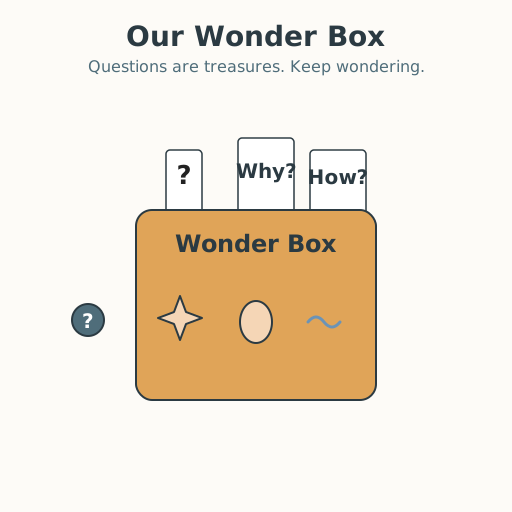
Lesson 5 — Our Wonder Box
Summary
Learners celebrate the unit’s biggest lesson — that wondering is good — by gathering their questions into a shared wonder box. They learn that some questions stay open, that keeping a question is a way of loving it, and that the box will be there to wonder with again.
Objectives
- Ask “why” and “how” questions about things in the world and offer their own ideas. (D06.S1.K.01)
Connection
Grown-ups do not know everything, and neither does anyone — that is why people keep asking questions their whole lives. A question is a little gift; when you keep it, you can wonder about it again tomorrow. Today we gather our questions together so we can keep wondering, now and later.
Materials
- A decorated box (the “wonder box”)
- Slips of paper
- A soft ball or “wonder stone”
Preparation
- Set out the wonder box where everyone can reach it.
- Cut slips of paper and set out crayons.
- Have the “wondering wall” from Lesson 1 nearby to revisit old questions.
Facilitator note
This lesson closes the unit and seals its promise: no question here will be graded, ranked, or dismissed. Model the comfort with not knowing — say a question you still wonder about yourself. If a child asks something you cannot answer, say “I wonder too — let’s keep it in the box.” The wonder box should stay in the room after the unit, so wondering continues.
Procedure
- Gather (5 min). Look at the wondering wall. Remember all the questions you have asked this week. Were any of them easy to answer? Were some very big?
- Decorate the box (10 min). Make the wonder box beautiful — with crayons, drawings of stars and eggs and rivers, or whatever you like. This box will hold your questions.
- Fill the box (15 min). Pass the wonder stone around. When it comes to you, say one “why” or “how” question you still wonder about, and offer your own first idea. Then draw or write your question on a slip and drop it in. Passing is always okay.
- Wonder about someday (10 min). Pull out one question (yours or a friend’s). Wonder about it together: what might the answer be? What could we watch or try to find out? Some questions we cannot answer yet — and that is wonderful too.
- Close (5 min). Remember: wondering is good, questions are treasures, and this box will be here whenever you want to wonder again.
Differentiation
- Support: Offer question starters — “Why…?” “How…?” — and accept a drawing or a point as a question; scribe the words for learners who want them written.
- Extension: Invite learners to sort questions into “we can find out now” and “we will wonder about someday,” and to plan one thing they could watch to learn more.
Assessment
- Formative (observation): Does the learner offer a “why” or “how” question and an idea of their own, and speak of wondering as good?
- Self: The learner reflects — “one question I am keeping” — as the unit closes.