Lesson 10 — The Living World Around Us
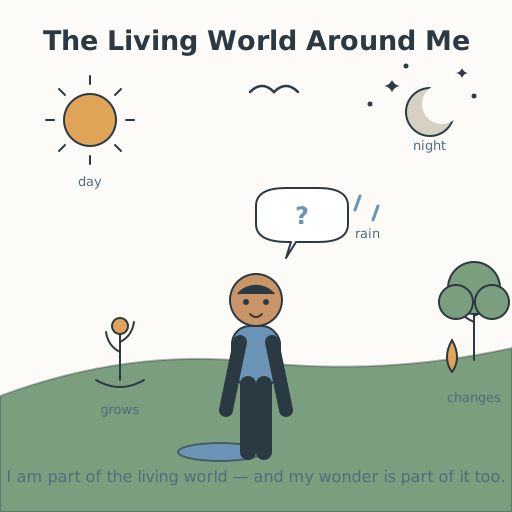
Learners bring the unit together in one big picture of the living world around them — the sky, the changes, a growing thing, and themselves — and share one change they noticed and one question they still wonder about.
Objectives
Objectives
- D06.S1.K.01 Ask "why" and "how" questions about things in the world and offer their own ideas.
- D06.S4.K.02 Observe and describe changes in the natural world (day and night, seasons, growth).
Essential question
What lives and changes around you, and what do you wonder about it?
Key vocabulary
Materials
Standard materials
- Large paper (or several sheets taped together) · per learner Room to draw a big picture of the living world
- Crayons or paint · per learner
Low-tech / no-cost
- The ground and a stick Draw a big living-world picture in the dirt or sand, with yourself in it
- Voice and body Act out your living world — the sun, a growing plant, a change — with a partner
Enriched / lab & device
- A class mural paper · 1 Learners add their piece to one shared living-world mural
- A tablet or camera · 1 per group Photograph each learner's picture to keep in a class living-world gallery
Works in different contexts
- large-group Make a shared class mural; each learner adds one living thing or change, then the group tells the story of the mural together
- self-directed A learner draws their own living world — sky, light, a growing thing, themselves — and writes or draws one question they still wonder about
- outdoor-only Draw the living world on the ground with a stick, or build it from stones, leaves, and sticks, then walk around it and tell its story
Lesson 10 — The Living World Around Us
Summary
Learners gather everything from the unit — day and night, the sky, the seasons, growing things, and their own questions — into one big picture of the living world around them, with themselves in it, and share a change they noticed and a question they still wonder about.
Objectives
- Ask “why” and “how” questions about the living world and offer their own ideas. (D06.S1.K.01)
- Observe and describe changes in the natural world around them. (D06.S4.K.02)
Connection
You have watched the sky change, seen living things grow, and asked big questions. All of that — the light and dark, the seasons, the growing things, and your wonder — is the living world around you. And you are part of it, too.
Materials
- Large paper (or several sheets taped together)
- Crayons or paint
Preparation
- Give each learner a big sheet of paper (or join sheets together for a class mural).
- Gather all the drawings and journals from the unit so learners can look back at them.
Facilitator note
This lesson is written to the learner (“you”). It is the unit’s capstone — celebrate what learners have noticed and wondered, and resist the urge to “review facts.” The unit’s promise is science as observation and wonder. Honor every learner’s local world: there is no correct sky, season, or growing thing — only the one that is home. Close with genuine delight at their questions.
Procedure
- Gather (5 min). Think about everything you have explored: day and night, the changing sky, the seasons, growing things, and your own questions.
- Make a living-world picture (20 min). On your big paper, draw the living world around you: the sky and its light, a change you noticed (a season, the weather, the night), a growing thing, and you in the middle of it all. Add one “why” or “how” question you still wonder about — write it or draw it.
- Share (15 min). Share your picture with a partner or the group. Tell one change you noticed in this unit, and one question you still have.
- Close (5 min). The living world is always changing, and your wonder is part of it. Keep watching, keep asking. You are a scientist already.
Differentiation
- Support: Draw just three things — the sky, one growing thing, and yourself — and tell the change out loud instead of writing.
- Extension: Invite learners to add one more part to their picture — a change they think will happen next — and tell why they think so.
Assessment
- Formative (observation): Can the learner name one change in the natural world and ask one “why” or “how” question about it?
- Artifact (portfolio): The living-world picture, kept as the unit’s closing artifact.
Home connection
At home, show a grown-up your living-world picture. Tell them one change you noticed and one question you still wonder about, and invite them to wonder with you.