Lesson 01 — Tools Help Us
Learners meet tools as things people make to help them do a job, name a tool and what it helps do, and discover that people everywhere and in every time have made tools.
Objectives
Objectives
- D10.S1.K.01 Name a tool or device people use and tell what it helps them do.
Essential question
What is a tool, and how does it help people do a job?
Key vocabulary
Materials
Standard materials
- A "tool bag" or tray of safe everyday tools · 1 set A spoon, a cup, a broom, a basket, a water jug or gourd, and (if available) a mortar and pestle
- Paper and crayons · per learner
Low-tech / no-cost
- Found or homemade tools A stick for digging, a folded leaf or cupped hand for carrying water, a stone for pounding; name each and its job
- Voice and body Act out using a tool — scoop, carry, sweep, pound — and name the job it helps with; no objects needed
Enriched / lab & device
- A photo set of tools from around the world · 1 set A loom, a water jar, a grinding stone, a scythe, a telephone — one tool per card with the job it does
- A real tool to handle and try · 1 per group Any safe, working tool (a hand whisk, a pestle, a watering can) learners can use once with help
Works in different contexts
- large-group Hold each tool up big so all can see; the whole group says the tool's name and acts out its job together before a few learners try it
- self-directed A learner gathers a few safe tools, says each name and its job out loud, and draws one tool helping someone
- outdoor-only Hunt for "tools in nature" — a stick, a stone, a leaf cup, a gourd — and name what each could help a person do
Lesson 1 — Tools Help Us
Summary
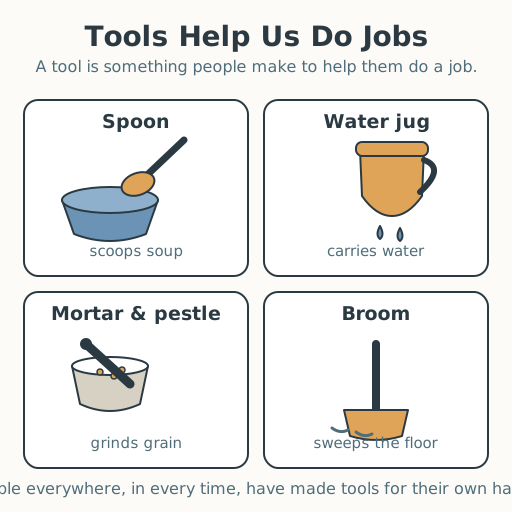
Learners discover that a tool is something people make to help them do a job. They hold, name, and act out everyday tools — a spoon, a cup, a broom, a water jug, a mortar and pestle — and tell what each one helps people do. Along the way they learn that people everywhere, in every time and place, have made tools.
Objectives
- Name a tool or device people use and tell what it helps them do. (D10.S1.K.01)
Connection
Think about your hands. There are jobs they cannot do alone — scooping soup, carrying water, sweeping a floor, pounding grain. People make tools to help their hands, and every home and every kitchen has some. A spoon, a cup, a broom, a water jug: each one is a tool that helps.
Materials
- A “tool bag” or tray of safe everyday tools (spoon, cup, broom, basket, water jug or gourd, mortar and pestle if available)
- Paper and crayons
Preparation
- Gather a set of safe, everyday tools and place them in a bag or on a tray.
- Clear a circle for acting out tool jobs.
Facilitator note
This lesson is written to the learner (“you”). As facilitator, keep the message gentle and true: tools are wonderful helpers, but they are not magic and they are not better just because they are new. Honor every tool equally — a stone for pounding and a spoon for scooping both matter, and people in every place and every time have made tools for their own hands and their own lives. Avoid presenting any one tool (like a phone) as the “real” or “modern” tool; a mortar and pestle and a water jug are just as much tools. Supervise any handling of tools so everyone stays safe.
Procedure
- Gather (5 min). Look at your hands. What is one job your hands cannot do alone?
- What is a tool? (10 min). A tool is something people make to help them do a job. Reach into the tool bag and pull one out. Name it, and tell what it helps people do: “A spoon helps us scoop and eat. A broom helps us sweep.”
- Act it out (10 min). Choose a tool and act out its job with your body — scoop, sweep, carry, pound. Can a partner guess which tool you are using?
- Tools everywhere (10 min). People make tools in every land and every time: a water jug to carry water, a mortar and pestle to grind grain, a basket to carry food, a loom to weave cloth. Which tools have you seen at home or in a market?
- Draw it (5 min). Draw one tool and the job it helps with.
- Close (5 min). Tools help people. Every person who makes a tool is using their head and hands to make a job easier.
Differentiation
- Support: Offer two tools and ask the learner to point to the one that “carries” or “scoops,” then say the job together.
- Extension: Invite learners to draw or name two tools that do the same job in different ways (a basket and a bag both carry; a broom and a mop both clean).
Assessment
- Formative (observation): Can the learner name one tool and tell what it helps people do?
- Artifact (portfolio): The “tool and its job” drawing.
Home connection
At home, find one tool with a grown-up — a spoon, a jug, a broom, a knife for cooking. Name it and tell the grown-up what job it helps do. Ask: who first thought to make a tool like this?