Lesson 02 — Answering Questions About a Story
Learners listen to a story and answer simple who, what, and where questions about it, building toward answering in a complete sentence.
Objectives
Objectives
- D04.S1.01.01 Listen to a speaker or story and ask or answer a simple question about it.
Essential question
How do I answer a question about a story I heard?
Key vocabulary
Materials
Standard materials
- A short story to tell or read aloud · 1 A simple tale with a clear who, what, and where
- Question cards (who, what, where) · 1 set The three questions most easy to answer about a story
Low-tech / no-cost
- A story told from memory No book needed; any remembered tale with a clear who, what, and where works
- Voice and hands Hold up one finger for "who," two for "what," three for "where"
Enriched / lab & device
- A picture book with clear events · 1 Read aloud, then answer questions with the pictures as reminders
- A recording of the story · 1 Learners re-listen to check their own answers
Works in different contexts
- large-group Read the story aloud twice; ask a question and let the whole group answer together, then call on individuals to answer in a full sentence
- self-directed A learner listens to the story twice, then answers written who/what/where questions aloud to a grown-up or older sibling
- outdoor-only Tell the story in a circle outside; answer the who/what/where by pointing to a spot, a person, or acting out the happening
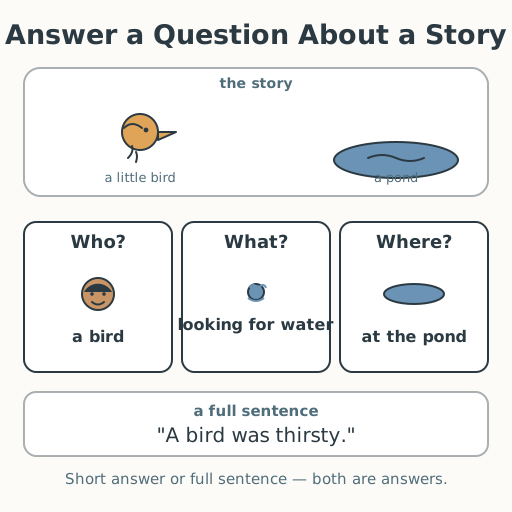
Lesson 2 — Answering Questions About a Story
Summary
Learners listen to a short story and practice answering simple questions about it — who was there, what happened, and where it took place. They build from short answers toward full sentences, so others can understand them.
Objectives
- Listen to a speaker or story and answer a simple question about it. (D04.S1.01.01)
Connection
After someone tells a story, people often ask, “Who was it about? What happened? Where?” Answering well shows that you listened and lets you share the story with someone else. Every culture keeps and passes on its stories this way — by telling and answering.
Materials
- A short story to tell or read aloud
- Question cards (who, what, where)
Preparation
- Choose a story with a clear who, what, and where — a few sentences is enough.
- Prepare the three question cards.
- Arrange a circle for listening and answering.
Facilitator note
This lesson is written to the learner (“you”) so it works in a classroom and for a self-directed learner. Prepare the story and cards, then guide the answering practice. Answers can be short at first; gently stretch learners toward full sentences (“A little bird” → “A little bird was looking for water”). Honor every way of telling — there is no single correct accent or way of speaking. An answer can be spoken, signed, pointed to on a picture, or said through a device — all are answers. For a learner who is Deaf or hard of hearing, use a picture book or a signed or written telling of the story, and accept a signed or pointed answer as fully as a spoken one.
Procedure
- Gather (5 min). Sit comfortably. Get ready to listen with your whole body, like you practiced before.
- Listen to a story (5 min). Hear the story once, all the way through. Do not talk yet — just listen.
- Learn the three questions (5 min). Meet three questions that fit almost any story: Who was there? What happened? Where did it happen? Hold up one, two, or three fingers to match each.
- Answer together (15 min). Hear the story again. Now answer each question aloud. First try a short answer — “a bird.” Then try it as a full sentence — “A bird was thirsty.” Say both ways and hear the difference.
- Partner practice (10 min). With a partner, one of you asks a who, what, or where question, and the other answers in a full sentence. Then switch.
- Close (5 min). Listening plus answering means the story travels from one person to another. You just kept a story alive.
Differentiation
- Support: Ask only “who” questions at first; accept a pointing or one-word answer, then model the full sentence.
- Support (deaf/Hard of Hearing): Use a picture book or signed/written story; accept a signed or pointed answer.
- Support (non-speaking): Answer by signing, pointing, choosing a picture, or using a device, then have a partner voice the full sentence.
- Extension: Answer a “why” question — why do you think it happened — and give a guess with a reason.
Assessment
- Formative (observation): Can the learner answer a who, what, or where question about the story, ideally in a full sentence?
Home connection
Retell one story you know to someone at home, then ask them a “what happened” question and listen to their answer.