Lesson 03 — Feelings in My Body
Learners discover that feelings show up in the body — a fast heartbeat when excited, a fluttery tummy when nervous — and practice noticing and naming the feeling their own body is showing them.
Objectives
Objectives
- D03.S1.02.02 Notice where a feeling shows up in the body, such as a fast heartbeat when excited, and name the feeling.
Essential question
Where does a feeling show up in my body?
Key vocabulary
Materials
Standard materials
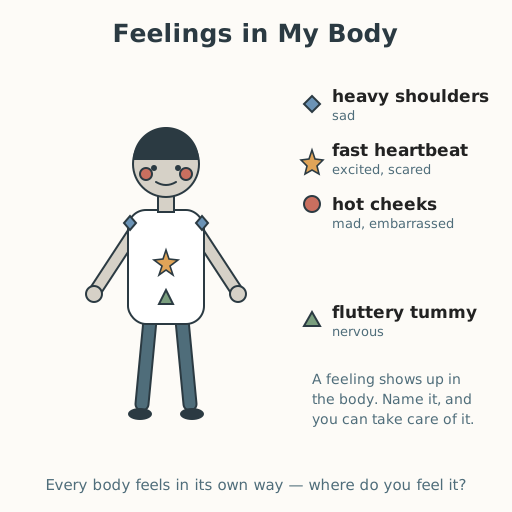
- Feeling-in-the-body cards · 1 set Cards pairing a feeling with its body spot — fast heartbeat (excited, scared), fluttery tummy (nervous), hot cheeks (mad, embarrassed), heavy shoulders (sad)
- A bell or shaker (optional) · 1 To practice a calm, quiet body-check
Low-tech / no-cost
- Your own body Feel and name each body spot — chest, tummy, cheeks, shoulders — with no cards needed
- Voice Describe each feeling aloud ("my heart beats fast when I am excited")
Enriched / lab & device
- Laminated feeling-and-body cards · 1 set per pair Durable cards for repeated sorting and matching of feelings to body spots
- Tablet or camera · 1 per group Photograph or record learners acting out a feeling to build a class "where feelings live" poster
Works in different contexts
- large-group Hold each card up high and describe the body feeling aloud, then have the group put a hand on their own matching spot
- self-directed A learner works through the cards alone, feeling each spot in their own body and naming a time they felt it
- outdoor-only Do the body-check outside after a run — notice the fast heartbeat and warm cheeks, and name the feeling with them
- multi-age Older learners act out a feeling while younger learners guess which body spot it lives in
Lesson 3 — Feelings in My Body
Summary
Learners learn that feelings are not only in the mind — they show up in the body. They meet four feeling spots: a fast heartbeat (excited or scared), a fluttery tummy (nervous), hot cheeks (mad or embarrassed), and heavy shoulders (sad). They practice noticing and naming the feeling their own body is showing them.
Objectives
- Notice where a feeling shows up in the body, such as a fast heartbeat when excited, and name the feeling. (D03.S1.02.02)
Connection
Think of a time you waited for a surprise — maybe a gift or a visitor. Did your heart beat fast and your body feel light and bouncy? That is the feeling of excitement showing up in your body. Feelings have homes in your body. When you learn their homes, you can read what your body is telling you.
Materials
- Feeling-in-the-body cards (fast heartbeat, fluttery tummy, hot cheeks, heavy shoulders)
- A bell or shaker (optional)
Preparation
- Print or draw the four feeling-in-the-body cards.
- Have the bell or shaker ready for the quiet body-check.
- Arrange a circle for gathering and the acting game.
Facilitator note
This lesson is written to the learner (“you”) so it works in a classroom and for a self-directed learner. Prepare the cards and bell, then guide the body-check and acting game. This spirals up from Grade 1’s body signals (hunger, thirst, tiredness) and from Grade 2 Unit 1’s feeling vocabulary — now feelings and bodies come together. Handle feelings with care: never require a learner to share a private feeling aloud, and never make a feeling “good” or “bad.” A fast heartbeat from excitement and one from fear are both okay to have. Offer writing or drawing as equal ways to share. Hold up each feeling card as you name it, so learners who are deaf or hard of hearing can follow the acting game without needing to hear the word. There is no correct answer — noticing is the skill.
Procedure
- Gather (5 min). Sit still and put a hand on your chest. Can you feel your heartbeat? It is always there, steady and quiet. Sometimes it changes when you feel something.
- Meet four feeling spots (15 min). Feelings show up in the body. Meet four: fast heartbeat — your heart drums when you are excited or scared; fluttery tummy — your tummy flutters when you are nervous; hot cheeks — your cheeks warm when you are mad or embarrassed; heavy shoulders — your shoulders droop when you are sad. Act out each one and touch the spot.
- Acting game (10 min). When you hear a feeling (or see its card held up), act it out and touch the spot: “You are excited!” — fast heartbeat. “You are nervous!” — fluttery tummy. “You are mad!” — hot cheeks. “You are sad!” — heavy shoulders.
- Body-check now (10 min). Close your eyes for a quiet moment. What is your body feeling right now — fast heart, fluttery tummy, warm cheeks, or heavy shoulders? Name it to yourself, then share with a partner only if you want.
- Close (5 min). Your body tells you how you feel. Listening to it is a way of being kind to yourself.
Differentiation
- Support: Introduce one feeling spot at a time and act it out together before moving on.
- Extension: Ask learners to name a time they felt each feeling and where exactly it showed up for them.
Assessment
- Formative (observation): Can the learner match a feeling to its body spot and name one feeling their own body is showing them?
Resources
- World Health Organization — global health and wellbeing reference: https://www.who.int/
Home connection
Ask someone at home where a feeling shows up in their body, and share where it shows up in yours.