Lesson 01 — Feelings Have Strength
Learners discover that every feeling has a strength, or intensity, that can be described as a little, some, or a lot. Using a feeling thermometer, they name a real feeling and place its strength, learning that noticing how strong a feeling is helps them know themselves and choose what to do next.
Objectives
Objectives
- D01.S1.04.01 Describe the intensity of a feeling as a little, some, or a lot, and what each level feels like.
Essential question
How strong is a feeling, and how do I know?
Key vocabulary
Materials
Standard materials
- Feeling thermometer chart · 1 A labeled thermometer with three zones — a little, some, a lot — for feeling strength
- Blank feeling thermometer page · 1 per learner An empty thermometer with three zones for the learner to fill in their own feeling and its strength
- Pencils and crayons · per learner
Low-tech / no-cost
- A line drawn on the ground or in the sand Stand at a low, middle, or high mark to show how strong a feeling is; no page needed
- Voice and body Say a feeling and show its strength with a small, medium, or big gesture; no thermometer needed
Enriched / lab & device
- A laminated feeling thermometer with a sliding clip · 1 per learner A reusable strip the learner can slide to show where a feeling's strength sits right now
- A class 'feeling weather' chart · 1 A shared chart where learners clip their feeling's strength each morning to notice patterns over the week
Works in different contexts
- large-group Draw one big thermometer on the board and call out feelings for the whole group to place together; then learners fill their own pages in small groups
- multi-age Older learners name a feeling and place its strength, while younger learners point to the zone and repeat the word "a little, some, or a lot"
- self-directed A learner names a real feeling, places its strength on their own thermometer, and reads it back to check it matches how they truly feel
- level-grouped Learners ready to extend add a second feeling and compare the two strengths side by side on the same thermometer
- outdoor-only Use three spots on the ground (near, middle, far) and walk to the spot that shows how strong a feeling is; name the feeling and its strength aloud
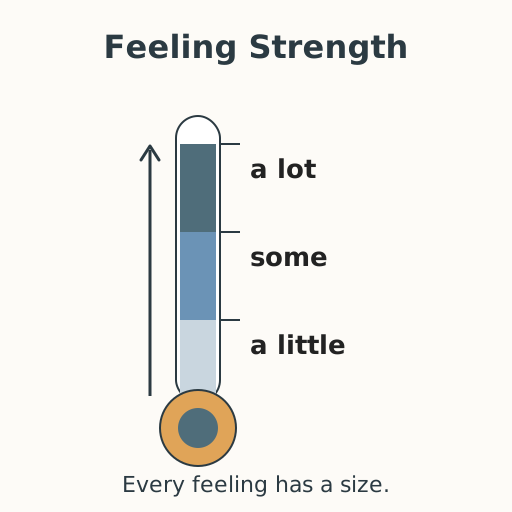
Lesson 1 — Feelings Have Strength
Summary
Learners discover that every feeling has a strength, also called its intensity, and that strength can be described as a little, some, or a lot. Using a feeling thermometer, they name a real feeling and place its strength, learning that noticing how strong a feeling is helps them know themselves and choose what to do next.
Objectives
- Describe the intensity of a feeling as a little, some, or a lot, and what each level feels like. (D01.S1.04.01)
Connection
Two children can both feel nervous, but not the same amount. One feels a little nervous before a spelling quiz — a tiny flutter. The other feels a lot nervous before speaking in front of the whole school — a racing heart and shaky hands. Same feeling, different strength. In a mountain village, a child feels a little worried when clouds gather, and a lot worried when the river rises. Everywhere in the world, feelings come in sizes. Knowing the size helps you know what kind of help you might need — and that is a skill you can practice your whole life.
Materials
- Feeling thermometer chart
- Blank feeling thermometer page
- Pencils and crayons
Preparation
- Print or draw the feeling thermometer chart (three zones: a little, some, a lot).
- Copy a blank feeling thermometer page for each learner.
- Arrange a circle for gathering and a quiet space for individual work.
Facilitator note
This lesson is written to the learner (“you”). The one idea to land is that feeling
strength is a real, observable thing — not that some feelings are “good” or “bad.”
Model the worked example aloud (a little / some / a lot of the same feeling) before
learners place their own. Watch for learners who choose a feeling that is very strong;
honor it calmly and name it with them, then move gently on. Never tell a learner their
feeling is “too big” — the point is noticing size, not judging it. See
docs/facilitation.md on holding big feelings safely.
Procedure
- Gather (5 min). Last year you learned that feelings change over time and that you can feel more than one feeling at once. Today you learn something new: every feeling has a strength. A feeling can be small, medium, or big — and you can notice the difference.
- Meet the feeling thermometer (10 min). Look at the chart. It is a thermometer with three zones: a little, some, and a lot. Feelings rise on it the way heat rises in a real thermometer. Here is a worked example: nervous. A little nervous is a tiny flutter before a quiz. Some nervous is a warmer, tighter feeling before a race. A lot nervous is a pounding heart and cold hands before a big performance. Same feeling — three different sizes.
- Sort some feelings (10 min). With a partner, name a feeling and decide its size: “I felt mad — a little mad, not a lot.” Take turns. Try the same feeling at two different sizes and notice how the word stays the same while the strength changes.
- Place your own feeling (15 min). Think of one real feeling you had recently. Draw or write it on your blank thermometer, and shade the zone that matches its strength — a little, some, or a lot. Underneath, write or tell what that level felt like in your body.
- Close (5 min). You are the one who can measure your own feelings. Noticing the size of a feeling — a little, some, or a lot — is the first step to taking care of it. It is a skill you will grow all year.
Differentiation
- Support: Offer feeling word cards and a three-box “small / medium / big” frame to place a card in instead of writing; scribe the feeling name the learner says.
- Extension: Place two feelings on the same thermometer and compare their sizes (“my worry is some, but my excitement is a lot”).
Assessment
- Formative (observation): Can the learner name a feeling and place its strength on the thermometer as a little, some, or a lot?
- Self-check: The learner reads their thermometer back and checks whether the zone truly matches how the feeling felt.
Home connection
Ask someone at home about a feeling they had today and how strong it was — a little, some, or a lot — and share one of yours.
Resources
- CASEL SEL Framework (self-awareness competency): https://casel.org/fundamentals-of-sel/