Lesson 05 — An Ecosystem's Living and Nonliving Parts
Learners describe an ecosystem as living and nonliving parts that depend on each other, and name two of its parts. They sort parts into living and nonliving, arrange a pond or garden scene, and draw one ecosystem of their own with two living and two nonliving parts labeled, plus arrows showing who depends on what.
Objectives
Objectives
- D10.S3.04.01 Describe an ecosystem as living and nonliving parts that depend on each other, and name two of its parts.
Essential question
What is an ecosystem, and what are two of its living and nonliving parts?
Key vocabulary
Materials
Standard materials
- Ecosystem part cards · 1 set Living parts (a tree, a bird, a worm, a fish) and nonliving parts (sun, water, soil, rock) to sort and arrange
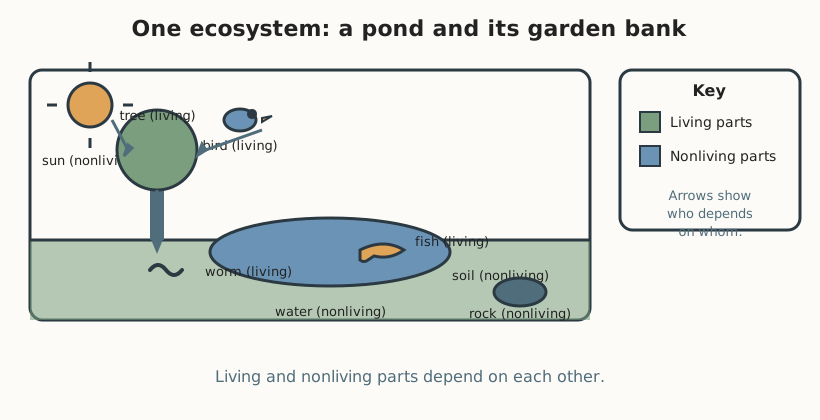
- A large "ecosystem" diagram · 1 A pond or garden scene with living and nonliving parts labeled, plus arrows showing who depends on what
- Paper and crayons · per learner For drawing one ecosystem with two living and two nonliving parts labeled
Low-tech / no-cost
- The real outdoors and found things Go outside and name living and nonliving parts you can see, hear, or touch; no printed cards needed
- Voice and body Act out an ecosystem — one learner is the sun, one the water, one a plant, one an animal — and point out who depends on whom
Enriched / lab & device
- A magnifier or collection tray · per pair To look closely at soil, a leaf, and a tiny living thing from a local place
- A short video or picture set of one ecosystem · 1 Optional — a pond, a forest floor, or a coral reef, to name its living and nonliving parts
Works in different contexts
- large-group Build one big ecosystem picture on the wall; the whole group names living and nonliving parts before a few learners add the dependence arrows
- self-directed A learner names one ecosystem and lists two living and two nonliving parts and how they depend on each other
- outdoor-only Choose a real spot — a garden, a ditch, a tree — and name its living and nonliving parts and how they depend on each other
- multi-age Older learners write the "depends on" sentences; younger learners sort the cards into living and nonliving
- level-grouped Learners who finish early add a third living and third nonliving part and a new dependence arrow; others sort the given cards
Lesson 5 — An Ecosystem’s Living and Nonliving Parts
Summary
Learners describe an ecosystem as living and nonliving parts that depend on each other, and name two of its parts. They sort parts into living and nonliving, arrange a pond or garden scene, and draw one ecosystem of their own with two living and two nonliving parts labeled, plus arrows showing who depends on what.
Objectives
- Describe an ecosystem as living and nonliving parts that depend on each other, and name two of its parts. (D10.S3.04.01)
Connection
Look out a window or step outside. You are standing inside an ecosystem: the living parts (a tree, a bird, a worm) and the nonliving parts (sunlight, water, soil, rock) all around you, depending on each other. The tree cannot live without the sun, the water, and the soil; the bird needs the tree for shelter and food; the worm needs the soil, and the soil is kept rich by the worm. Every place on Earth — a pond, a desert, a forest, a field — is an ecosystem like this, made of living and nonliving parts woven together.
Materials
- Ecosystem part cards (living: tree, bird, worm, fish; nonliving: sun, water, soil, rock)
- A large ecosystem diagram (pond or garden)
- Paper and crayons
Preparation
- Prepare the part cards, each labeled “living” or “nonliving.”
- Prepare the large diagram with living and nonliving parts labeled and dependence arrows.
- If possible, choose a real nearby spot (a garden, a tree, a puddle) to observe.
Facilitator note
This lesson is written to the learner (“you”). Grade 3 built a food chain of plants and animals; Grade 4 widens to the whole ecosystem — living and nonliving parts that depend on each other. The key new idea is that nonliving parts (sun, water, soil, rock, air) are not just scenery; they are parts of the system that living things depend on, and living things change them in return (worms enrich soil, plants shade and cool, roots hold soil). Model the concept with the worked diagram, then guide sorting before learners draw their own (Kirschner, Sweller & Clark, 2006). Keep it concrete and global: offer ecosystems from many biomes — a pond, a desert, a mangrove, a forest floor, a field — so no single place is the default, and note that people are part of ecosystems too, depending on them and caring for them. A light ethical thread returns throughout the unit: because every part depends on every other, caring for one part cares for the whole (this grows in Lessons 6–8). Honor every body: describe the cards and diagram in words for a learner who is blind or has low vision; a non-speaking learner sorts the cards and points the dependence arrows; acting out an ecosystem works for learners who learn best by moving.
Procedure
- Gather (5 min). You are standing inside an ecosystem right now. What living things are around you? What nonliving things? Today you name its parts and see how they depend on each other.
- Meet the ecosystem (10 min). An ecosystem is all the living parts and the nonliving parts in a place, depending on each other. Look at the diagram: the sun, water, and soil are nonliving; the tree, bird, and worm are living. The tree depends on sun, water, and soil; the bird depends on the tree; the worm depends on the soil — and the soil is made richer by the worm.
- Sort living and nonliving (8 min). With a partner, sort the cards into two piles: living (tree, bird, worm, fish) and nonliving (sun, water, soil, rock). Name two parts from each pile.
- Draw your own ecosystem (12 min). Draw one ecosystem you know — a pond, a garden, a field, a forest edge. Label two living parts and two nonliving parts, and draw one arrow showing who depends on what.
- Share (5 min). Show your drawing to a partner. Can they find your two living and two nonliving parts, and follow your dependence arrow?
- Close (5 min). An ecosystem is living and nonliving parts depending on each other. Every part matters — even the soil and the sunlight.
Differentiation
- Support: Sort the given cards and say two living and two nonliving parts aloud, using the frame “The ___ is living; the ___ is nonliving; the tree depends on the ___.”
- Blind/low vision: Hear the parts described and name two living and two nonliving parts by voice; a partner builds the scene by feel or describes it.
- Deaf/hard of hearing / non-speaking: Sort the cards and point to two living and two nonliving parts, then point the dependence arrow.
- Motor differences: Direct a partner’s hands to sort and draw while the learner says or points to the living and nonliving parts.
- Extension: Add a third living and third nonliving part and a second dependence arrow, or explain what might happen to the bird if the tree were cut down.
Assessment
- Formative (observation): Can the learner describe an ecosystem as living and nonliving parts that depend on each other, and name two of its parts?
- Artifact (portfolio): The drawn ecosystem with two living and two nonliving parts labeled and one dependence arrow.
Home connection
At home or nearby, find one small ecosystem — a tree, a puddle, a garden bed. Name two living and two nonliving parts in it, and tell a grown-up one way they depend on each other.
Resources
- National Geographic Education, “Ecosystem” — an ecosystem is a place where living and nonliving things interact and depend on each other. https://education.nationalgeographic.org/resource/ecosystem/