Lesson 06 — Producers, Consumers, and Decomposers
Learners explain the jobs of producers, consumers, and decomposers in an ecosystem, with an example of each. A producer makes food from sunlight (grass); a consumer eats other living things (a rabbit); a decomposer breaks dead things down back into soil (a mushroom or earthworm). They sort roles, then draw the three jobs in a cycle with one example of each.
Objectives
Objectives
- D10.S3.04.02 Explain the jobs of producers, consumers, and decomposers in an ecosystem, with an example of each.
Essential question
What are the jobs of producers, consumers, and decomposers in an ecosystem, and what is an example of each?
Key vocabulary
Materials
Standard materials
- Role cards · 1 set Producer (grass, a tree), consumer (a rabbit, a bird, a person), decomposer (a mushroom, an earthworm, a beetle) — to sort and arrange in a cycle
- A "who does what" chart · 1 Three columns — producer (makes food from sunlight), consumer (eats other living things), decomposer (breaks down dead things back into soil)
- Paper and crayons · per learner For drawing the three jobs with one example of each
Low-tech / no-cost
- The real outdoors and found things Find a plant (producer), something that eats plants (consumer), and a rotting leaf or a worm (decomposer) outside; no printed cards needed
- Voice and body Act out the three jobs — a plant reaching for sun, an animal eating, a worm breaking leaves into soil
Enriched / lab & device
- A small compost or leaf-litter sample · per group Look closely at leaves breaking down and the small decomposers at work
- A short video of a food chain with decomposers · 1 Optional — a mushroom, worm, or beetle breaking dead things down into soil
Works in different contexts
- large-group Make one big cycle on the wall — producer to consumer to decomposer back to soil; the whole group names each job before a few learners place the arrows
- self-directed A learner sorts the three jobs, names an example of each, and draws the cycle with arrows
- outdoor-only Find a real producer, consumer, and decomposer in one place (a plant, an insect, a worm or moldy leaf) and name each job
- multi-age Older learners write the "job" sentences; younger learners act out each role and place the arrows
- level-grouped Learners who finish early add a second consumer and a second decomposer; others sort the given roles
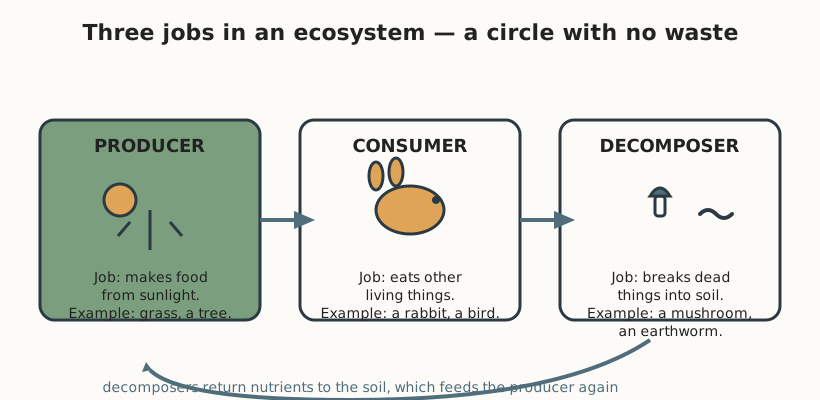
Lesson 6 — Producers, Consumers, and Decomposers
Summary
Learners explain the jobs of producers, consumers, and decomposers in an ecosystem, with an example of each. A producer makes food from sunlight (grass, a tree); a consumer eats other living things (a rabbit, a bird, a person); a decomposer breaks dead things down back into soil (a mushroom, an earthworm). They sort roles, then draw the three jobs in a cycle with one example of each.
Objectives
- Explain the jobs of producers, consumers, and decomposers in an ecosystem, with an example of each. (D10.S3.04.02)
Connection
Where does the food in your meal begin? With a plant. A producer — grass, a rice plant, an apple tree — makes its own food from sunlight. A consumer — a rabbit, a bird, or you — eats other living things to get energy. And when anything dies, a decomposer — a mushroom, an earthworm, a tiny beetle — breaks it down and returns it to the soil, which feeds the plant again. These three jobs keep every ecosystem going, in a circle with no waste.
Materials
- Role cards (producer, consumer, decomposer)
- A “who does what” chart
- Paper and crayons
Preparation
- Prepare the role cards: producers (grass, a tree), consumers (a rabbit, a bird, a person), decomposers (a mushroom, an earthworm, a beetle).
- Prepare the chart: producer — makes food from sunlight; consumer — eats other living things; decomposer — breaks dead things down into soil.
- If possible, gather a small sample of leaf litter or compost to look at.
Facilitator note
This lesson is written to the learner (“you”). Grade 3 explained that plants make their own food from sunlight and that animals eat plants or other animals; Grade 4 names the three jobs explicitly — producer, consumer, decomposer — and gives an example of each. The key new idea is the cycle: decomposers close the loop, turning dead things back into soil that producers use, so an ecosystem has no true waste. Model the cycle with the chart and arrows, then guide sorting before independent drawing (Kirschner, Sweller & Clark, 2006). Keep it concrete and gentle: say “breaks dead things down and returns them to the soil,” not gory detail; frame decomposers as quiet helpers, not as “gross.” Use examples from many biomes — grass and rabbit, sea plants and fish, rice plants and people, forest leaves and mushrooms — so no single place is the default. A light ethical thread: everything is food for something else, and nothing is wasted in a healthy ecosystem — this prepares the “reduce, reuse, recycle” idea in Lessons 7–8, where humans can choose to waste less, the way ecosystems already do. Honor every body: describe the cards in words for a learner who is blind or has low vision; a non-speaking learner sorts the cards and points the cycle arrows; acting out each role works for learners who learn best by moving.
Procedure
- Gather (5 min). Every living thing has a job in the ecosystem. Today you learn the three big jobs and who does them.
- Meet the three jobs (10 min). A producer makes food from sunlight (grass, a tree). A consumer eats other living things (a rabbit, a bird, a person). A decomposer breaks dead things down back into soil (a mushroom, an earthworm). Watch the cycle: the plant makes food, the rabbit eats the plant, and when either dies, the decomposer returns it to the soil that feeds the plant again.
- Sort the roles (8 min). With a partner, sort the cards into the three jobs. Say one example of each: “Grass is a producer; a rabbit is a consumer; a mushroom is a decomposer.”
- Draw the cycle (12 min). Draw the three jobs in a circle with arrows: producer → consumer → decomposer → back to the soil and the producer. Label one example of each.
- Share (5 min). Show your cycle to a partner. Can they name your producer, consumer, and decomposer, and follow the arrows all the way around?
- Close (5 min). Producers make food, consumers eat, decomposers return everything to the soil. In a healthy ecosystem, nothing is wasted.
Differentiation
- Support: Sort the given cards and say the three jobs aloud, using the frame “The ___ is a ___; its job is to ___.”
- Blind/low vision: Hear each card described and name the three jobs and an example of each by voice; a partner describes the cycle in words.
- Deaf/hard of hearing / non-speaking: Sort the cards and point to each job and an example, then point the cycle arrows.
- Motor differences: Direct a partner’s hands to sort and draw while the learner says or points to the three jobs and their examples.
- Extension: Add a second consumer and a second decomposer to the cycle, or explain what would happen in a garden with no decomposers.
Assessment
- Formative (observation): Can the learner explain the jobs of producers, consumers, and decomposers and give an example of each?
- Artifact (portfolio): The drawn cycle with the three jobs labeled and one example of each.
Home connection
At home, find one producer (a plant), one consumer (a person, pet, or animal), and one decomposer (a worm, a mushroom, or a rotting leaf). Tell a grown-up each one’s job in the ecosystem.
Resources
- National Geographic Education, “Decomposers” — decomposers break down dead organisms and return nutrients to the soil, completing the cycle that producers use. https://education.nationalgeographic.org/resource/decomposers/