Lesson 14 — We Are Friends
A capstone that gathers the unit's four friendship skills — sharing, reading feelings, belonging, and helping — into one shared "we are friends" creation.
Objectives
Objectives
- D02.S1.K.01 Take turns and share materials during play with a gentle reminder.
- D02.S2.K.01 Describe how a friend or story character might feel in a simple situation.
- D02.S3.K.01 Name a community they belong to and one thing people do together in it.
- D02.S4.K.01 Help a classmate or care for a shared space when shown how.
Essential question
How do we live well together as friends?
Key vocabulary
Materials
Standard materials
- A large shared paper or banner · 1 For a class "we are friends" picture
- Paper and crayons · per learner
- A shared object for a passing game · 1
Low-tech / no-cost
- Voice and body A closing circle of song, sharing, and naming one thing each learner offers the group
- A shared ground drawing Draw one big circle in the soil and add a mark for every way we are friends
Enriched / lab & device
- Photos of the class across the unit · 1 set Pictures of learners sharing, listening, helping, and caring together
- A tablet to record a class "we are friends" story · 1 Learners tell and record what friendship means to them
Works in different contexts
- large-group Each learner adds one mark to the shared banner and says one thing they learned about being a friend
- self-directed A learner makes a small book of the four friendship skills — share, feel, belong, help — in words and pictures
- outdoor-only Hold the closing circle outdoors and add natural objects (leaves, stones) to a shared "friendship circle" in the ground
- multi-age Learners of different ages share the friendship skills with each other and build the banner together
- level-grouped Learners who are ready name all four skills and one example each; others point to a picture for each
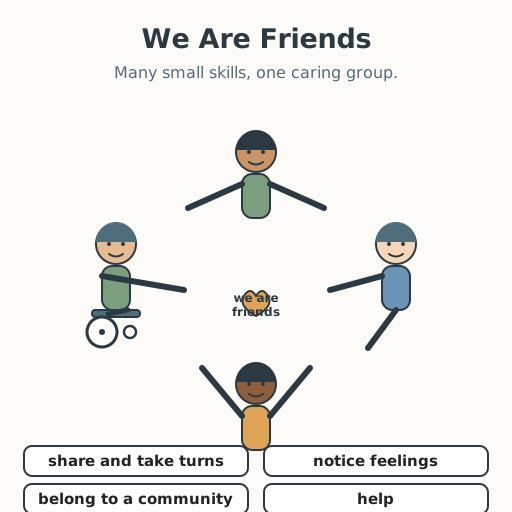
Lesson 14 — We Are Friends
Summary
The capstone brings the whole unit together. Learners recall the four friendship skills they have practiced — taking turns and sharing, reading feelings, belonging to communities, and helping — and weave them into one shared “we are friends” creation.
Objectives
- Take turns and share during play. (D02.S1.K.01)
- Describe how a friend might feel. (D02.S2.K.01)
- Name a community they belong to and something people do together in it. (D02.S3.K.01)
- Help a classmate or care for a shared space. (D02.S4.K.01)
Connection
Being a friend is not one big thing — it is many small things practiced every day: sharing a turn, noticing a feeling, belonging together, lending a hand. When you put them all together, you get something wonderful: people who live well with each other. That is what “we are friends” means.
Materials
- One large shared paper or banner
- Paper and crayons
- A shared object for a passing game
Preparation
- Prepare the shared banner and drawing materials.
- Gather any photos from across the unit.
- Choose a passing game and a closing song.
Facilitator note
This lesson is written to the learner (“you”) so it works in a classroom and for a self-directed learner. As facilitator, this is a celebration, not a test. Let learners show what they remember in their own way — words, pictures, movements — and affirm that friendship is practice, not perfection. Keep the four skills simple and let the shared creation hold the meaning.
Procedure
- Gather (5 min). We have spent many days learning to be friends. Today we put it all together.
- Remember the four skills (10 min). A friend: shares and takes turns, notices feelings, belongs to a community, and helps. For each, name one thing you have done.
- Play it (10 min). Play one passing game together, remembering to take turns and wait. Notice a friend’s happy face as the game goes round.
- Make “we are friends” (15 min). On the shared banner, each learner adds a mark or picture for one friendship skill. Say your part as you add it: “I share.” “I notice feelings.” “I belong.” “I help.”
- Close (5 min). Stand together and look at what we made. Many hands, one picture — like many friends, one caring group. We are friends.
Differentiation
- Support: Offer picture cards of the four skills to point to instead of naming.
- Extension: Invite learners to make a small “how to be a friend” book showing all four skills with an example of each.
Assessment
- Summative (observation): Can the learner show each friendship skill — taking a turn, naming a feeling, naming a community, helping — in word or action?
- Artifact (portfolio): The shared “we are friends” banner (or a photo of it) and each learner’s contribution.
Resources
- CASEL SEL Framework (foundational competencies): https://casel.org/fundamentals-of-sel/
Home connection
With your family, make a small “friendship circle” — each person draws or names one way they share, notice feelings, belong, or help. Put them together.