Lesson 01 — Listening to a Story
Learners practice listening with their whole body — ears, eyes, and a still, ready body — and discover that careful listening helps them remember a story.
Objectives
Objectives
- D04.S1.K.01 Listen to a story or speaker and retell one important part in their own words.
Essential question
How do I listen with my whole body so I can remember a story?
Key vocabulary
Materials
Standard materials
- A short picture story · 1 A story the learners know or a simple new one; choose one with clear characters and one important event
- Storytelling props · as available A scarf, a stick, a shell, or a soft toy to hold while listening
Low-tech / no-cost
- A told story No book needed; the facilitator tells a short story from memory or makes one up with the learners
- Voice and body The whole lesson can run on a spoken story and quiet listening
Enriched / lab & device
- Audio story recording · 1 A recorded story learners can replay to practice listening again and again
- Simple headphones or a quiet listening corner · as available For learners who focus better with fewer sounds around them
Works in different contexts
- large-group Sit in a circle so everyone can see the storyteller's face and hands; pause to let the whole group "act out" a sound or motion from the story together
- self-directed A learner chooses a story (from a book, an audio recording, or a grown-up) and practices the three listening jobs alone, then tells someone one thing they remember
- outdoor-only Tell the story outdoors; invite learners to listen also to the world around them — wind, birds, footsteps — before the story begins
Lesson 1 — Listening to a Story
Summary
Learners learn three “listening jobs” — ears open, eyes watching, body still — and practice them while a story is told. They close by remembering and sharing one thing they heard.
Objectives
- Listen to a story and retell one important part in their own words. (D04.S1.K.01)
Connection
Stories are everywhere — at bedtime, around a fire, in a song, or read from a book. When you listen to a story, you can step into another world and meet new people and places. Listening carefully is how a story travels from one person to another, and it is how the story gets to live inside you too.
Materials
- A short picture story (or a story told from memory)
- Storytelling props — a scarf, stick, shell, or soft toy (optional)
Preparation
- Choose a short story with one clear, important event.
- Arrange a circle where everyone can see the storyteller.
Facilitator note
This lesson is written to the learner (“you”) so it works in a classroom and for a self-directed learner. Tell the story slowly, with pauses and expression, so there is time to listen. Tell the story in the language the learners understand best — the home language is always welcome here. “Listening with the body” is a skill to name kindly, never to scold; some learners listen best while moving, and that is okay. “Watching with the eyes” also looks different across cultures — in many places a listener shows attention and respect by looking down or away, especially toward an elder — so honor every learner’s own way of listening. For a learner who is deaf or hard of hearing, “listening” can mean watching a story told in sign, lip-reading, or following pictures — offer the story visually (signed, pictured, or acted out) so that learner “listens” with eyes and hands instead of ears. Retelling may be spoken, signed, pointed, drawn, or acted out; all of these are real retelling and all are welcome.
Procedure
- Gather (5 min). Sit comfortably. Close your eyes for a moment and listen: what do you hear right now, without looking?
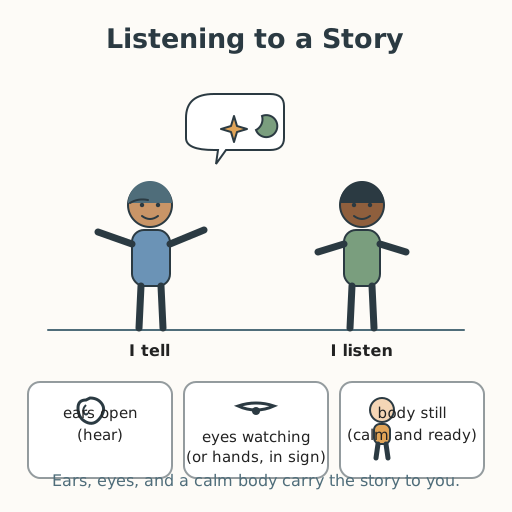
- Meet the three listening jobs (10 min). A good listener uses ears (open and ready), eyes (watching the storyteller), and a body (still and calm). If you listen with your eyes and hands instead — watching a story told in sign or in pictures — those are your listening tools too. Try all three (or the tools that work for you). Why does each one help you take in and remember the story?
- Hear the story (15 min). Listen to the whole story with your ears, eyes, and body. You can hold a soft prop if it helps your body stay calm. When something in the story makes you feel something — happy, worried, curious — notice it.
- Remember one thing (10 min). Think: what is one important thing that happened? Tell it to a partner in your own words.
- Close (5 min). Remember: listening is a gift you give. Your ears, eyes, and body are the tools that carry a story to you.
Differentiation
- Support: Give one listening job at a time; let a learner echo a repeated phrase or sound from the story instead of retelling an event.
- Extension: Invite learners to tell back two things and say which one felt most important, and why.
Assessment
- Formative (observation): Does the learner show ears, eyes, and body engaged during the story?
- Formative (oral): Can the learner share one thing that happened in the story in their own words — spoken, signed, pointed, drawn, or acted out?
Resources
- CASEL SEL Framework (foundational competencies; self-awareness and relationship skills that listening builds): https://casel.org/fundamentals-of-sel/
Home connection
At home, ask a grown-up to tell you a story you have never heard. Practice the three listening jobs, then tell back one thing you remember.