Lesson 02 — The Changing Sky
Learners notice what lives in the sky — sun, moon, stars — and how the sky changes from day to night and night to night, through sorting, looking up, and drawing.
Objectives
Objectives
- D06.S4.K.02 Observe and describe changes in the natural world (day and night, seasons, growth).
Essential question
What can you see in the sky, and how does it change?
Key vocabulary
Materials
Standard materials
- Sky pictures (sun, moon, stars) · 1 set Simple drawn or printed cards for sorting
- Paper and crayons · per learner
Low-tech / no-cost
- The real sky Go outside (or to a window) and look up; name what you see in the day sky and night sky
- Skin and ears Feel the sun's warmth in the day and cooler air at night; listen for the different sounds of day and night
- Stick and ground Draw the sun, moon, and stars in dirt or sand
Enriched / lab & device
- A moon-shape chart · 1 Pictures of the moon's changing shapes to look at and wonder over
- Binoculars or a small telescope (optional) · 1 per group
Works in different contexts
- large-group Hold up each sky card and invite the whole group to say whether they usually see it in the day, at night, or both
- self-directed A learner sorts the sky cards into "day," "night," and "sometimes both," then draws the sky they saw most recently
- outdoor-only Lie back and watch the real sky together; name everything you can see, and talk about how it will look different at night
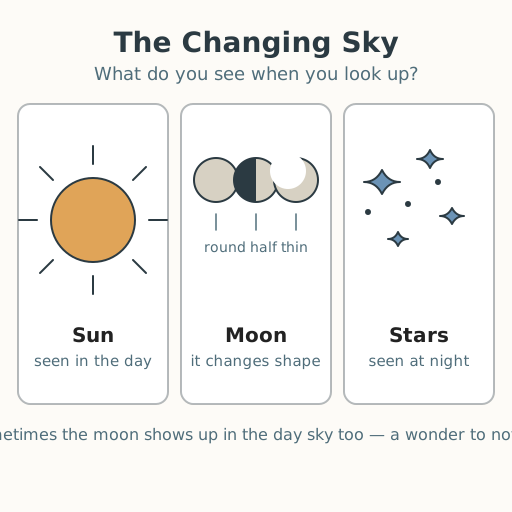
Lesson 2 — The Changing Sky
Summary
Learners look up and notice what lives in the sky — the sun, the moon, and the stars — and how the sky changes from day to night and from one night to the next. They sort, look, and draw their own sky.
Objectives
- Observe and describe changes in the sky from day to night. (D06.S4.K.02)
Connection
Lie on your back and look up — the sky is never empty. In the day you might see the sun, and sometimes the moon too; at night you might see the moon and stars. In a bright city you may see fewer stars, but the moon still comes and goes. Wherever you live, the sky changes, and you can watch it.
Materials
- Sky pictures (sun, moon, stars)
- Paper and crayons
Preparation
- Draw or print simple cards for the sun, the moon, and stars.
- If you can, note when the moon will be visible tonight so learners know when to look.
Facilitator note
This lesson is written to the learner (“you”). As facilitator, honor the many stories people everywhere have told about the sun, the moon, and the stars; hold them side by side without ranking one above another. The goal is wonder at a changing sky, not astronomy facts. Be ready for the moon to appear in the day sky too — that is a real, wonderful thing to notice.
Procedure
- Gather (5 min). What did the sky look like this morning? What do you think it will look like tonight?
- Sort the sky (10 min). Look at the sun, moon, and star cards. Sort them: which do you usually see in the day? At night? Which can you sometimes see in both? If you cannot see the cards, tell the sky aloud instead: “the sun warms my skin,” “the night is cool and full of sounds.”
- Moon watch (15 min). The moon seems to change a little night after night — sometimes round, sometimes thin, sometimes hiding. Draw the moon the way you remember it. If you can, check the moon over the next few nights and see if it changed.
- Draw your sky (10 min). Draw the sky you saw most recently — day or night — with everything you noticed in it.
- Close (5 min). The sky is full of changing lights, and people everywhere have looked up and wondered about them.
Differentiation
- Support: Use just two cards (sun and moon) and act out “bright day” and “dim night” with a partner. For learners who cannot see the cards, describe the day sky and night sky with skin (warm vs cool) and sound (busy vs quiet).
- Extension: Invite learners to watch the moon for several nights and draw three of its shapes in order.
Assessment
- Formative (observation): Can the learner name what they might see in the day sky and the night sky?
- Artifact (portfolio): The “my sky” drawing.
Resources
- NASA Space Place (kid-friendly space and sky explanations): https://spaceplace.nasa.gov/
Home connection
At home, look at the night sky with a grown-up. Count what you see — the moon, some stars — and tell them whether the moon looked round or thin.