Lesson 04 — Living Things Grow
Learners notice that living things grow and change — from seed to plant, baby to grown-up — and that growing is one of the ways we know something is alive.
Objectives
Objectives
- D06.S4.K.02 Observe and describe changes in the natural world (day and night, seasons, growth).
Essential question
What does it mean for a living thing to grow?
Key vocabulary
Materials
Standard materials
- Baby/grown-up picture pairs (seed-plant, puppy-dog, chick-hen) · 1 set Simple drawn or printed cards to match small to big
- Paper and crayons · per learner
Low-tech / no-cost
- Body and voice Act out growing — curl up small like a seed, then stretch tall like a plant; no cards needed
- A found seed, leaf, or shell Hold it and tell what it used to be like when it was small
Enriched / lab & device
- A real plant or pet to observe (if available) · 1 Any living thing learners can watch grow over days
Works in different contexts
- large-group Show each baby/grown-up pair big; invite the whole group to say which is the baby and which is the grown-up, then act out growing together
- self-directed A learner matches baby to grown-up cards and draws one thing growing from small to big
- outdoor-only Find a small plant, a big plant, and a seed on the ground; line them up from smallest to biggest and wonder how it happened
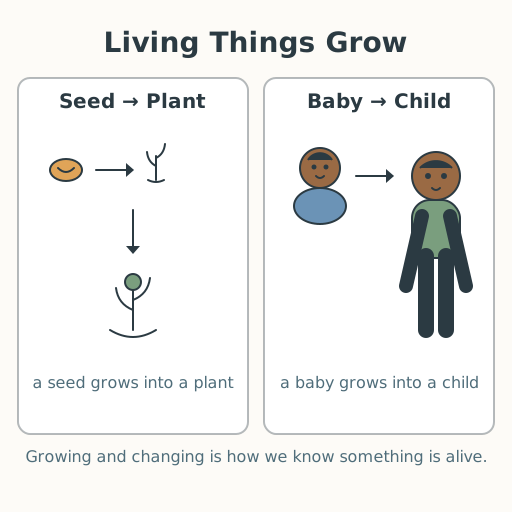
Lesson 4 — Living Things Grow
Summary
Learners explore what it means for a living thing to grow and change — from seed to plant, baby to grown-up — and discover that growing is one of the ways we recognize that something is alive.
Objectives
- Observe and describe how living things grow and change. (D06.S4.K.02)
Connection
You were once a tiny baby, and now you are bigger. A seed becomes a plant, a puppy becomes a dog, a chick becomes a hen. Living things grow and change — that is how we know they are alive.
Materials
- Baby/grown-up picture pairs (seed–plant, puppy–dog, chick–hen)
- Paper and crayons
Preparation
- Draw or print simple pairs: a seed and a plant, a puppy and a dog, a chick and a hen, a baby and a grown-up person.
- Clear space for acting out growing.
Facilitator note
This lesson is written to the learner (“you”). As facilitator, keep it gentle and concrete. Growth differs everywhere: a learner’s local plants and animals grow in their own way and at their own pace — honor that. If the “baby to grown-up person” pair feels tender for any learner (for example, a new sibling), let them choose a plant or animal pair instead. Care for living things is the quiet through-line.
Procedure
- Gather (5 min). Think of something that grew: a plant, an animal, or you. What was it like when it was small?
- Living and growing (10 min). Look at a seed and a rock. A seed can grow into a plant; a rock mostly stays the same. Growing and changing is something living things do. Act out growing: curl up small like a seed, then stretch up tall and leafy.
- Match baby to grown-up (15 min). Match each card to its grown-up: seed to plant, puppy to dog, chick to hen, baby to grown-up person. Which is the baby? Which is the grown-up?
- Draw it growing (10 min). Draw one thing small, and then the same thing bigger.
- Close (5 min). Living things grow and change. That is what makes them alive — and it happens everywhere, to every living thing.
Differentiation
- Support: Use two pairs only (seed–plant, chick–hen) and match together with a partner.
- Extension: Invite learners to draw three stages of one living thing — tiny, middle, and grown — in order.
Assessment
- Formative (observation): Can the learner match at least one baby to its grown-up and say “it grew”?
- Artifact (portfolio): The “small and big” drawing.
Home connection
At home, ask a grown-up to show you a picture of you or someone in your family when they were small. Talk about one way they have grown.