Lesson 05 — Watching Something Grow
Learners set up a growing thing to watch — a seed, or their own height — and begin a grow journal, guessing what will change and planning to look again day by day.
Objectives
Objectives
- D06.S4.K.02 Observe and describe changes in the natural world (day and night, seasons, growth).
Essential question
What changes do you notice as something grows, day by day?
Key vocabulary
Materials
Standard materials
- A seed (bean or lentil works well) · 1 per learner Any fast-germinating seed; a bean or lentil grows even on a damp cloth
- A cup or small jar · 1 per learner
- Damp cloth or a little soil, and water · per learner
- Paper and crayons (for a grow journal) · per learner
Low-tech / no-cost
- Any found seed and a damp cloth in any cup No soil or special seeds needed
- Height mark on a wall or a knotted string If no seed is available, watch your own body grow by marking your height now and again later
- Fingers and nose Feel the seed swell and the sprout's soft tip each day; smell the damp soil and tap the cup gently to hear the water — growth you can notice without eyes
Enriched / lab & device
- A clear cup or jar · 1 per learner So learners can watch roots appear through the side
- A camera or tablet · 1 per group Photograph the seed each day to see the change side by side
Works in different contexts
- large-group Plant the seeds together at a class table; each learner names their own cup and draws the first page of their journal
- self-directed A learner sets up their own seed, draws it, writes or draws a guess for next week, and keeps the journal going alone
- outdoor-only Plant a seed in a patch of ground outside and mark the spot with a stick; return each day to look and draw
Lesson 5 — Watching Something Grow
Summary
Learners begin a slow, real observation: they plant a seed (or mark their own height), draw what they see now, and make a guess about what will change. The watching continues over the next days — growth is seen, not told.
Objectives
- Observe and describe how a living thing grows and changes over time. (D06.S4.K.02)
Connection
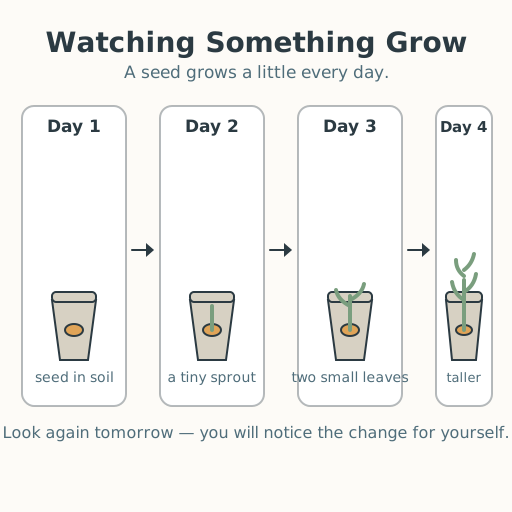
A seed does not become a plant all at once — it grows a little every day. You can watch a seed, or watch yourself grow, a little bit at a time. Watching closely, day after day, is how we see change happen.
Materials
- A seed (bean or lentil)
- A cup or small jar
- Damp cloth or a little soil, and water
- Paper and crayons (for a grow journal)
Preparation
- Set out a seed, cup, and damp cloth (or soil) for each learner.
- If seeds are unavailable, prepare a way to mark each learner’s height (a wall mark or a knotted string).
Facilitator note
This lesson is written to the learner (“you”). It begins an observation that runs several days — plan to return to the journals every day or two. If seeds are not available, watching a learner’s own height, a plant outside, or a pet works just as well; what matters is the repeated looking. Remind learners to be gentle with the living thing they are watching.
Procedure
- Gather (5 min). What could you watch grow? A seed, a plant, your own height, a pet, a younger person?
- Set up a grow-watch (15 min). Put a damp cloth (or a little soil) in your cup. Tuck your seed in where you can see it, and add a few drops of water. If you are watching your height instead, make a mark on the wall or tie a knot in your string. That mark is your “small.” You can notice growth with more than your eyes: feel the seed and the sprout with your fingers, smell the damp soil, and tap the cup gently to hear the water.
- Start a grow journal (10 min). On the first page, draw your seed (or your height mark) exactly as it is right now. Write or draw the date if you can.
- Guess and wonder (10 min). What will it look like in a week? Draw your guess on the next page. You are not sure — and that is okay.
- Close (5 min). You will look again tomorrow, and the next day. You will notice the change for yourself.
Differentiation
- Support: Watch together as a group; the facilitator draws the first journal page while learners watch and describe.
- Extension: Invite learners to draw the seed every day for a week and compare the pages to describe the change.
Assessment
- Formative (observation): Can the learner describe their seed (or height) “now” and make a guess about “later”?
- Artifact (portfolio): The grow journal, added to over the following days.
Home connection
At home, ask a grown-up to help you find something small that is growing — a plant, a sibling, a pet, or you. Tell them what you think it will look like in a week.