Lesson 06 — Changes All Around Me
Learners hunt for change in the world right around them — the sky, the weather, the light, and growing things — and draw one change they noticed, discovering that change is everywhere.
Objectives
Objectives
- D06.S4.K.02 Observe and describe changes in the natural world (day and night, seasons, growth).
Essential question
What changes can you notice all around you, every day?
Key vocabulary
Materials
Standard materials
- Paper and crayons · per learner
- A change hunt checklist (simple pictures) · 1 per pair Icons for sky, weather, plant, animal, light, water
Low-tech / no-cost
- Eyes, ears, nose, and skin (and a window or doorway) A change hunt needs no checklist — just notice and point; a sound, a smell, or warmer or cooler air all count as changes
- A stick for pointing Point to changes outdoors and name them aloud
Enriched / lab & device
- A simple thermometer or rain gauge (if available) · 1 per group A tool for watching weather change day to day
Works in different contexts
- large-group Do the change hunt as a whole group walk (or window watch); learners call out one change each and the facilitator records them
- self-directed A learner sits by a window or outside for a few minutes, finds three changes, and draws one of them
- outdoor-only Walk outside and find three changes with your own eyes — a cloud moved, a leaf fell, a shadow grew — then draw one
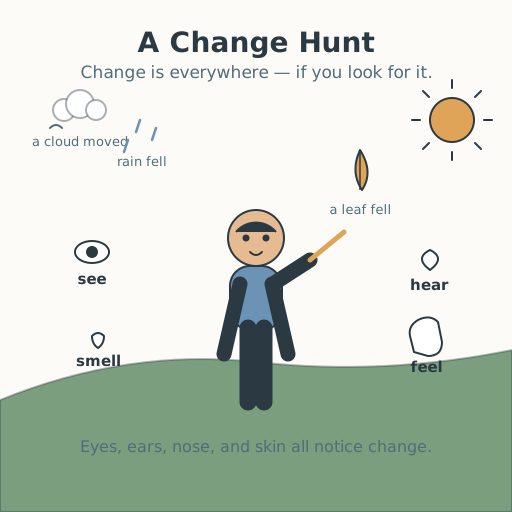
Lesson 6 — Changes All Around Me
Summary
Learners discover that change is happening everywhere, all the time — in the sky, the weather, the light, and the living things around them. They hunt for changes, then draw one they noticed.
Objectives
- Observe and describe changes in the natural world all around them. (D06.S4.K.02)
Connection
The world is always changing a little: the weather changes, the sky changes, water moves, and living things grow. You do not have to go far — changes are happening right where you are, and you can find them.
Materials
- Paper and crayons
- A change hunt checklist (simple pictures)
Preparation
- Prepare a simple picture checklist: sky, weather, a plant, an animal, light, water.
- Decide on a walk route or a good window for watching.
Facilitator note
This lesson is written to the learner (“you”). As facilitator, keep the change hunt safe and gentle. Weather and growing food are natural tie-ins: farmers and gardeners everywhere watch the weather and the seasons to know when to plant and harvest — that is people and the natural world changing together. Keep the tone of wonder, not of worry.
Procedure
- Gather (5 min). What changed between yesterday and today? The sky? The weather? A plant? You?
- Change hunt (15 min). Walk around (or look out the window). Point to three changes you notice with your eyes, ears, nose, or skin: the sky, the weather, a plant or animal, the light, the water, a sound, a smell, warmer or cooler air. Check them off your picture list.
- Weather watch (10 min). What is the weather today — hot, cool, wet, dry, windy, still? Has it changed since this morning? How can you tell?
- Draw a change (10 min). Draw one change you noticed on your hunt.
- Close (5 min). Change is everywhere, all the time — if you look for it. You found it today.
Differentiation
- Support: Hunt for just one change together, and describe it aloud before drawing. A change found by ear (a new sound), nose (a smell), or skin (cooler air) counts just as much as one found by eye.
- Extension: Invite learners to keep a “change list” all day and share three changes they noticed after the lesson.
Assessment
- Formative (observation): Can the learner point to and name one change in the world around them?
- Artifact (portfolio): The “a change I noticed” drawing.
Home connection
At home, watch one thing — a window, a plant, or the sky — in the morning and again in the evening. Tell a grown-up one thing that changed.