Lesson 04 — Stories from Far and Near
Learners listen to a gentle story from another culture and practice respectful listening, then share one thing they noticed.
Objectives
Objectives
- D08.S2.K.01 Listen to a story or song from another culture and share one thing they noticed.
Essential question
What can I learn from a story from another place?
Key vocabulary
Materials
Standard materials
- A told story from another culture · 1 A gentle, well-told story chosen by the facilitator, ideally told or recorded by someone from that culture
- Cushion or mat · per learner For settling into listening
Low-tech / no-cost
- A live or remembered story The facilitator tells a gentle story from another culture they know well and can tell respectfully
- Quiet circle No object needed; a calm listening space is the whole material
- Story in pictures or signs A sequence of simple drawn pictures, or a signed retelling, so the story can be seen and not only heard
Enriched / lab & device
- Audio recording of a story · 1 per group A recording of a storyteller telling a story from their own culture
- Story pictures or shadow play · 1 set Simple images or shadows that go with the story, used without changing its meaning
Works in different contexts
- large-group Gather close in a circle; one facilitator tells while others hold a quiet "listening body" so everyone can hear
- self-directed The learner listens to a recorded story alone, then tells a grown-up or peer one thing they noticed
- outdoor-only Tell or play the story outside in a quiet spot, letting a natural sound (wind, birds) be part of the listening
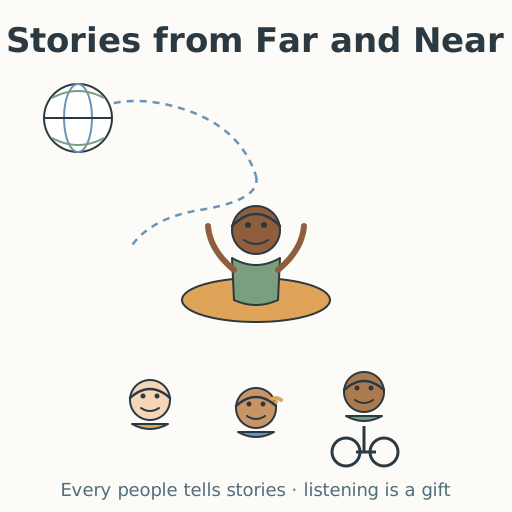
Lesson 4 — Stories from Far and Near
Summary
Learners listen to a gentle story from another culture, held respectfully, and share one thing they noticed. The focus is listening well, not retelling facts.
Objectives
- Listen to a story or song from another culture and share one thing they noticed. (D08.S2.K.01)
Connection
Every people on Earth tells stories — to teach, to comfort, to remember. When you listen to a story from a place far from yours, you are meeting people you may never see. Listening carefully is a way of honoring their story as a gift.
Materials
- A told story from another culture (chosen by the facilitator)
- Cushions or mats for a listening circle
Preparation
- Choose a gentle story from another culture and learn to tell it well, or prepare a recording of a storyteller from that culture.
- Set up a calm, comfortable listening circle.
Facilitator note
Written to the learner (“you”) so it works in a classroom and for a self-directed learner. Choose the story with care: it should be gentle, told by or faithful to the culture it comes from, and never a caricature or a “costume.” Avoid stories that mock, exoticize, or reduce a whole people to one trait. A recording of a storyteller from that culture is best. Keep the retelling respectful; the goal is one honest noticing, not a quiz.
Procedure
- Gather (5 min). Settle into a calm listening body: hands still, ready to listen with your eyes or your ears.
- Listen (15 min). Hear the story all the way through without stopping. If a picture comes to your mind, let it stay there quietly.
- Notice (10 min). Think of one thing you noticed: a character, a sound, a feeling, a place in the story.
- Share (10 min). Take turns sharing, “I noticed…” — say it, point to a picture, draw it, or sign it. Each noticing is welcome; there is no right answer.
- Close (5 min). Many peoples tell stories, and each story is a gift. When we listen carefully, we honor it.
Differentiation
- Support: Offer a picture or a gesture to go with the story; ask “what did you see in your mind?”
- Deaf or hard of hearing: Tell the story in sign or with a picture sequence, so the story is seen, not only heard; a learner may “listen” with their eyes.
- Non-speaking: A learner may point to a picture, draw, act, or sign their noticing instead of saying it aloud.
- Extension: Invite learners to draw the one thing they noticed and add a caption.
Assessment
- Formative (observation): Does the learner listen through the story and share one genuine noticing?
- Formative (oral): Is the noticing specific (“I noticed the drum,” not just “I liked it”)?