Lesson 01 — Kind and Helpful Things
Learners name kind and helpful things they can do, practice saying why each is good, and draw one kind act of their own.
Objectives
Objectives
- D09.S1.K.01 Name something kind or helpful to do for a friend or animal and say why it is good.
Essential question
What is something kind or helpful I can do, and why is it good?
Key vocabulary
Materials
Standard materials
- Kind-act picture cards · 1 set Pictures of simple kind or helpful acts (sharing, helping carry, comforting, saying a kind word)
- Crayons and paper · per learner
Low-tech / no-cost
- Voice and body Act out each kind act together instead of using cards; no pictures needed
- Found objects A stick, a cup, or a scarf to stand in for something to share or help carry
Enriched / lab & device
- Laminated kind-act cards · 1 set per pair Durable, wipeable cards for repeated sorting and matching of kind acts
- Camera or tablet · 1 per group A photo app to capture learners doing a kind act and build a class "kind acts" gallery
Works in different contexts
- large-group Hold up each card large enough for all to see, and invite the whole group to act out each kind act together before naming why it is good
- self-directed The learner looks at each card, names the kind act, and tells a grown-up or writes one reason it is good
- outdoor-only Find kind acts outdoors (watering a plant, moving a rock from a path, leaving a flower for a bee), then name each and say why it is good
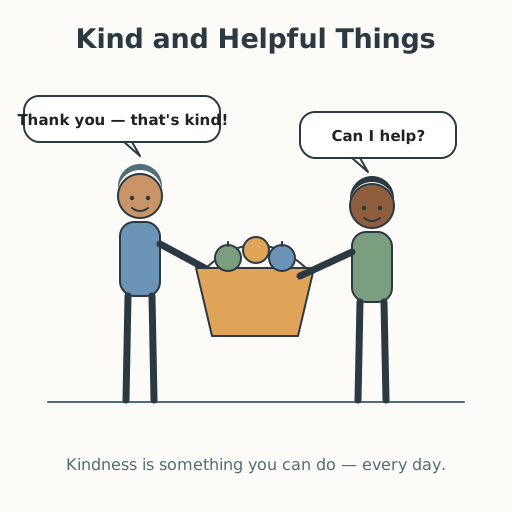
Lesson 1 — Kind and Helpful Things
Summary
Learners meet the idea that kindness is something we can do. They name kind and helpful acts, practice saying why each one is good, and draw one kind act they could do themselves.
Objectives
- Name something kind or helpful to do for a friend or animal and say why it is good. (D09.S1.K.01)
Connection
Think of a time someone helped you — holding a door, sharing a snack, or saying something warm when you felt sad. That feeling is kindness, and you can give it to someone else too. Everywhere in the world, people show care in small ways every day: carrying something heavy for a neighbor, watering a plant, or comforting a friend.
Materials
- Kind-act picture cards (sharing, helping carry, comforting, saying a kind word)
- Crayons and paper
Preparation
- Prepare or draw a set of simple kind-act picture cards.
- Arrange a circle for gathering and acting out.
Facilitator note
This lesson is written to the learner (“you”) so it works in a classroom and for a self-directed learner. Kindness here is framed as mutual — it is good for the person helped and for the person helping — not as obedience or earning praise. Avoid labeling children “good” or “bad”; describe the act (“that was kind”) rather than the child (“you are kind”). Accept every learner’s example; there is no single right kind act.
Procedure
- Gather (5 min). Sit comfortably. Think of a time someone was kind or helpful to you. How did it feel?
- Meet kind acts (10 min). Look at each card and name what the person is doing. Act it out together: share, help carry, comfort, say a kind word. For each one, say why it is good — because it helps someone feel better or makes something easier.
- Why is it good? (10 min). Pick two cards. For each, finish the sentence: “It is good because…” (for example, “…the friend smiles and feels less alone”). Notice that helping feels good for the helper too.
- Draw your kind act (15 min). Draw one kind or helpful thing you could do — for a friend, a family member, or an animal. Tell a partner what it is and why it is good.
- Close (5 min). Remember: kindness is something you can do, every day, in many small ways.
Differentiation
- Support: Offer just two cards; model one sentence “It is good because…” with a word and a gesture.
- Extension: Invite learners to draw two kind acts and tell a time they saw someone else do one.
Assessment
- Formative (observation): Can the learner name a kind or helpful act and give one reason it is good?
- Artifact (portfolio): The “my kind act” drawing, kept in the learner’s portfolio.
Home connection
Tonight, do one small kind or helpful thing at home — help set the table, put away shoes, or say something warm. Tell a grown-up why it was good.
Resources
- CASEL SEL Framework (foundational competencies): https://casel.org/fundamentals-of-sel/