Lesson 02 — Helping a Friend or Animal
Learners practice gentle, specific ways to help a friend or an animal and say why caring for a living thing is good.
Objectives
Objectives
- D09.S1.K.01 Name something kind or helpful to do for a friend or animal and say why it is good.
Essential question
How can I help a friend or an animal, and why does it matter?
Key vocabulary
Materials
Standard materials
- Friend-and-animal picture cards · 1 set Pictures of a friend and an animal in need of gentle help (a friend who fell, a thirsty plant's birdbath, a pet that needs water)
- Crayons and paper · per learner
Low-tech / no-cost
- Voice and body Act out helping a friend or an animal; use a soft toy as the animal
- Found objects A cup and a little water (outdoors) to practice giving a plant or dish a drink
Enriched / lab & device
- Laminated friend-and-animal cards · 1 set per pair Durable cards for sorting "how to help a friend" and "how to help an animal"
- Camera or tablet · 1 per group A photo app to capture learners practicing a gentle helping act
Works in different contexts
- large-group Act out each helping scene together; invite the whole group to show a "gentle hands" version of each help
- self-directed The learner chooses a friend-card or an animal-card, names one way to help, and says why it matters
- outdoor-only Look for a real living thing to help gently — a plant to water, an ant to step around, a leaf to leave on the ground — and say why it is good
Lesson 2 — Helping a Friend or Animal
Summary
Learners focus their kindness on a friend and on an animal (or other living thing). They practice gentle, specific ways to help, and say why caring for a living thing is good.
Objectives
- Name something kind or helpful to do for a friend or animal and say why it is good. (D09.S1.K.01)
Connection
A friend who trips, a thirsty plant, a bird with no water — living things need help sometimes, and you can give it. Around the world, people care for friends, pets, livestock, and wild creatures in many small ways: filling a water dish, giving a hug, making sure an animal has shade. Helping a living thing is a way of saying “you matter.”
Materials
- Friend-and-animal picture cards
- Crayons and paper
Preparation
- Prepare or draw friend-and-animal picture cards showing gentle, safe ways to help.
- Arrange space for acting out (and a soft toy “animal” if available).
Facilitator note
Written to the learner (“you”). Keep help gentle and safe: a child never touches a strange or wild animal without an adult, and never puts themselves in danger to help. Frame caring as a responsibility we choose, not a rule to obey. Across cultures people care for animals differently — as pets, as working partners, or as wild neighbors — and all are valid. Avoid ranking one kind of caring above another.
Procedure
- Gather (5 min). Think of a friend and an animal you know. What is one thing each of them might need?
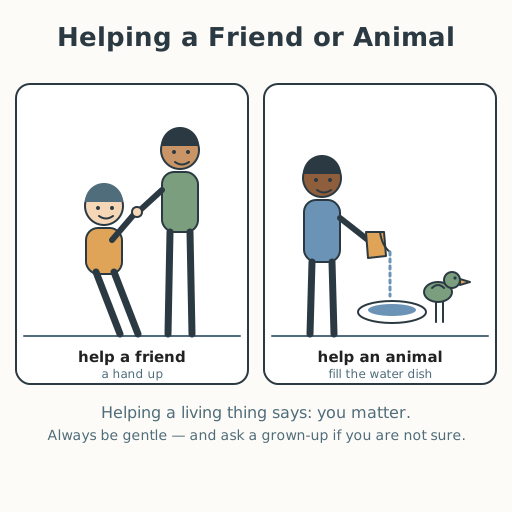
- Help a friend (10 min). Look at the friend cards and name what the friend needs. Act out gentle help: a hand up, a kind word, sitting together. Say why it is good.
- Help an animal (10 min). Look at the animal cards. Act out gentle care: a dish of water, a soft voice, stepping carefully around a tiny creature. Say why it is good — because the animal is safe and well.
- Draw your help (15 min). Draw yourself helping a friend or an animal in one gentle, safe way. Tell a partner what you did and why it matters.
- Close (5 min). Remember: helping a living thing — friend or animal — is caring in action. Always be gentle, and ask a grown-up if you are not sure.
Differentiation
- Support: Choose only a friend or an animal; model one gentle helping gesture.
- Extension: Invite learners to think of a wild animal or plant they could help (leaving water out safely, not pulling leaves) and draw it.
Assessment
- Formative (observation): Can the learner name one gentle way to help a friend or animal and give a reason it is good?
- Artifact (portfolio): The “helping a friend or animal” drawing, kept in the learner’s portfolio.
Home connection
At home, find one gentle way to help a living thing — a person, a pet, or a plant — and tell a grown-up why it was good.