Lesson 03 — Real or Make-Believe?
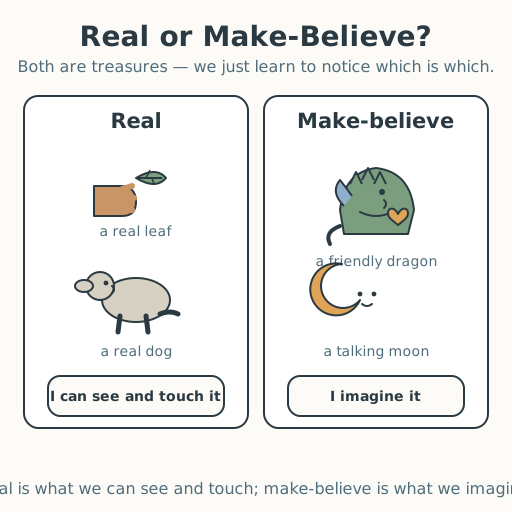
Learners sort real things from make-believe ones — a real dog from a dragon, a real leaf from a talking moon — and learn that pretend is a treasure we love, even though it is not real.
Objectives
Objectives
- D10.S2.K.01 Tell the difference between a real thing they see and a made-up picture or story.
Essential question
How can I tell a real thing from a made-up picture or story?
Key vocabulary
Materials
Standard materials
- A set of "real" and "make-believe" picture cards · 1 set Real things (a dog, a tree, a cup, a leaf) and make-believe things (a dragon, a unicorn, a talking moon)
- Two sorting baskets or hoops labeled "real" and "make-believe" · 2
- A real leaf, stone, or spoon to hold · 1
Low-tech / no-cost
- Found objects and words Hold up a real object and name it, then "pretend" one (an invisible dragon); sort with voice and pointing, no cards or hoops needed
- A shared walk Point to real things you can see and touch, then make up one make-believe thing and giggle about it together
Enriched / lab & device
- A real photograph and a drawn cartoon of the same animal · 1 pair To compare "a real picture of a dog" with "a made-up drawing of a dog"
- A picture book with both real and pretend pages · 1 Read together and stop to ask "real or make-believe?" on each page
Works in different contexts
- large-group Hold each card up big; the whole group calls out "real!" or "make-believe!" and drops the card in the right basket
- self-directed A learner sorts the cards into two piles alone and then draws one real thing and one make-believe thing side by side
- outdoor-only Touch real things outside (a leaf, a stone, a tree) and then invent one make-believe creature that "lives" in the space, naming why it is pretend
Lesson 3 — Real or Make-Believe?
Summary
Learners practice telling real things from make-believe ones by holding a real object and sorting picture cards into “real” and “make-believe” piles. The lesson is gentle and joyful: make-believe is a treasure to love, not a trick to fear — we just learn to notice which is which.
Objectives
- Tell the difference between a real thing they see and a made-up picture or story. (D10.S2.K.01)
Connection
Some things are real — you can see them, touch them, and hold them, like a leaf or a stone or a spoon. Some things are make-believe — a dragon, a unicorn, a talking moon — wonderful and fun, but not real. Both kinds are good. We just learn to notice which is which.
Materials
- A set of “real” and “make-believe” picture cards
- Two sorting baskets or hoops labeled “real” and “make-believe”
- A real leaf, stone, or spoon to hold
Preparation
- Make or gather picture cards: real things (dog, tree, cup, leaf) and make-believe things (dragon, unicorn, talking moon).
- Label two baskets or hoops “real” and “make-believe.”
Facilitator note
This lesson is written to the learner (“you”). As facilitator, keep it warm and wonder-full, never cynical. Make-believe is not “bad” or “a lie” — it is pretend, and pretend is one of the great gifts of being human. The goal at age five is a soft distinction, not suspicion. If a learner insists a dragon could be real, honor the wonder: “Some people tell stories about dragons — what a wonderful story!” Then gently return to “a real thing is one I can see and touch.” Do not shame any media or screen; frame it as noticing, not judging.
Procedure
- Gather (5 min). Hold the real leaf, stone, or spoon in your hand. This is real — you can see it and touch it.
- Meet make-believe (5 min). Now think of a dragon or a talking moon. It is wonderful — and it is make-believe. You cannot touch it. Pretend is fun, and it is not real.
- Sort the cards (15 min). Look at each card. Ask: “Can I see and touch this in the real world, or is it made up?” Drop each card into the “real” basket or the “make-believe” basket.
- Real or make-believe voices (10 min). Say one real sentence (“I saw a bird”) and one pretend sentence (“The bird sang me a song about the moon”). Which is which? How do you know?
- Draw one of each (5 min). Draw one real thing and one make-believe thing.
- Close (5 min). Real and make-believe are both treasures. Real is what we can see and touch; make-believe is what we imagine — and both can live happily in the same story, as long as we know which is which.
Differentiation
- Support: Sort just two cards — one real, one make-believe — and hold the real object while deciding.
- Low vision / blind: Describe each card aloud as it is shown — “this one shows a real dog; you can see and touch a dog. This one shows a dragon; a dragon is make-believe.” The learner decides by voice, by pointing to the named basket, or by saying “real” or “make-believe.” The real-object step already works by touch, and the make-believe step works by hearing the description aloud.
- Extension: Invite learners to make up a make-believe creature and tell one real thing about it (it has fur, it breathes) and one pretend thing (it breathes fire).
Assessment
- Formative (observation): Can the learner place a real card and a make-believe card in the correct pile and say why?
- Artifact (portfolio): The “one real, one make-believe” drawing.
Home connection
At home, find one real thing you can touch and think of one make-believe thing from a story. Tell a grown-up which is which and how you know. Ask them to tell you a make-believe story they loved as a child.