Lesson 04 — Stories Real and Pretend
Learners listen to a true story and a pretend story, signal which is which, and make up one of each — learning that both real and make-believe stories are worth telling, and that we can tell them apart.
Objectives
Objectives
- D10.S2.K.01 Tell the difference between a real thing they see and a made-up picture or story.
Essential question
How can a story be real (true) or pretend (made-up), and how do I know?
Key vocabulary
Materials
Standard materials
- Two short stories to read or tell aloud · 2 One true story about something that really happened, one pretend story with a talking animal or flying house
- "Real" and "Pretend" picture cards · 1 set To hold up as a signal when a story is real or pretend
Low-tech / no-cost
- Told-from-memory stories Tell one true thing that happened today and one made-up tale; learners signal real or pretend with a thumbs-up or a wiggle
- Act out, sign, or picture the story Tell each story with hands, body, sign language, or drawn pictures so learners who do not hear can still follow which is real and which is pretend
- Voice and body Act out the difference — stand still and point for "real," flap arms and twirl for "pretend"
Enriched / lab & device
- A small "real and pretend" storybook · 1 A book with clear real pages (photographs) and pretend pages (drawings of talking animals) to page through together
- A device to record a story · 1 per group Learners record their own one-sentence real story and one-sentence pretend story and listen back
Works in different contexts
- large-group Tell both stories to the whole group; everyone raises a "real" or "pretend" card at the end and says why, then acts out the difference together
- self-directed A learner makes up one true and one pretend sentence, says each aloud, and draws the pretend one
- outdoor-only Sit under a tree and take turns telling one real thing you saw outside and one pretend thing, signaling which is which
Lesson 4 — Stories Real and Pretend
Summary
Learners hear two short stories — one true, one pretend — and learn to tell them apart. They signal “real” or “pretend” and say why, then create one of each. Real and pretend stories are both treasures; this lesson is about noticing the difference, not ranking them.
Objectives
- Tell the difference between a real thing they see and a made-up picture or story. (D10.S2.K.01)
Connection
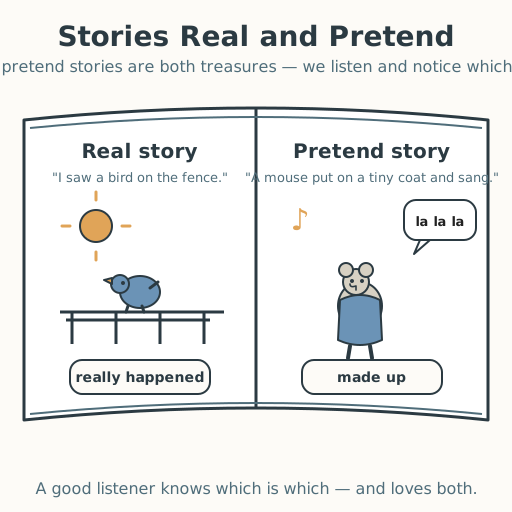
People tell stories every day. Some stories are true — they tell about things that really happened, like “yesterday I saw a bird on the fence.” Some stories are pretend — they tell about talking animals and flying houses and magic. Both are wonderful. We just learn to listen and notice: did this really happen, or is it made up?
Materials
- Two short stories to read or tell aloud (one true, one pretend)
- “Real” and “Pretend” picture cards to signal with
Preparation
- Choose or make up a short true story (“This morning I drank water from a cup”) and a short pretend story (“A mouse put on a tiny coat and sang a song”).
- Set out the “real” and “pretend” signal cards.
Facilitator note
This lesson is written to the learner (“you”). As facilitator, tell the two stories with warmth and delight — pretend stories are a joy, not a trap. Keep the distinction soft: a true story is about something that really happened; a pretend story is made up. If a learner asks whether a favorite tale is “true,” say gently: “It is a wonderful story — it is make-believe, and that is one reason we love it.” No story, screen, or culture is being judged here; we are only practicing noticing. If a learner names a story their family holds as true — a sacred story or a tale of their people — honor it and do not call it make-believe; gently steer the practice back to clearly fictional examples like talking animals and magic. Noticing is the goal, never ranking what another family holds dear.
Procedure
- Gather (5 min). Think of a story you love. Is it about something that really happened, or something made up?
- Hear two stories (15 min). Listen to Story One. Then listen to Story Two. Which one is true — about something real that happened? Which one is pretend — made up, with talking animals or magic? Hold up your “real” or “pretend” card and say why.
- How do we know? (10 min). A true story can be checked — you could see it or ask someone who was there. A pretend story cannot happen in the real world — animals do not talk, houses do not fly. That is how we tell them apart.
- Make up one of each (10 min). Tell a partner one true story (something that really happened to you) and one pretend story. Ask your partner to guess which is which.
- Close (5 min). Real and pretend stories are both worth telling. A good listener knows which is which — and loves both.
Differentiation
- Support: Use just the two told stories and a thumbs-up (real) or a wiggle (pretend) instead of cards; decide together aloud.
- Deaf / hard of hearing: Tell the stories in sign language, acted out, or with drawn pictures; use the thumbs-up (real) / wiggle (pretend) signals or sign “real” and “pretend.” A non-speaking learner can signal, point, gesture, or draw to show which is which.
- Low vision / blind: The two stories are told aloud, so they can be followed by ear; signal “real” and “pretend” with a spoken word, a clap, a thumbs-up, or a wiggle instead of holding up a card, and retell the story back by voice.
- Extension: Invite learners to tell a partner one true and one pretend story and explain one clue that gives each away.
Assessment
- Formative (observation): Can the learner signal “real” and “pretend” correctly for the two stories and give a simple reason?
- Artifact (portfolio): The learner’s own one-real, one-pretend drawing or retelling (recorded in words by the facilitator).
Home connection
Ask a grown-up to tell you one true story from their day and one made-up bedtime tale. Then tell them which is which and how you know.