Lesson 05 — What Living Things Need
Learners observe a living plant and discover what it needs to live and grow — sun, water, food, and air — and sort those needs from things no living thing needs.
Objectives
Objectives
- D10.S3.K.01 Observe and name a living thing and something it needs to live (sun, water, food).
Essential question
What does a living thing need to live and grow?
Key vocabulary
Materials
Standard materials
- A real plant (or a clear picture of one) · 1 Any living plant learners can observe up close
- "What living things need" cards · 1 set Sun, water, food (soil/leaf for a plant), air — plus a few things they do not need (a toy, a hat)
- Paper and crayons · per learner
Low-tech / no-cost
- A found plant or leaf Observe any living plant outside; no cards or pictures needed
- Touch, smell, and sound Feel a leaf's shape and stem, smell a crushed leaf, listen to leaves rustle in the wind — observe the plant without sight
- Voice and body Act out a seed growing into a plant, reaching for sun and "drinking" water, to feel what a plant needs
Enriched / lab & device
- A small plant to care for over days · 1 per group Water it daily and watch it respond to sun and water
- A magnifier · 1 per pair Look closely at leaves and stems to see a living thing up close
Works in different contexts
- large-group Show the plant and the need cards big; the whole group says each need aloud and acts out the plant growing toward sun and water
- self-directed A learner observes a plant, sorts the need cards, and draws the plant with its sun, water, food, and air
- outdoor-only Find a living plant outside and, next to it, the sun in the sky and water in the ground; name each need while touching or pointing to it
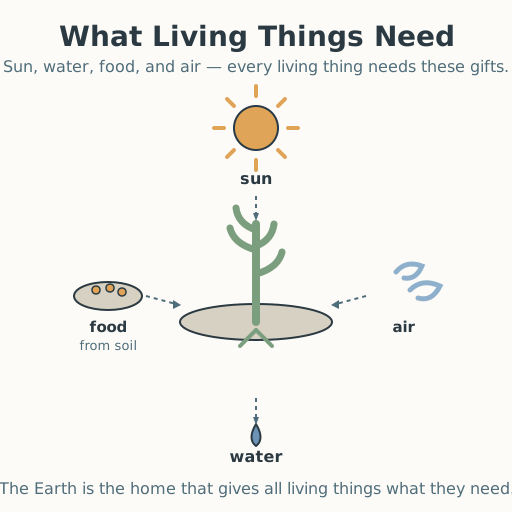
Lesson 5 — What Living Things Need
Summary
Learners look closely at a living plant and name what it needs to live and grow: sun, water, food, and air. They sort those needs from things a plant does not need, and they act out a seed growing toward the sun. Caring for what living things need becomes the quiet thread of the lesson.
Objectives
- Observe and name a living thing and something it needs to live (sun, water, food). (D10.S3.K.01)
Connection
You are a living thing. So is a plant, a bird, a fish, a tree. Every living thing needs the same few gifts to live and grow: sun, water, food, and air. Without them, a plant cannot grow and a bird cannot fly. Let’s look at a living plant and see what it needs.
Materials
- A real plant (or a clear picture of one)
- “What living things need” cards (sun, water, food, air; plus a few things they do not need, like a toy or a hat)
- Paper and crayons
Preparation
- Bring a real plant (or a clear picture) for learners to observe.
- Prepare need cards: sun, water, food, air, and a few decoys (toy, hat).
Facilitator note
This lesson is written to the learner (“you”). As facilitator, keep it concrete and tender: a plant is a living thing that needs care, and learners can be its helpers. The needs of a plant (sun, water, food from soil, air) are shared, with small differences, by every living thing — including us. If learners wonder about animals, honor it: an animal needs food and water and air too, and a place to rest. Frame the Earth as a home that gives all living things what they need, not as a store of things to use up.
Procedure
- Gather (5 min). Look at the plant. Is it alive? How can you tell? It grows and changes — that is what living things do.
- What does it need? (10 min). Point to the plant and name what it needs: sun (light), water, food (from the soil), and air. Touch the leaves gently and notice how they reach for the sun. If you cannot see the plant, feel its leaves and stem, smell a leaf, and listen to the leaves rustle — you are observing, too.
- Sort the cards (15 min). Look at each card. Does a plant need this to live? Sort the “needs” (sun, water, food, air) from the “not needs” (a toy, a hat).
- Grow like a seed (10 min). Curl up small like a seed in the soil. Feel the sun and the rain. Slowly stretch up, up, up into a plant with leaves reaching for the light.
- Close (5 min). Every living thing — a plant, a bird, a fish, and you — needs sun, water, food, and air. The Earth is the home that gives us these things, and we can help care for it.
Differentiation
- Support: Sort just two cards (sun and water) and point to the sun in the sky or a picture while saying “the plant needs this.”
- Low vision / blind: Observe by touch, smell, and sound — feel the leaf and stem, smell a crushed leaf, listen to leaves in the wind; a partner or facilitator names each part as it is touched.
- Extension: Invite learners to name one thing an animal needs (food, water, air) and compare it with what the plant needs.
Assessment
- Formative (observation): Can the learner name one living thing and one thing it needs to live?
- Artifact (portfolio): The drawing of the plant with its sun, water, food, and air.
Home connection
At home, find one living thing — a plant, a pet, or a tree outside. Tell a grown-up one thing it needs to live, and, with their help, give it a little of what it needs (a splash of water, a sunny spot).