Lesson 06 — Watching a Living Thing
Learners sit quietly and watch one living thing — a plant, a bug, a bird, a pet — noticing what it does and what it needs, and record what they see in words or a drawing.
Objectives
Objectives
- D10.S3.K.01 Observe and name a living thing and something it needs to live (sun, water, food).
Essential question
What can I learn by watching a living thing closely?
Key vocabulary
Materials
Standard materials
- A living thing to observe · 1 A plant, a tree, a bug in a jar, a bird, a fish, or a pet — whatever is close at hand
- Paper and crayons · per learner
Low-tech / no-cost
- Patient senses — eyes, ears, hands, nose Sit quietly and observe any living thing nearby with whatever senses work best — sight, hearing, touch, smell; no tools needed
- Telling with words Say aloud what you notice — "it is green," "it moves," "it drinks water" — instead of drawing
Enriched / lab & device
- A magnifier or "bug viewer" · 1 per pair To look very closely at leaves, stems, or a small creature
- A simple observation notebook · per learner Folded paper stapled into a tiny book to draw what was noticed each day
Works in different contexts
- large-group Observe one shared living thing together; take turns saying one thing you notice, then everyone draws the same plant or animal
- self-directed A learner picks one living thing, sits quietly for five minutes, and draws or says three things they notice about it
- outdoor-only Sit by a tree, an anthill, or a bird, and watch in silence; then share one thing it did and one thing it needs
Lesson 6 — Watching a Living Thing
Summary
Learners practice the gentle skill of observing: sitting quietly and watching one living thing — a plant, a bug, a bird, a fish, a pet — and noticing what it does and what it needs. They record what they see in words or a drawing, learning that looking closely is a kind of caring.
Objectives
- Observe and name a living thing and something it needs to live (sun, water, food). (D10.S3.K.01)
Connection
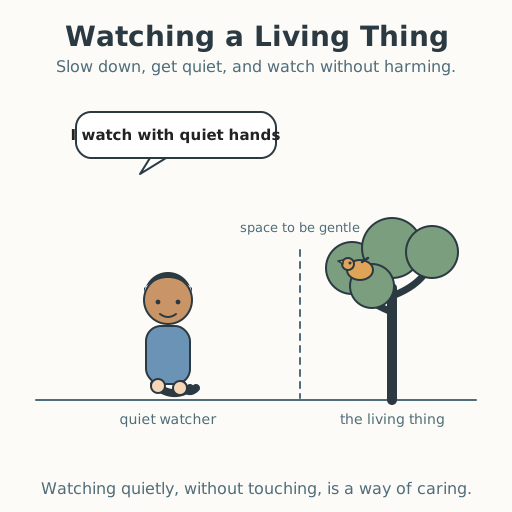
There is a secret way to learn about living things: you slow down, get quiet, and watch. A scientist is first a watcher. When you watch a plant turn toward the sun or a bird look for food, you learn what it needs and what it is like — just by paying attention.
Materials
- A living thing to observe (a plant, a tree, a bug, a bird, a fish, or a pet)
- Paper and crayons
Preparation
- Choose a living thing that is easy and safe for learners to observe quietly.
- Arrange a comfortable place to sit and watch.
Facilitator note
This lesson is written to the learner (“you”). As facilitator, protect the quiet — silence is the heart of observation, and young learners may need a little structure to settle into it. Guide gentle hands and eyes: we watch without harming, and we never hurt a living thing just to look at it. If a bug is observed, remind learners it is a guest, not a toy. Whatever living thing is at hand is perfect; there is no “right” animal to watch.
Procedure
- Gather (5 min). Find your living thing and get comfortable. Take one slow, quiet breath.
- Watch (10 min). Use your senses — eyes, ears, hands, nose. What does the living thing do? Does it move, grow, or turn toward the sun? What does it need — sun, water, food, air? Watch without harming. If it is safe to touch (a leaf, a stem, a piece of bark), feel it gently; if you cannot see it, listen for its sounds and smell what is near it.
- Notice and name (10 min). Say three things you noticed. “It is green. It reaches for the sun. It drinks water from the ground.” Name one thing it needs to live.
- Draw what you saw (15 min). Draw your living thing and one thing it needs — draw the sun above it, the water beside it, or the food it eats.
- Close (5 min). When we watch a living thing quietly, we get to know it — and knowing it helps us care for it. What did you learn that you did not know before?
Differentiation
- Support: Observe together and name just one thing the living thing does and one thing it needs; draw together.
- Low vision / blind: Observe through touch (a leaf, a stem, bark), sound (a bird call, leaves rustling), and smell (a crushed leaf, damp soil); a partner or facilitator describes what they see as the learner feels and listens.
- Extension: Invite learners to watch the same living thing again tomorrow and tell one thing that is the same and one thing that changed.
Assessment
- Formative (observation): Can the learner name the living thing and one thing it needs, based on what they watched?
- Artifact (portfolio): The observation drawing, kept in the learner’s portfolio.
Home connection
At home, pick one living thing — a plant on the windowsill, a pet, a tree outside — and watch it quietly for a little while. Tell a grown-up one thing you noticed and one thing it needs.