Lesson 07 — Caring for Our Earth Home
Learners choose and actually do one small act of care for the Earth — watering a plant, turning off a tap, or putting litter in the right place — and say why it helps, learning that small acts of care add up.
Objectives
Objectives
- D10.S4.K.01 Do one small act of care for the environment and say why it helps.
Essential question
How can I do one small act of care for the Earth, and why does it help?
Key vocabulary
Materials
Standard materials
- Supplies for one small act of care · per group A watering can or cup, a small plant or seed, a bin for litter, or a tap to practice turning off
- Paper and crayons · per learner For a "care promise" card
Low-tech / no-cost
- Hands and a cup of water Water a plant or splash water on a dry patch of earth; turn off the tap; no special tools needed
- A found piece of litter and a safe place for it Pick up one piece of litter (with clean, safe hands) and put it where it belongs
Enriched / lab & device
- A small plant or seed to keep and care for · 1 per group To water and watch over days, as a living reminder of the act of care
- A class "Earth care" poster or book kit · 1 To record every learner's act of care and the reason it helps
Works in different contexts
- large-group Choose one shared act of care to do together (water a plant, clear litter from a path) and say together why it helps; each learner then draws their own care promise
- self-directed A learner chooses and does one small act of care — water a plant, turn off a tap — and draws or says why it helps
- outdoor-only Do the act of care outside — water a plant, return a fallen leaf to the soil, or carry litter to a bin, then say why it helps the living things there
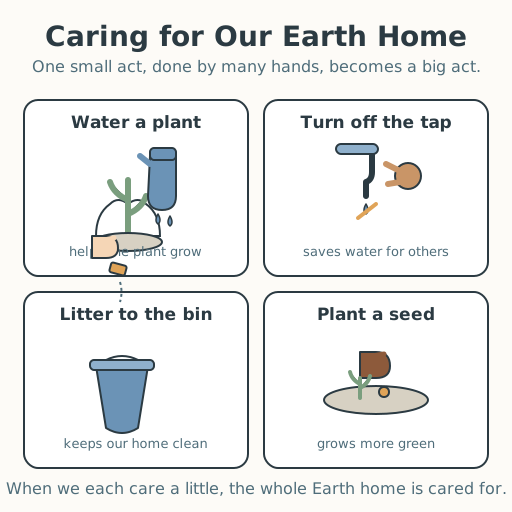
Lesson 7 — Caring for Our Earth Home
Summary
Learners do one real, small act of care for the Earth — watering a plant, turning off a tap, or putting litter in the right place — and say why it helps. The lesson frames the Earth as a home to care for, not a thing to use up, and shows that small acts add up when everyone does their part.
Objectives
- Do one small act of care for the environment and say why it helps. (D10.S4.K.01)
Connection
The Earth is our home, the way a house is a home. We keep a home clean and cared for, and we can do the same for the Earth. A plant needs water; a dry tap left running wastes water other living things need; a piece of litter does not belong on the path. One small act of care, done by many hands, keeps our home healthy.
Materials
- Supplies for one small act of care (a watering can or cup, a plant or seed, a bin for litter, or a tap to practice turning off)
- Paper and crayons for a “care promise” card
Preparation
- Choose one or two safe, simple acts of care learners can actually do: water a plant, turn off a tap, place litter in a bin, plant a seed.
- Set out the supplies for each act.
Facilitator note
This lesson is written to the learner (“you”). As facilitator, make the act real, not symbolic — learners should actually water, turn off, or tidy something, with safe, clean hands. Keep the tone hopeful, never frightening: the Earth is our shared home and we are its helpers, not its saviors or its enemies. Small acts matter, and no learner’s act is too small. If water is scarce where you are, adapt — turning off a tap or shading a plant can be the act of care, and is just as real.
Procedure
- Gather (5 min). Put your hand on the ground (or on the floor). This Earth is your home. Homes need care.
- Choose your act of care (10 min). Pick one small act you can really do: water a plant, turn off a tap, put a piece of litter in the right place, or plant a seed. Say why it helps: “Watering helps the plant grow.” “Turning off the tap saves water for other living things.”
- Do it (15 min). Do your act of care now, with a grown-up or partner nearby. If your body makes the doing hard, choose the act and guide a partner’s hands while you say why it helps. Feel what it is like to help.
- Make a care promise (10 min). Draw a “care promise” card: one small act of care you will do again, and why it helps.
- Close (5 min). One small act, done by many people, becomes a big act. When we each care a little, the whole Earth home is cared for.
Differentiation
- Support: Do the act together hand-over-hand and say the “why” together aloud.
- Motor differences: A learner who cannot physically perform the act can still do the caring — choose the act, tell a partner or grown-up exactly what to do, and say why it helps; the choosing and the saying are the act of care. Adapt the tool too (a light cup, a foot-operated tap, a helper’s hands).
- Extension: Invite learners to name a second act of care they could do at home or in their neighborhood, and tell who or what it would help.
Assessment
- Formative (observation): Did the learner complete one small act of care and say why it helps?
- Artifact (portfolio): The “care promise” card.
Home connection
Take your “care promise” card home. Do the act of care with a grown-up — water a plant, turn off a tap, or put litter in the bin — and tell them why it helps our Earth home.