Lesson 03 — My Community, What We Do Together
Learners name a community they belong to and one thing people do together in it, noticing that communities everywhere are built on shared work and shared joy.
Objectives
Objectives
- D02.S3.K.01 Name a community they belong to and one thing people do together in it.
Essential question
What community do I belong to, and what do people do together in it?
Key vocabulary
Materials
Standard materials
- Paper and crayons · per learner
- A large shared sheet or board · 1 For a class picture of "what we do together"
Low-tech / no-cost
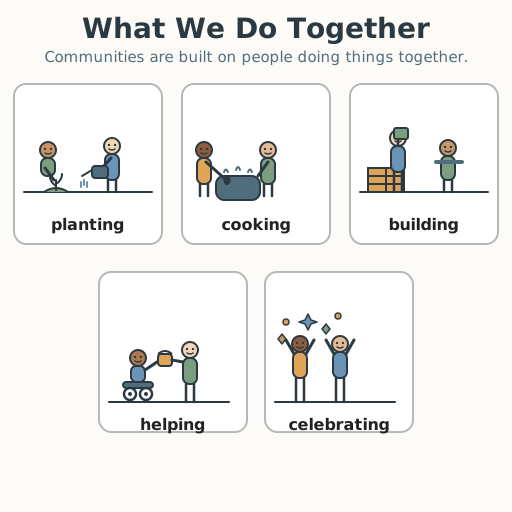
- Voice and body Act out one thing people do together in the community (planting, cooking, building, celebrating) and name it aloud
- A found object Pick up a stone, leaf, or stick and tell what people do together in the place where it came from
Enriched / lab & device
- Photos or picture books of communities near and far · a few To see the many ways people live and work together around the world
- A recording device · 1 per group To capture each learner naming a community and one thing people do together in it
Works in different contexts
- large-group Build one big class picture of "what we do together"; each child adds a mark and names one thing people do together
- self-directed A learner draws their community and one thing people do together in it, then tells a grown-up about it
- outdoor-only Look around outside and name the community of the place — who lives and works here — and one thing people do together
- multi-age Older learners share a story of their own community and help younger ones draw one shared activity
Lesson 3 — My Community, What We Do Together
Summary
Learners name a community they belong to and one thing people do together in it — working, helping, celebrating, or caring for a shared place. They notice that communities everywhere are built on people doing things together.
Objectives
- Name a community they belong to and one thing people do together in it. (D02.S3.K.01)
Connection
A community is a group of people who share a place or a purpose. In your community, people do things together — they work, celebrate, help each other, and care for shared places. Today you name one community you belong to and one thing people do together in it.
Materials
- Paper and crayons
- A large shared sheet or board for a class picture
Preparation
- Gather picture books or photos of communities near and far, if available.
- Prepare a large shared sheet or board for the class picture of “what we do together.”
- Arrange a circle for gathering and sharing.
Facilitator note
This lesson is written to the learner (“you”). Communities look very different around the world — a fishing village, a high-rise neighborhood, a mountain village, a city block, a market square — and none is better than another. Let each child name the community that is theirs. If a child names a community others have not seen, welcome it with curiosity: “What do people do together there?” Keep the lens global and egalitarian: we learn about many ways to live, not one correct way.
Procedure
- Gather (5 min). Sit comfortably. Think of the place where you live or spend your days — the people around you there are a community.
- Name your community (10 min). Say or show the name of a community you belong to — you can point, draw, or gesture if speaking is not your way. It can be your neighborhood, your village or town, your class, or your family’s place. What is one thing people do together there?
- Act it out (10 min). Choose one thing people do together in your community — planting, cooking, building, singing, celebrating, helping a neighbor — and show it with your body. Let others guess what it is.
- Draw it (15 min). Draw your community and the thing people do together in it. Add your mark to the big class picture of “what we do together.”
- Close (5 min). Look at the class picture. Communities everywhere — near and far — are built on people doing things together. That shared doing is what makes a community.
Differentiation
- Support: Offer two example communities (class, neighborhood) and model one thing people do together in each.
- Extension: Invite learners to name a second community and one thing people do together there, and to draw both.
Assessment
- Formative (observation): Can the learner name one community they belong to and one thing people do together in it?
- Artifact (portfolio): The community drawing, kept in the learner’s portfolio.
Home connection
Bring your community drawing home and show it to a grown-up. Name the community and the thing people do together in it. Ask the grown-up: what community do you belong to, and what do people do together there?