Lesson 07 — Reading Aloud
Learners read a simple text aloud with a clear, expressive voice, practicing tracking, pacing, and reading for a listener.
Objectives
Objectives
- D04.S2.01.02 Read a simple text aloud and retell its beginning, middle, and end.
Essential question
How do I read a simple text aloud so others can hear and follow the story?
Key vocabulary
Materials
Standard materials
- A very simple text in the home writing system · 1 per learner or pair A few short sentences the learner can mostly decode
- A "reading voice" pointer · 1 Optional stick or finger to follow along while reading
Low-tech / no-cost
- A text written large on a chart or in the dirt One shared text everyone can see
- Voice only Practice a big clear voice without any pointer or book
Enriched / lab & device
- A copy of the text per learner · 1 each So each learner can track with their own finger
- A recording device · 1 Record learners reading aloud so they can hear themselves
Works in different contexts
- large-group Read the text together in one voice first, then invite volunteers to read a sentence each while others follow along
- self-directed A learner reads the text aloud to a mirror, a recording, or a patient listener, tracking each word with a finger
- outdoor-only Read the text aloud to a partner sitting across from you; use the open air to practice a voice that carries
- level-grouped Pair confident readers with emerging readers so they take turns reading sentences aloud to each other
Lesson 7 — Reading Aloud
Summary
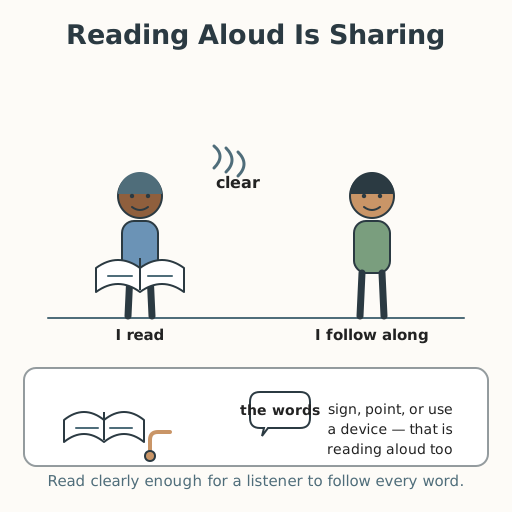
Learners read a simple text aloud in their home writing system, practicing a clear voice, careful tracking, and reading for a real listener. Reading aloud turns a silent text into something shared.
Objectives
- Read a simple text aloud and retell its beginning, middle, and end. (D04.S2.01.02)
Connection
When you read silently, the story lives only inside your head. When you read aloud, it reaches everyone in the room — like passing a bowl of food around a table so all can taste. Reading aloud with a clear, lively voice is how stories have been shared around fires, tables, and classrooms for thousands of years.
Materials
- A very simple text in the home writing system
- A “reading voice” pointer (optional)
Preparation
- Choose a text of a few short sentences the learners can mostly decode.
- Write it large enough for shared reading, or prepare copies.
- Plan to model reading aloud once.
Facilitator note
This lesson is written to the learner (“you”) so it works in a classroom and for a self-directed learner. Model reading aloud with a clear voice and expression, then guide practice. Honor every voice and accent — there is no single “correct” way to read aloud, only clarity and care. Choose texts in the learners’ own writing system, and let oral traditions be honored alongside written ones. A learner who does not use a speaking voice “reads aloud” by signing each word, pointing to each word as a partner or a device voices it, or communicating with an AAC device — that is reading aloud too, honored just as fully.
Procedure
- Gather (5 min). Listen as the text is read aloud once. Notice the voice is clear and not too fast — you can follow every word.
- Warm up your voice (or your hands) (5 min). Say a silly phrase together, first very quietly, then in a big clear voice — or sign it small, then big. Find the “reading voice” others can follow.
- Read together (10 min). Read the text aloud together in one voice, pointing under each word as you go. Slow down at the end of each sentence.
- Read in turns (15 min). With a partner, take turns reading one sentence each. Listen for a clear voice. If a word is tricky, sound it out like you practiced, then keep going.
- Read for a listener (5 min). Read the whole text aloud once more for your partner or group, as if you are telling them the story.
- Close (5 min). A clear voice carries words from the page to the people. Reading aloud is sharing.
Differentiation
- Support: Echo-read one sentence at a time — the learner repeats after a model — before reading independently.
- Support (non-speaking): Read by signing each word, pointing to each word while a partner or device voices it, or communicating with an AAC device — tracking words still counts.
- Extension: Read with expression, changing your voice for different parts, and try a slightly longer text.
Assessment
- Formative (performance): Can the learner read the simple text aloud — spoken, signed, or communicated — clearly enough for a listener to follow, tracking words and sounding out tricky ones?
Home connection
Read one short page or sentence aloud to someone at home, using your clearest reading voice.