Lesson 02 — Looking at an Artwork
Learners look at an artwork — a picture or a real made object — and name one thing they notice and one feeling it gives them. Looking is a kind of listening with the eyes.
Objectives
Objectives
- D07.S1.01.02 Look at an artwork and name one thing they notice and one feeling it gives them.
Essential question
What do I notice in an artwork, and how does it make me feel?
Key vocabulary
Materials
Standard materials
- An artwork to look at · 1 A printed picture or a real object (a cloth, pot, mural photo) from any culture
- A simple "notice" frame · 1 per pair A cut-out paper frame to look through and focus on one part
Low-tech / no-cost
- A real, touchable artwork A woven cloth, carved wooden piece, or painted pot learners can look at and feel
- A told description Describe an artwork aloud in words so no printed picture is needed
Enriched / lab & device
- A small set of artworks from different places · 1 set Two or three pictures or objects to compare what learners notice
- A magnifier or tablet to zoom · 1 per group Look closer at one detail of the artwork
Works in different contexts
- large-group Show one artwork big at the front and take turns sharing one thing noticed and one feeling; record ideas in words and drawings where all can see
- multi-age Older learners model noticing details and naming feelings; younger learners point to what they see
- self-directed A learner looks at an artwork, finds one thing they notice and one feeling, and tells a grown-up, friend, or recording
- level-grouped Some learners name one thing they see; others connect what they see to a feeling; match the challenge to the learner
- outdoor-only Look at a wall mural, a woven fence, or a pattern of stones and leaves as your artwork; notice and feel it right where you are
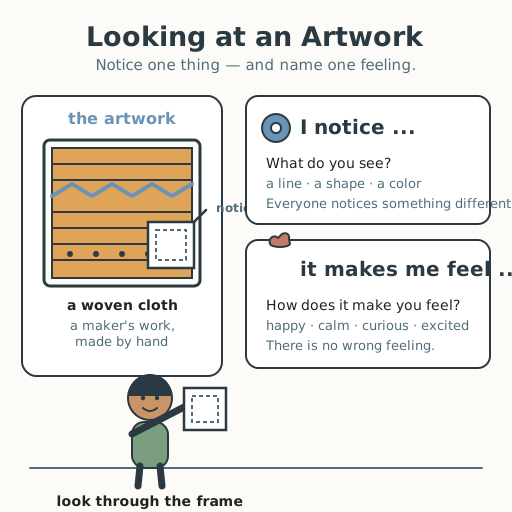
Lesson 2 — Looking at an Artwork
Summary
Learners look closely at an artwork and practice two moves: noticing something they see and naming a feeling it gives them. There is no right answer to what a picture makes you feel — everyone’s looking is welcome.
Objectives
- Look at an artwork and name one thing they notice and one feeling it gives them. (D07.S1.01.02)
Connection
Have you ever stopped to look at a picture on a wall, a pattern on a cloth, or a mural painted on a building? Looking is a way of listening with your eyes. Art is made by people everywhere to share an idea, a story, or a feeling — and when you look carefully, you receive it. Today you will look at one artwork and share what you see and how it makes you feel.
Materials
- An artwork to look at (a printed picture or a real object)
- A simple “notice” frame (a cut-out paper frame to look through)
Preparation
- Choose one artwork to look at together — a picture or a real object from any culture, presented respectfully as a maker’s work.
- Make or gather the “notice” frames so learners can focus on one part.
Facilitator note
This lesson is written to the learner (“you”) so it works in a classroom and for a self-directed learner. Choose an artwork that is safe and warm for young learners — something they can notice and feel without distress. Honor the maker and the culture it comes from as a living people’s work, not a museum piece; do not tokenize sacred objects. Remember there is no “correct” notice or feeling — every answer is welcome, and “I notice the color” is just as true as “I notice the shape.” A learner who is blind or has low vision receives the artwork by touch or description: a woven cloth to feel, a carved surface to trace, or a careful spoken description. A learner who does not speak notices by pointing or gesturing, and shows a feeling with their face or hands.
Procedure
- Gather (5 min). Sit where you can see the artwork. Let your eyes rest on it. Look at the whole thing first — what is it a picture of, or what is it?
- Look close (10 min). Use your “notice” frame (or your hands) to focus on one small part. Look at the lines, the shapes, the colors. What is one thing you notice? Say it, or point to it. Everyone notices something different, and that is good.
- Feel it (10 min). Sit quietly for a moment. How does the artwork make you feel — happy, calm, curious, excited, a little sad? Show the feeling with your face or hands, and try to say its name. There is no wrong feeling.
- Share (15 min). Take turns telling one thing you notice and one feeling it gives you. Listen to a friend’s notice — is it different from yours? Both are true.
- Close (5 min). Remember: looking carefully is a gift you give the artwork, and the artwork gives you a feeling back. Every maker hoped someone would look.
Differentiation
- Support: Offer a sentence starter (“I notice the ___” and “It makes me feel ___”) and accept pointing or showing as a full answer.
- Support (blind/low-vision): Offer the artwork by touch or spoken description; notice through the hands, not the eyes.
- Support (non-speaking): Notice by pointing and show the feeling with face or gesture.
- Extension: Invite learners to find a second thing they notice and guess what the maker might have wanted to share.
Assessment
- Formative (observation): Does the learner name (or point to) one thing they notice and name or show one feeling the artwork gives them?
Home connection
Find something made by hand at home or nearby — a cloth, a pot, a picture, a carving. Look at it closely and tell a grown-up one thing you notice and one feeling it gives you.