Lesson 08 — A Kind Act
Learners meet a gentle kind act where someone helped a person or animal, describe what happened, and say why the kindness mattered.
Objectives
Objectives
- D08.S4.01.02 Describe a kind act where someone helped another person or animal and why it mattered.
Essential question
What is a kind act, and why did it matter?
Key vocabulary
Materials
Standard materials
- A gentle story or picture sequence of a kind act · 1 A short story or picture sequence of someone helping a person or animal — sharing food, helping someone who fell, giving water to a thirsty animal
- Paper and crayons · per learner For drawing a kind act and why it mattered
Low-tech / no-cost
- A told or remembered kind act The facilitator tells a simple kind-act story; no book needed
- A "because it mattered" holding object A stone or leaf passed around; the learner holding it says why the kindness mattered
Enriched / lab & device
- A short gentle video of a real kind act · 1 Optional — a short clip of a person helping another person or animal, watched together
- Puppets or dolls · 1 set For acting out the kind act and the feeling it brought
Works in different contexts
- large-group Share one kind-act story to the whole circle, then each learner draws or points to why it mattered
- self-directed The learner reads or listens to a kind-act story, then draws it and tells a grown-up or peer why it mattered
- outdoor-only Find a living chance for kindness — give water to a plant, move a stone from a path, notice an animal being cared for — and name why it matters
- multi-age Older learners help younger ones put "why it mattered" into words; younger learners draw it
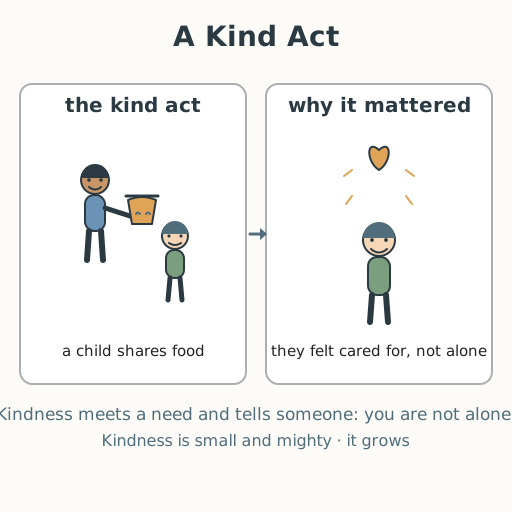
Lesson 8 — A Kind Act
Summary
Learners meet a gentle kind act where someone helped a person or animal. They describe what happened and say why the kindness mattered — for the one helped, and for the world around them.
Objectives
- Describe a kind act where someone helped another person or animal and why it mattered. (D08.S4.01.02)
Connection
Think of the last time someone was kind to you — they shared, they helped you up, they sat with you when you were sad. A kind act is small, but it can change a whole day. Kindness matters not only because it helps the one who receives it, but because it grows — one kind act often leads to another, and it tells the other person: you are not alone.
Materials
- A gentle story or picture sequence of a kind act
- Paper and crayons
Preparation
- Choose or write a short, gentle kind-act story: someone sharing food, helping a friend who fell, or giving water to a thirsty animal.
- Prepare the “because it mattered” holding object if using one.
Facilitator note
This lesson is written to the learner (“you”) so it works in a classroom and for a self-directed learner. Keep it gentle and concrete. The kind act should be something a six-year-old can picture and one they could do themselves — sharing, helping, comforting, caring for an animal. The key thinking is the why: kindness matters because it meets a need, eases a hurt, or tells someone they are not alone. Welcome every body: a learner who does not use a speaking voice acts the kindness out or points to a picture; a learner who is blind or has low vision hears the story with clear, warm language and tells why it mattered aloud. No one is asked to disclose a private hurt. End on warmth and agency — learners are the ones who can do the next kind act.
Procedure
- Gather (5 min). Think of one kind thing someone did for you. How did it make you feel? (You do not have to share it.)
- Hear the kind act (15 min). Listen to a story of a kind act — a child shares their lunch with someone who has none, or gives water to a thirsty dog on a hot day, or helps a friend who fell. Listen for what happened, step by step.
- Describe it (10 min). Tell the story back: who helped whom, and what did they do? Point to the pictures, act it out, or say it.
- Find why it mattered (10 min). Ask: why did this kindness matter? The one helped felt cared for, safe, full, or less alone. The helper felt warm inside. And the world felt a little kinder. Name or show one reason.
- Draw the why (5 min). Draw the kind act and mark or caption why it mattered.
- Close (5 min). Kindness is small and mighty. It helps one person or animal now, and it grows — because kindness teaches kindness.
Differentiation
- Support: Focus on one question — “how did the one helped feel after?” — and offer two feeling words to choose from.
- Non-speaking: A learner acts the kindness out, points to a picture, or orders a picture sequence, instead of speaking.
- Blind/low-vision: Describe the story’s sounds and warmth richly; the learner tells why it mattered aloud.
- Deaf/HH: Tell the kind act with a picture sequence or in sign so it is seen; the learner shows what happened and why it mattered by pointing or signing.
- Motor difference: The learner tells the “why” while a partner scribes or draws; use picture cards that can be pointed to rather than drawn.
- Extension: Tell one more kind act you have seen or done, and why it mattered.
Assessment
- Formative (observation): Can the learner describe a kind act — who helped whom and what they did?
- Formative (oral/performance): Can the learner say or show why the kindness mattered?
Home connection
With a grown-up, think of a kind act you saw this week — for a person or an animal. What happened, and why did it matter?