Lesson 07 — A Character Treated Unfairly
Learners hear a gentle, blame-free story in which a character is treated unfairly, name the unfair moment, and describe one way someone could help or stand up for them.
Objectives
Objectives
- D08.S4.01.01 Tell when a character in a story is treated unfairly and describe one way someone could help or stand up for them.
Essential question
When a story character is treated unfairly, how could someone help or stand up for them?
Key vocabulary
Materials
Standard materials
- A gentle story about a character treated unfairly · 1 A short, blame-free story — such as a character left out of a game for no good reason — with a kind, repair-filled ending
- Help cards · 1 set Simple picture cards of ways to help — say something kind, invite them in, sit with them, tell a grown-up
Low-tech / no-cost
- A told or made-up story The facilitator tells a simple story about turns and being left out; no book needed
- Two feeling spots A "fair" spot and an "unfair" spot for pointing to the moment it happened
Enriched / lab & device
- Puppets or dolls · 1 set For acting out the unfair moment and then the standing-up moment
- A set of picture scenes · 1 set Scenes of being left out and of someone helping, for sorting and retelling
Works in different contexts
- large-group Tell the story once, then two learners act out the unfair moment and the helping moment while the group points to the matching spot
- self-directed The learner reads or listens to the story, points to the unfair moment, and chooses or draws one way someone could help
- outdoor-only Act out a game of turns outside — first one person is left out (unfair), then someone invites them in (help) — and name each
- multi-age Older learners read the story aloud while younger learners point to the unfair moment and the helping moment
Lesson 7 — A Character Treated Unfairly
Summary
Learners hear a gentle, blame-free story in which a character is treated unfairly. They name the unfair moment and describe one way someone could help or stand up for the character. The story ends in repair and hope, never shame.
Objectives
- Tell when a character in a story is treated unfairly and describe one way someone could help or stand up for them. (D08.S4.01.01)
Connection
Unfair means someone is treated differently for no good reason — left out of a game, skipped for a turn, or not listened to. Fair means everyone gets a turn and no one is left out for no reason. You notice fair and unfair every day, at home and at play. When you notice someone being treated unfairly, there are kind things anyone can do to help.
Materials
- A gentle story about a character treated unfairly (with a kind, repair-filled ending)
- “Help cards” showing ways to help (say something kind, invite them in, sit with them, tell a grown-up)
Preparation
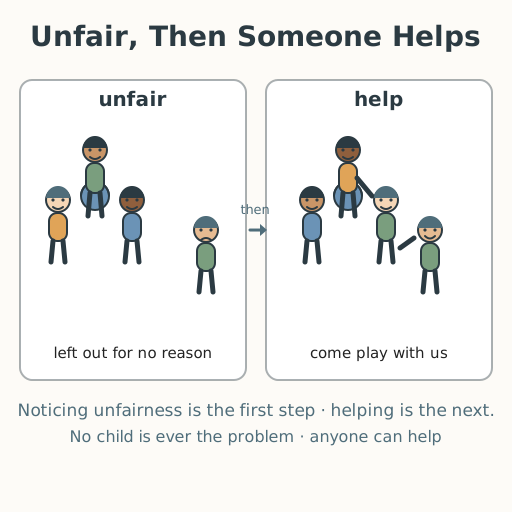
- Choose or write a short, gentle story with one clear unfair moment, ending in repair without blame. Example: a new child is told “you can’t play, there’s no room” while others play on; a friend notices and invites them in.
- Prepare the “help cards” or plan to act out ways to help.
Facilitator note
This lesson is written to the learner (“you”) so it works in a classroom and for a self-directed learner. Keep the story gentle and blame-free. The goal is noticing and naming unfairness, then turning toward repair — never shaming a character. Avoid heavy or traumatic unfairness at this age: no frightening or violent content. No child is ever the problem — the unfairness is in the treatment, not in the child. End with someone helping or standing up, so learners leave with agency and hope, not fear. Honor every body: a learner who does not use a speaking voice points to the unfair moment or acts it out; a learner who is blind or has low vision hears the story told with clear, gentle language and describes what happened aloud. Never require a learner to share a real unfairness from their own life.
Procedure
- Gather (5 min). Think of a game where everyone gets a turn. How does that feel? Now think of a time someone was left out. How might that feel?
- Hear the story (15 min). Listen to a story about a character who is treated unfairly — maybe a new child told “there’s no room” while everyone else plays. Listen for the exact moment it happens.
- Name the unfair moment (10 min). Point to the “unfair” spot. When was the character treated unfairly? What happened? How did the character feel?
- Find a way to help (10 min). Look at the help cards. Choose or act out one way someone could help: say something kind, invite them in, sit with them, or tell a grown-up. Which one do you think would help most?
- Hear the repair (5 min). Finish the story: someone does help, and the character is included and cared for. How does that feel now?
- Close (5 min). Noticing unfairness, kindly, is the first step. Standing up and helping is the next — and anyone can do it.
Differentiation
- Support: Tell only the unfair moment and ask one question: “How did the character feel?” Then show the repair.
- Non-speaking: A learner points to the unfair moment, acts it out, or orders picture cards, instead of speaking.
- Blind/low-vision: Tell the story with clear, warm language; the learner describes the unfair moment and the help aloud.
- Deaf/HH: Tell the story with a picture sequence, in sign, or acted out so it is seen; the learner points to the unfair moment and the helping moment on the cards.
- Motor difference: The learner directs a partner or puppet to act out the unfair and helping moments, or points/eye-gazes to the matching picture card.
- Extension: Make up a tiny new ending where someone stands up, and act it out.
Assessment
- Formative (observation): Can the learner point to or say the moment the character was treated unfairly?
- Formative (oral/performance): Can the learner describe one way someone could help or stand up for the character?
Home connection
With a grown-up, think of a story you both know where someone was treated unfairly. What happened, and what could someone do to help? (Only share a real-life one if you want to.)