Lesson 08 — Caring for a Plant or Animal
Learners choose a plant or animal to help care for, learn what it needs each day — water, food, and a clean, safe place — and actually do one caring task. They make a daily care plan and learn that steady, everyday care is what keeps a living thing well.
Objectives
Objectives
- D10.S4.01.02 Help care for a plant or animal and say what it needs each day.
Essential question
How do I help care for a plant or an animal, and what does it need each day?
Key vocabulary
Materials
Standard materials
- A plant or animal to help care for · 1 A classroom or home plant, a pet, a fish, or a bird feeder — whatever is safe and close at hand
- Care supplies · per group A small cup or watering can for a plant; a food dish, water dish, or clean space for an animal
- Paper and crayons · per learner For a "daily care plan" drawing
Low-tech / no-cost
- A plant and a cup of water Water a real plant and say what it needs each day; no special tools needed
- Voice and body Act out caring — watering a plant, filling a dish, making a soft clean bed — and say what the living thing needs each day
Enriched / lab & device
- A plant or animal to keep and care for over many days · 1 per group Water the plant or feed the animal daily and watch it respond to steady care
- A simple "care journal" (folded paper book) · per learner To draw or mark one caring task done each day
Works in different contexts
- large-group Care for one shared plant or animal together; each learner takes a turn doing one caring task and says what the living thing needs each day
- self-directed A learner chooses a plant or animal, learns its daily needs, does one caring task, and draws a daily care plan
- outdoor-only Care for a living thing outside — water a plant, refill a bird's water, or gently clear space around a seedling — and say what it needs each day
- multi-age Older learners model the caring tasks and help younger ones make a daily care plan they can follow
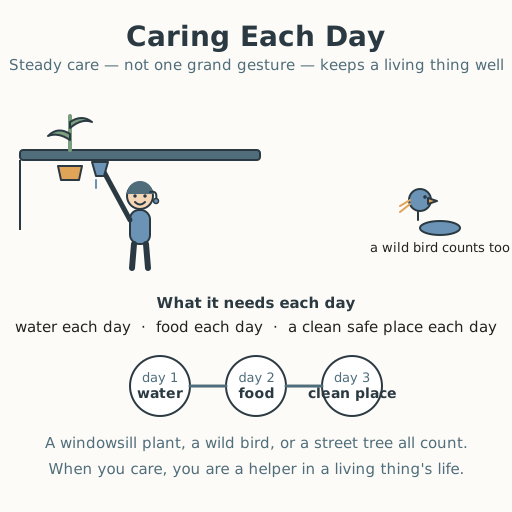
Lesson 8 — Caring for a Plant or Animal
Summary
Learners choose a plant or animal to help care for, learn what it needs each day — water, food, and a clean, safe place — and actually do one caring task. They make a simple daily care plan and learn that it is steady, everyday care — not one grand gesture — that keeps a living thing well.
Objectives
- Help care for a plant or animal and say what it needs each day. (D10.S4.01.02)
Connection
A plant cannot water itself, and a pet cannot fill its own dish. Living things need helpers — and you can be one. Caring for a living thing is not hard to understand: it needs water, food, and a clean, safe place, each day, not just once. When you water a plant a little every day, or give a pet food and clean water every day, you are doing what keeps it alive and well.
Materials
- A plant or animal to help care for
- Care supplies (a cup or watering can, a food dish, a water dish)
- Paper and crayons for a “daily care plan” drawing
Preparation
- Choose a plant or animal that is safe and easy for learners to help care for: a classroom or home plant, a pet, a fish, or a bird feeder.
- Set out the care supplies each task needs.
- Make sure any animal is calm and safe, and that learners wash hands after handling.
Facilitator note
This lesson is written to the learner (“you”). Make the caring real, not symbolic — learners should actually water, feed, or tidy for a living thing, with safe, clean hands and gentle touch. The core idea is each day: steady care is what living things need, and learners are helpers, not saviors or owners to command. Honor whatever living thing is at hand — a windowsill plant is every bit as worthy of care as a pet. Never frame a family without pets or plants as missing something; a wild bird given a dish of water, or a street tree watered in the dry season, is just as real. For a learner with motor differences, the choosing and the directing are the care — they may guide a partner’s hands to pour the water or fill the dish while saying what the living thing needs; adapt the tool (a light cup, a long-spouted can). A learner who is blind or has low vision can feel the plant’s dry or damp soil and the filled dish, and listen for the living thing’s sounds. A non-speaking learner can point to the caring task and to pictures of water and food to show what the living thing needs each day.
Procedure
- Gather (5 min). Meet the plant or animal you will help care for. Take one gentle, quiet look (or listen, or feel). It is alive, and it needs you.
- Learn its daily needs (10 min). Say what this living thing needs each day: a plant needs water and light each day; an animal needs food, clean water, and a clean, safe place each day. Point to or touch each need as you name it.
- Do one caring task (15 min). Choose one caring task and do it now — water the plant, fill the water dish, put out food, or tidy the safe place. Use gentle hands. If your body makes the doing hard, guide a partner’s hands while you say what to do and why.
- Make a daily care plan (10 min). Draw a simple plan: one caring task for each day — water, food, clean water, a clean safe place. Put the days in a row or a circle so you can follow it.
- Close (5 min). A living thing needs care each day, not just once. When you care for a plant or an animal, you are a helper in its life. What caring task will you do first?
Differentiation
- Support: Do one caring task together hand-over-hand and say the need aloud; make a two-day plan instead of a week.
- Motor differences: Choose the task and direct a partner’s hands while saying what the living thing needs; adapt the tool (a light cup, a long-spouted watering can).
- Blind/low vision: Feel the soil before and after watering, or the dish empty then full; a partner names each step and the daily need.
- Deaf/hard of hearing: Share each caring task with sign, pictures, and acting; the learner signs or points to water, food, and clean place to show the daily needs.
- Extension: Watch the same plant or animal again tomorrow and tell one thing that is the same and one thing that changed, and check off the day’s caring task.
Assessment
- Formative (observation): Did the learner help do one caring task and say what the plant or animal needs each day?
- Portfolio: The “daily care plan” drawing, kept as a living record to follow over the coming days.
Resources
- BBC Bitesize (KS1 Science), “What does a plant need to grow?” — plants need water, light, air, the right temperature, and time. https://www.bbc.co.uk/bitesize/topics/zpxnyrd/articles/zkp2jsg
- BBC Bitesize (KS1 Science), “What do animals need to survive?” — animals need air, water, shelter, and food to survive. https://www.bbc.co.uk/bitesize/topics/z6882hv/articles/zx38wmn
Home connection
At home, help care for one living thing — a plant, a pet, a tree, or a bird you can reach with water. Do one caring task with a grown-up and tell them what it needs each day. Ask if you may help again tomorrow.