Lesson 09 — Earth Care in Practice
Learners put two kinds of care together: wasting less (turning off a tap, using just enough) and caring for a living thing (watering a plant, filling a dish). They do both in one connected act and learn that saving water *is* caring for the living things that need it — the two strands of stewardship are one care for one shared home.
Objectives
Objectives
- D10.S4.01.01 Name one way to waste less, such as turning off water or reusing a bag, and do it.
- D10.S4.01.02 Help care for a plant or animal and say what it needs each day.
Essential question
How do wasting less and caring for a living thing fit together as care for our Earth home?
Key vocabulary
Materials
Standard materials
- Supplies for two connected acts of care · per group A tap or cup for wasting less, and a plant or animal to care for with water or food
- Paper and crayons · per learner For a two-part "Earth care" drawing
Low-tech / no-cost
- Hands, a tap, and a plant Turn off a running tap and water a plant with just enough; say how the two acts are connected — no special tools needed
- Voice and body Act out the connection — turn off the tap, then carry a cup of saved water to a plant — and say why both acts are care for the same home
Enriched / lab & device
- A class "Earth care" poster or book kit · 1 To record each learner's two connected acts and the reason they belong together
- A device to record a spoken "Earth care" message · 1 per group Optional; learners say their two acts and why they are connected
Works in different contexts
- large-group Do one shared connected pair of acts together (turn off the tap, then water a plant with just enough) and say the connection aloud; each learner then draws their two-part plan
- self-directed A learner chooses and does one waste-less act and one caring-for-a-living-thing act, and says how they are connected
- outdoor-only Turn off or use carefully a water source outside, then use a little of that water to water a plant or fill a bird's dish; say how the two acts are one care
- multi-age Older learners lead the two acts and coach younger ones in saying the connection between wasting less and caring for living things
Lesson 9 — Earth Care in Practice
Summary
Learners bring the two strands of stewardship together: wasting less and caring for a living thing. They do both in one connected act — turning off a tap, then using just enough water to water a plant — and discover that the two are really one care: when we save water, we are caring for the living things that need it. Ecology is not a chapter here; it is the ground they are standing on.
Objectives
- Name one way to waste less, such as turning off water or reusing a bag, and do it. (D10.S4.01.01)
- Help care for a plant or animal and say what it needs each day. (D10.S4.01.02)
Connection
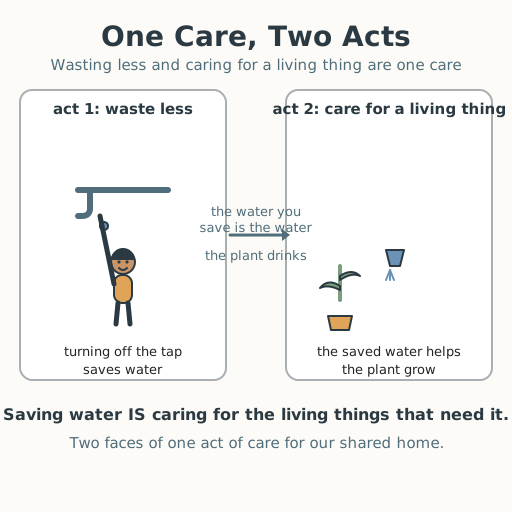
The water you save and the plant you water are part of the same story. When you turn off a tap so water is not wasted, you are keeping water for the plant, the bird, and the people who need it. When you water a plant with just enough — not too much, not too little — you are wasting less and caring at the same time. These are not two different jobs; they are two faces of one act of care for our shared home.
Materials
- Supplies for two connected acts of care (a tap or cup, and a plant or animal to care for)
- Paper and crayons for a two-part “Earth care” drawing
Preparation
- Choose a connected pair of acts learners can really do: turn off a running tap and then water a plant with just enough; or use a cup carefully and fill a bird’s water dish.
- Set out the supplies for both parts.
Facilitator note
This lesson is written to the learner (“you”). The key move is the connection: saving water and caring for a living thing are one care, not two. Make both acts real and connected — learners turn off a tap, then carry a small, just-enough cup to a plant or a bird’s dish. Keep the tone hopeful and agentic: learners are helpers, not saviors or enemies, and no act is too small. Where water is scarce, this connection is especially true and especially dear — a carefully used cup of water for a plant is both a waste-less act and a caring act, and it is exactly right to celebrate. Never shame any family or place for how they use water; honor the care people already show. For a learner with motor differences, the choosing and the directing are the care — they may guide a partner’s hands to turn off the tap and pour the water while saying how the two acts are one; adapt the tools (a light cup, a long-handled tap). A learner who is blind or has low vision can hear the tap stop and feel the damp soil after watering, and say the connection. A non-speaking learner can point from the tap to the plant to show the two acts are connected. This lesson draws on the spirit of education for sustainable development (see Resources).
Procedure
- Gather (5 min). Think of two things you can do for the Earth: waste less, and care for a living thing. Are they two jobs, or one?
- Do the first act — waste less (10 min). Turn off a running tap, or use just enough water from a cup. Say why it helps: “Turning off the tap saves water.”
- Do the second act — care for a living thing (10 min). Now use a little of that saved water to water a plant, or fill a bird’s dish. Say why it helps: “This water helps the plant grow.”
- Find the connection (10 min). Talk with a partner: how are the two acts one care? (The water you save is the water the plant drinks; caring for water is caring for the plant.) Say it in your own words.
- Draw the two-part care (10 min). Draw the two acts side by side — the tap turned off, and the plant watered with just enough — with one line joining them.
- Close (5 min). Wasting less and caring for living things are one care for one home. When we save water, we save it for the living things we love. What will you do with your saved water tomorrow?
Differentiation
- Support: Do the two acts together and say the connection as one shared sentence, hand-over-hand.
- Motor differences: Choose and direct both acts through a partner’s hands while saying the connection; adapt the tools (a light cup, a long-handled tap).
- Blind/low vision: Hear the tap stop and feel the soil turn damp; a partner names the two acts and the learner says the connection.
- Deaf/hard of hearing: Show the two connected acts with sign, pictures, and acting; the learner signs or points from the tap to the plant to show they are one care.
- Extension: Name a third act that joins the two — reusing a container to carry water to a plant, or watering with leftover water instead of fresh — and tell why it is care twice over.
Assessment
- Formative (observation): Did the learner do one waste-less act and one caring-for-a-living-thing act, and say how the two are connected?
- Portfolio: The two-part “Earth care” drawing, kept as a record of the connected acts.
Resources
- UNESCO — Education for Sustainable Development (https://www.unesco.org/en/sustainable-development/education): a general frame for the idea that caring for the Earth and for other people is learned as a single, everyday practice.
Home connection
At home, join the two acts with a grown-up: turn off a running tap, then use a little water to water a plant or fill a dish for a bird or pet. Tell the grown-up how saving water and caring for a living thing are one care for one home.