Lesson 08 — Helping Helps Everyone
Learners discover that helping others helps everyone, including themselves, by building a class "helping web" and seeing how care flows in every direction.
Objectives
Objectives
- D02.S4.02.02 Explain why helping others helps everyone, including themselves.
Essential question
Why does helping others help everyone — including me?
Key vocabulary
Materials
Standard materials
- A ball of yarn or string · 1 For the class "helping web"
- Paper and crayons · per learner For drawing one way to help that comes back to everyone
Low-tech / no-cost
- Voices and bodies Build the helping web with a shared gesture or a ball of grass rope; no yarn needed
- A found length of string or vine Any cord — a vine, a strip of cloth, a long blade of grass — can make the web
Enriched / lab & device
- A short picture book about mutual aid · 1 A story where helping one person helps the whole group, to read and discuss
- Camera or tablet · 1 per group Photograph the helping web and the drawings for a class "how helping helps" display
Works in different contexts
- large-group Build one big helping web around the whole circle, then talk about how the web is stronger because everyone is holding it
- self-directed A learner draws one way to help and writes or says how it comes back to everyone, including them
- outdoor-only Build the helping web outside with a vine or rope, and notice how caring for a shared plant or space helps everyone
- multi-age Older learners share a time they helped and how it came back; younger learners share one they remember
- level-grouped Pair learners so each says one way they have been helped and one way they help, in turns
Lesson 8 — Helping Helps Everyone
Summary
Learners discover a surprising truth: helping others helps everyone, including yourself. Through a class “helping web,” they see that care flows in every direction — when one person helps, the whole group is stronger, and the helper is helped too.
Objectives
- Explain why helping others helps everyone, including themselves. (D02.S4.02.02)
Connection
When you help water the garden, everyone gets vegetables — and you do too. When you help tidy a shared space, everyone has a nicer place — and you do too. When you share what you have, the whole group has enough. Helping is not a one-way gift that leaves you with less; it is like a web where care travels in every direction. People everywhere have always known this: when we help each other, we all rise. Today you will see it with your own hands.
Materials
- A ball of yarn or string
- Paper and crayons
Preparation
- Arrange a circle for gathering, with room to stretch the yarn across it.
- Set out paper and crayons.
Facilitator note
This lesson names mutual aid — the idea that help flows between equals, not from a giver above to a receiver below. That distinction matters: keep the lesson away from “charity” framing (the strong helping the weak), and toward “we all need help, and we all give it.” The environment lens lives here too: caring for a shared plant, a shared water source, a shared space helps everyone who depends on it. Keep the web playful and non-ranking; no one is “the most helpful.” Every learner has been helped and has helped — that is the point. A non-speaking learner shows their help with a gesture or a drawing; a learner who has been helped in a hard way shares only what they wish. Read the procedure aloud; model one “I was helped… I helped…” pair first.
Procedure
- Gather (5 min). Sit in a circle. Think: name one time someone helped you. Name one time you helped someone.
- Meet the idea (10 min). Wonder together: when you help, who is helped? Watch the garden example — you water the plant, the plant grows, everyone eats. Say it together: “When I help, it comes back to everyone — including me.”
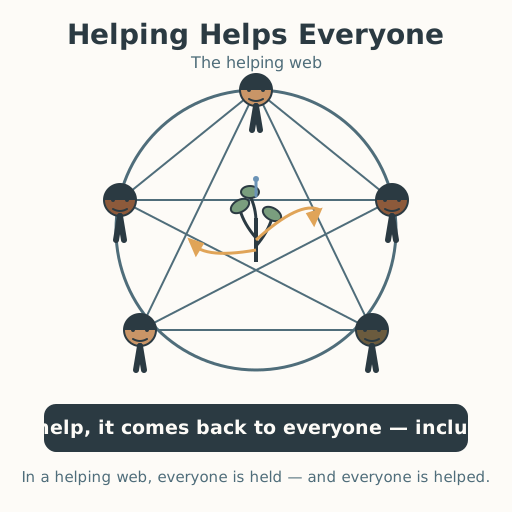
- Build the helping web (15 min). Hold one end of the yarn. Say one way you have been helped, then toss the ball to someone across the circle. They say one way they help, hold the yarn, and toss it on. Keep going until everyone holds the web. Look at it: when we are all connected, the web is strong.
- Draw the return (10 min). Draw one way you can help — and show how it comes back to everyone, including you.
- Close (5 min). Remember: helping is not a gift that leaves you with less. In a helping web, everyone is held — and everyone is helped.
Differentiation
- Support: Offer sentence starters (“I was helped when…”, “I helped when…”); a non-speaking learner holds the yarn and shows their help with a gesture or drawing.
- Extension: Invite learners to notice a shared resource everyone depends on — water, a garden, a tidy space — and name one way caring for it helps everyone.
Assessment
- Formative (observation): Can the learner explain — in words, sign, or drawing — how helping one person helps everyone, including themselves?
- Artifact (portfolio): The learner’s “help comes back” drawing.
Home connection
At home, do one thing that helps the whole family — and notice how it comes back to you too — then tell a grown-up what you noticed.