Lesson 09 — Rocks, Soil, and Water
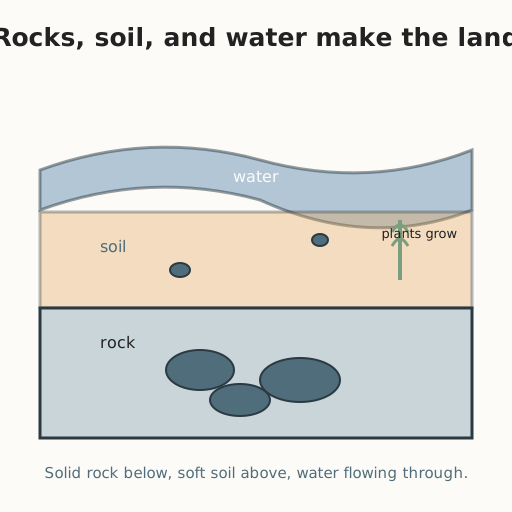
Learners meet the land they live on as three things they can touch — rock, soil, and water — and describe how they fit together: solid rock below, soft soil above, water flowing through. They connect these to the mountains, valleys, and rivers they see, and hold how the land began as a wonder with many stories.
Objectives
Objectives
- D06.S4.02.02 Describe rocks, soil, and water and how they make up the land we live on.
Essential question
How do rocks, soil, and water make up the land we live on?
Key vocabulary
Materials
Standard materials
- Samples of rock, soil, and water · 1 set A stone, a cup of soil, and a cup of water, each to touch and describe
- A picture of the land · 1 Mountains, valleys, and a river, to point to rock, soil, and water
- Paper and crayons · per learner
Low-tech / no-cost
- A patch of ground outside Touch real rock, soil, and water where you are
- Voice and a partner Describe the rock, soil, and water you can see and touch
Enriched / lab & device
- A hand lens · 1 per pair To look closely at the grains in soil and the crystals in a rock
- A "layers of the land" drawing frame · per learner A frame to draw rock below, soil above, and water flowing through
Works in different contexts
- large-group Pass rock, soil, and water around to touch and describe, then draw the land together on a shared picture
- self-directed A learner touches rock, soil, and water, describes each, and draws the layers of the land they live on
- outdoor-only Find real rock, soil, and water outside — a stone, a patch of earth, a puddle or stream — and describe each where it lives
- multi-age Older learners explain that soil is made of tiny pieces of rock and old living things; younger learners just name and touch the three
- level-grouped Learners who can explain how rock, soil, and water connect in the land do so; others match each to where it is found
Lesson 9 — Rocks, Soil, and Water
Summary
The land we stand on is made of three things a learner can touch: rock (the solid Earth below), soil (the soft layer on top where plants grow), and water (the rivers, lakes, and rain that flow through it). Learners feel and describe each, see how they fit together in mountains, valleys, and rivers, and connect the land to the living things that call it home. Where the land came from is held as a wonder with many stories, scientific and cultural, side by side.
Objectives
- Describe rocks, soil, and water and how they make up the land we live on. (D06.S4.02.02)
Connection
Look down: the ground under your feet is the land you live on. Kick it gently — that is soil. Under the soil, deep down, is solid rock. And flowing through it all, in rain and rivers and puddles, is water. Rock, soil, and water are not three separate things — they are the one land we stand on, and the home of every plant and creature on it.
Materials
- Samples of rock, soil, and water (a stone, a cup of soil, a cup of water)
- A picture of the land (mountains, valleys, and a river)
- Paper and crayons
Preparation
- Gather safe samples of rock, soil, and water for learners to touch and describe.
- Choose or draw a picture of the land showing mountains, a valley, and a river.
- Plan one worked example: touch soil, name it, say where it sits in the land.
Facilitator note
This lesson is written to the learner (“you”). Anchor everything in touch: rock,
soil, and water are concrete, and feeling them is the lesson. The gentle scientific idea
to offer is that soil is made of tiny pieces of worn rock mixed with old, broken-down
living things, and that water slowly wears rock down — but keep it as a wonder to
explore, not a definition to memorize; the full rock and water cycles arrive in later
grades. Hold origins with openness per docs/philosophy.md §11: many peoples have
stories about how the mountains, rivers, and land began, and geologists have a story
about very long, slow change — we hold them side by side and rank none above the others.
A light ethical and environmental thread: the land feeds us and gives us water, so we
care for it — this is a value we share, not a fact we prove. Touch with clean hands; use
safe, clean samples.
Procedure
- Gather and remember (5 min). You have met the Sun and the living things that need it. Now look down: what is the land you stand on made of?
- Touch rock, soil, and water (15 min). Feel each one. Rock is hard and solid. Soil is soft and crumbly — plants grow in it. Water is wet and flows. Say one describing word for each.
- See how they fit (10 min). Look at the picture of the land. Point to the solid rock in the mountains, the soil in the valleys where plants grow, and the water in the river. The land is all three, together.
- Wonder about the land (10 min). Where did the mountains and rivers come from? Many peoples have told stories about how the land began, and scientists have a story about slow, long change. We hold them all as stories to wonder at together — and we can see the land changing slowly, a little at a time.
- Draw the layers (7 min). Draw the land you live on: rock below, soil above, and water flowing through. Label the three.
- Close (3 min). Rock, soil, and water make the land — and the land is our home and the home of every living thing. We care for it.
Differentiation
- Support: Touch each of the three and use the frame “Rock is ___, soil is ___, water is ___.”
- Support (non-speaking): Point to the rock, soil, and water samples and to each in the land picture.
- Support (blind/low-vision): Describe the three by touch and by a partner’s spoken description; feel water’s coolness and soil’s crumble.
- Extension: Use a hand lens to look closely at soil and tell what tiny things you find — bits of rock, bits of old plants.
Assessment
- Formative (observation): Can the learner name the three parts of the land and describe each (or point to each) and say how they fit together?
- Artifact (portfolio): The labeled “layers of the land” drawing.
Home connection
At home or outside, touch three things: a stone (rock), a pinch of earth (soil), and a little water. Tell a grown-up which is hardest, which is softest, and which is wettest — you just described the land.
Resources
- BBC Bitesize (KS2 Science), “Rocks” — how rock and soil make up the land, and how soil forms from worn rock and living things. https://www.bbc.co.uk/bitesize/topics/z9bbkqt