Lesson 08 — Two Ways to Make
Learners compare two ways to solve a making problem, choose one, and explain why. They discover that trying more than one way is not a detour but the heart of good making, and that a reason is what turns a choice into a design.
Objectives
Objectives
- D07.S4.02.02 Compare two ways to solve a making problem and choose one, explaining why.
Essential question
How do I compare two ways to solve a making problem and choose one, explaining why?
Key vocabulary
Materials
Standard materials
- A making problem to solve · 1 Something to make or fix, like joining two pieces or making a bridge stand
- Two kinds of materials or two ways · per pair Two different joins, two different bases, or two different materials to compare
Low-tech / no-cost
- Found materials and the ground Two ways with sticks, stones, leaves, and mud — compare and choose with what is near
- Hands and eyes Try each way and watch which one works better
Enriched / lab & device
- Two real examples of a solved problem · 1 set Two bridges, two joins, or two baskets made two ways, to compare and choose between
- A "way A / way B / I choose" sheet · 1 per pair A paper with two columns and a choice box to record the compare
Works in different contexts
- large-group Solve one shared problem two ways as a whole group, compare aloud, and vote with a show of hands for which way and why
- multi-age Older learners ask "which way works better, and why?" while younger learners try each way and answer; then trade
- self-directed A learner tries two ways to solve a making problem, compares them, chooses one, and tells a grown-up or recording why
- level-grouped Some learners compare two ways with a prompt ("which holds better?"); others find the reason themselves; match the challenge
- outdoor-only Solve a problem two ways outside — two stick bridges, two leaf boats — and choose one, saying why
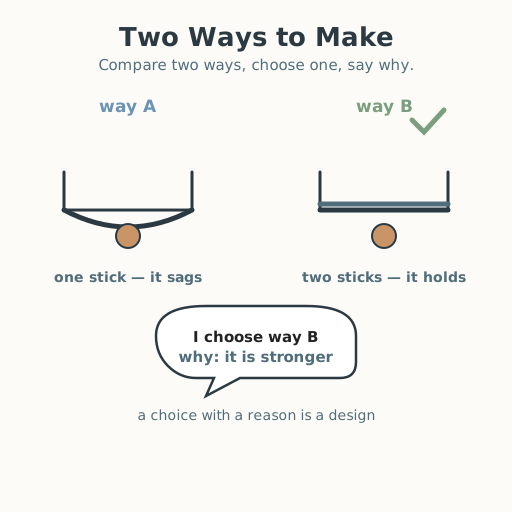
Lesson 8 — Two Ways to Make
Summary
Learners solve a small making problem two ways, compare them, choose one, and explain why. They discover that trying more than one way is not a detour but the heart of good making, and that a reason is what turns a choice into a design.
Objectives
- Compare two ways to solve a making problem and choose one, explaining why. (D07.S4.02.02)
Connection
Think of a time you tried something two ways — two ways to carry water, two ways to tie a knot, two ways to make a tower stand. Makers everywhere do this: they try one way, try another, look at both, and choose the one that works better, saying why. Today you will solve one small making problem two ways, compare them, and choose.
Materials
- A making problem to solve (joining two pieces, or making a bridge stand)
- Two kinds of materials or two ways to try
Preparation
- Set up one clear making problem for learners to solve (e.g., make a bridge that holds a stone, or join two sticks).
- Provide two different materials or two different ways for each pair to compare.
Facilitator note
This lesson is written to the learner (“you”) so it works in a classroom and for a self-directed learner. The goal is the reason, not the “right” answer — a choice with a reason is the learning, and either way may be a fine choice. Model the compare once — “way A sags, way B holds; I choose B because it is stronger” — before learners compare their own (Kirschner, Sweller & Clark, 2006). Frame a failed attempt as information, never a verdict. A learner with limited fine motor tries each way by directing a partner and decides the choice — deciding is making. A learner who is blind or has low vision compares by feel and sound (which holds, which bends, which makes a solid thud) with a partner describing what happened. A learner who does not speak points to the chosen way and to the reason on a picture card. Every reason is welcome.
Procedure
- Gather (5 min). Here is a small making problem — a bridge that must hold a stone, or two sticks that must stay joined. Today you will solve it two ways.
- Try way A (10 min). Make it the first way with the first material. Watch what happens. Does it hold? Does it sag or fall? What you see is a clue.
- Try way B (10 min). Now make it the second way with the second material. Watch again. Does it hold better, worse, or the same?
- Compare and choose (10 min). Set the two ways side by side. Which one works better? Choose one — and say why you chose it (“it is stronger,” “it does not tip,” “it is easier to make”). Your reason is what makes your choice a design.
- Share your why (10 min). Tell a friend or grown-up the two ways you tried and the one you chose, and your reason. Listen to a friend’s why — is their reason different from yours? Both can be good.
- Close (5 min). Remember: trying two ways and choosing with a reason is how everything good gets made. There is no “wrong” choice — only a choice with or without a reason.
Differentiation
- Support: Offer one clear problem and two very different ways, and ask “which holds better?” so the compare is easy to see.
- Support (fine motor): The learner directs each way and decides the choice while a partner builds.
- Support (non-speaking): Point to the chosen way and to the reason on a picture card.
- Support (blind/low-vision): Compare by feel and sound with a partner describing what happened; the learner decides and says the reason.
- Extension: Invite learners to try a third way and compare all three, explaining which they chose and why.
Assessment
- Formative (observation): Does the learner compare two ways to solve a making problem, choose one, and explain (or show) why?
Home connection
At home, find a small problem — a wobbly lid, a slipping knot, a tilting pile. Try two ways to fix it with a grown-up, choose one, and tell them why.