Lesson 06 — Helping Hands in Our Community
Learners identify ways people in their community help one another — a food drive, a cleanup, reading to a younger child, watering a shared garden — and plan one way they could join in, as a first small step of collective action.
Objectives
Objectives
- D09.S3.02.02 Identify a way people in their community help one another, such as a food drive or cleanup, and how they could join in.
Essential question
How do people in my community help one another, and how could I join in?
Key vocabulary
Materials
Standard materials
- Community-help picture cards · 1 set Pictures of ways people help one another — a food drive, a cleanup, reading to a younger child, watering a shared garden, carrying water for a neighbor
- Crayons and paper · per learner
Low-tech / no-cost
- Voice and body Act out each way of helping together; no cards needed
- A drawn "join in" plan Draw one way to help and the first step to joining in
Enriched / lab & device
- Laminated community-help cards · 1 set per pair Durable cards for repeated sorting and matching of helps to places
- A visit or guest · 1 A short visit to a real helping place (a community garden, a food share, a library) or a guest who helps
Works in different contexts
- large-group Hold each card up large; the group names the help and one way a child could join in, then acts it out
- self-directed The learner picks one community help, tells or writes how it helps and how they could join in
- outdoor-only Walk and spot real helping (a shared garden, a swept path, a mended fence) and name how a child could join in
- multi-age Older learners explain the help and read the steps; younger learners act out joining in
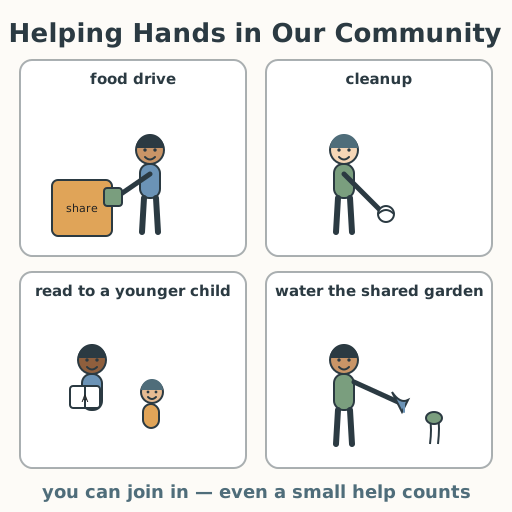
Lesson 6 — Helping Hands in Our Community
Summary
Learners identify ways people in their community help one another — a food drive, a cleanup, reading to a younger child, watering a shared garden — and plan one way they could join in. Helping is something anyone can do, whatever their body can do.
Objectives
- Identify a way people in their community help one another, such as a food drive or cleanup, and how they could join in. (D09.S3.02.02)
Connection
Think of a place near you where people help each other — a neighbor who shares food when someone is sick, a group that cleans the stream or the street, an older child who reads to a younger one, someone who waters the shared garden so everyone can eat. That is a community: people helping one another. And you can join in — even a small help counts. People everywhere do this: a village clears the well, a city shares food, a family waters the plot so all can harvest. Today you will name one way people help near you, and one way you could join in.
Materials
- Community-help picture cards (a food drive, a cleanup, reading to a younger child, watering a shared garden, carrying water for a neighbor)
- Crayons and paper
Preparation
- Prepare the community-help picture cards, each with a simple scene and label.
- Arrange a circle for acting out and sharing.
Facilitator note
Written to the learner (“you”). This lesson teaches collective action at the size a 7–8-year-old can hold: people help one another, and a child can join in. Keep it concrete and local — name real helps learners can see (a shared garden, a cleanup, a food share, reading to a younger child). Global and anthropological framing: every human community has ways of mutual aid (sharing harvests, mending shared things, carrying water) — helping is not one culture’s idea. Emphasize that a child’s help is real, not play-acting, and that every body can help in its own way: a learner who does not speak aloud points to a card or signs; a learner who is blind or low-vision hears each help described and names how they could join; a learner with a motor difference plans a help they can do (telling the story, holding the bag, being the lookout). Never require anyone to do physical work they cannot; “joining in” includes suggesting, cheering, and caring. Do not send learners to do unsupervised tasks outside — the plan is for later, with a grown-up. A learner may always pass.
Procedure
- Gather (5 min). Think of one time someone helped you or your family. What did they do? That is community help.
- Meet the helps (10 min). Look at the cards: a food drive, a cleanup, reading to a younger child, watering a shared garden, carrying water for a neighbor. Name each help and who it helps.
- Choose one and plan to join in (15 min). Pick one help (point, sign, or say it). Say how it helps, then plan your first step: “I could join in by…” — carrying a can to the box, picking up one piece of litter, reading one page, pouring one cup of water.
- Draw your “join in” plan (10 min). Draw or write one way people help near you and one step you could take to join in. If drawing is not your way, build it, act it out, or have a partner draw while you direct. Tell a partner your plan.
- Close (5 min). A community is people helping one another — and you can join in. Even a small help counts.
Differentiation
- Support: Offer two helping cards and model one sentence “I could join in by…” A non-speaking learner points to the card and the step; a learner with limited movement directs a partner.
- Extension: Invite learners to think of a help their community needs that is not on the cards, and a first step they could take with a grown-up.
Assessment
- Formative (observation): Can the learner identify a way people help one another and say how they could join in?
- Artifact (portfolio): The “join in” plan (drawn, built, acted, or partner-scribed), kept in the learner’s portfolio.
Home connection
At home, ask what way your family or neighbors help one another. With a grown-up, take one small step to join in — and tell someone how it helped.
Resources
- Mutual aid and cooperation across communities (an anthropological and community
organizing lens); see also the Escuela Nueva cooperative learning structure in
docs/contexts.md.