Lesson 02 — Old Tool, New Tool
Learners compare an old tool and a new tool that do the same job — a mortar and pestle and an electric grinder, a needle and a sewing machine, a water jug and a pump — and say what changed: speed, power, or the need for electricity. They learn that new is not better, just different, and that old tools still work in places without electricity.
Objectives
Objectives
- D10.S1.02.02 Compare an old tool and a new tool for the same job and say what changed.
Essential question
How do an old tool and a new tool do the same job, and what changed?
Key vocabulary
Materials
Standard materials
- Old-and-new tool picture cards · 1 set Pairs for the same job — a mortar and pestle and an electric grinder; a needle and a sewing machine; a water jug and a hand pump; a hand broom and a vacuum
- Paper and crayons · per learner For drawing an old tool and a new tool for one job
Low-tech / no-cost
- A real old tool to hold and the new idea told in words Hold a real mortar and pestle or a needle, and describe the new tool that does the same job; no printed cards needed
- Voice and body Act out grinding grain by hand (slow) and then by machine (fast), and name what changed — speed, and the need for electricity
Enriched / lab & device
- A short video or photo pair of an old and a new tool in use · 1 Optional — one clip or photo pair showing the same job done the old way and the new way
- A real new tool to try with help (a whisk or hand pump) · 1 per group To feel what changed — speed, power, or ease
Works in different contexts
- large-group Show each pair big; the whole group names the job, then says what changed (speed, power, or electricity) before a few learners sort old and new
- self-directed A learner sorts the pairs into old and new and writes or says what changed for one pair
- outdoor-only Compare two ways to move water or soil outside — a jug carried by hand and a pump, or a digging stick and a hoe — and name what changed
- multi-age Older learners read the pair labels and write the "what changed" sentence; younger learners act the old way and the new way
- level-grouped Learners who finish early explain why the old tool still matters (it works without electricity); others match one pair
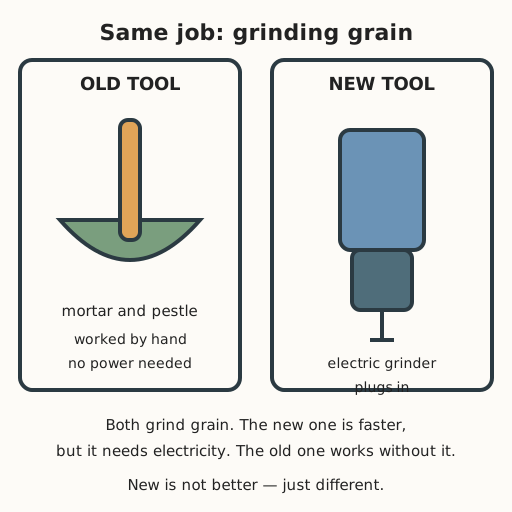
Lesson 2 — Old Tool, New Tool
Summary
Learners compare an old tool and a new tool that do the same job and name what changed. A mortar and pestle and an electric grinder both grind grain; a needle and a sewing machine both join cloth; a water jug and a hand pump both move water. They notice that the new tool is often faster or more powerful, and often needs electricity — and that the old tool still works where there is no power. New is not better; it is just different.
Objectives
- Compare an old tool and a new tool for the same job and say what changed. (D10.S1.02.02)
Connection
How did your family make food this morning — by hand, or with a machine? In many homes a person grinds grain by hand with a stone mortar and pestle; in others an electric grinder does it. Both do the same job. The difference is what changed: the machine is faster, but it needs electricity, and the hand tool works anywhere. That is what it means to compare an old tool and a new tool.
Materials
- Old-and-new tool picture cards (pairs for the same job)
- Paper and crayons
Preparation
- Prepare or draw old-and-new pairs: mortar and pestle → electric grinder; needle → sewing machine; water jug → hand pump; hand broom → vacuum.
- Have ready one real old tool to hold (a mortar and pestle, or a needle) if available.
- Prepare to say, for each pair, the shared job and what changed.
Facilitator note
This lesson is written to the learner (“you”). Hold the unit’s stance carefully: teach technology with neither worship nor fear. A new tool is not “better” simply because it is new — it is often faster or more powerful, and it often needs electricity that not everyone has. An old tool is not “worse” simply because it is old — it works anywhere, never runs out of power, and people still use it every day. Both are real tools made by people to solve a problem (retrieval: link back to Lesson 1). Use examples from many places so no one home is the default: a hand water pump in a village, a mortar and pestle in a kitchen, a sewing machine in a workshop. Distinguish evidence from values: “the machine is faster” is a fact; “the machine is better” is a value judgment — and at this age we hold them apart gently. Honor every body: a learner who is blind or has low vision can feel the old tool and hear the new one described; a non-speaking learner can point to old or new and to a picture for “faster” or “needs electricity.”
Procedure
- Gather (5 min). Remember Lesson 1: tools solve problems. Sometimes there is an old way and a new way to solve the same problem.
- Meet old and new (15 min). For each pair, name the shared job first: “Both the mortar and the grinder grind grain.” Then say what changed: “The grinder is faster, and it needs electricity. The mortar works by hand, with no power.”
- Sort old and new (10 min). With the cards, put each tool in the “old” pile or the “new” pile. For one pair, say the job and what changed.
- Say it in a sentence (5 min). Finish the frame together: “The ___ and the ___ both ___. What changed is ___.”
- Draw one pair (8 min). Draw an old tool and a new tool for the same job, and write or say what changed.
- Close (2 min). New is not better and old is not worse — they are two ways to solve the same problem. Some places have electricity; some do not. Both tools matter.
Differentiation
- Support: Compare one pair only, saying the job and one change together aloud with the frame.
- Blind/low vision: Feel the old tool and hear the new one described; tell what changed (faster, needs electricity) by voice.
- Deaf/hard of hearing / non-speaking: Sort cards by pointing, and signal “faster” or “needs electricity” with a sign or picture to say what changed.
- Motor differences: Direct a partner’s hands to sort and draw while the learner says or points to the job and the change; use big, light cards.
- Extension: Tell why the old tool still matters where there is no electricity, and name one job your family does by hand.
Assessment
- Formative (observation): Can the learner compare one old tool and one new tool for the same job and name what changed (speed, power, or electricity)?
- Artifact (portfolio): The “old tool, new tool” drawing with the “what changed” sentence.
Home connection
At home, find one job your family does with a tool. Ask a grown-up: how did people do this job long ago, before the new tool? Tell them what changed and which way your family uses.
Resources
- Encyclopaedia Britannica, “Sewing Machine” — the sewing machine was patented in the 1800s (Howe, 1846) and let people sew much faster than by hand, supporting the old-vs-new comparison. https://www.britannica.com/technology/sewing-machine