Lesson 02 — Eyes and Ears Together
Learners discover a second sense partnership: sight and hearing. By hearing a sound with eyes closed, then watching it with ears covered, then using both, they notice that eyes and ears each add a clue the other misses, and together they build a fuller picture.
Objectives
Objectives
- D03.S1.03.01 Describe how two senses can work together, such as taste and smell, to give a fuller picture of something.
Essential question
How do my eyes and ears work together to tell me more than either could alone?
Key vocabulary
Materials
Standard materials
- A small sound-making object · 1 A shaker, a hand clap, or a small drum — anything that makes a clear sound
- A soft ball or beanbag · 1 To drop or bounce so learners can both see and hear it
- Paper and crayons · per learner To draw the eyes-and-ears team
Low-tech / no-cost
- Your own body and voice Clap your hands, snap your fingers, and say a word — eyes and ears working together, no props needed
- A pebble or leaf Drop it so you can see it fall and hear it land
Enriched / lab & device
- A picture-and-sound matching set · 1 set Cards with a picture on one side and its sound source on the other (a bird, a drum, a bell)
- A tablet or camera · 1 per group Record a sound with and without seeing its source, then replay and compare
Works in different contexts
- large-group One learner hides a shaker behind a book while others first listen, then watch, then both — sharing what each clue adds
- self-directed A learner closes their eyes to hear a sound, then watches it, then uses both, and records what each sense added
- outdoor-only Listen to a bird or a passing vehicle first with eyes closed, then watch it, then use both — and name the two clues
- multi-age Older learners make the sounds while younger learners cover and uncover their eyes, then everyone switches roles
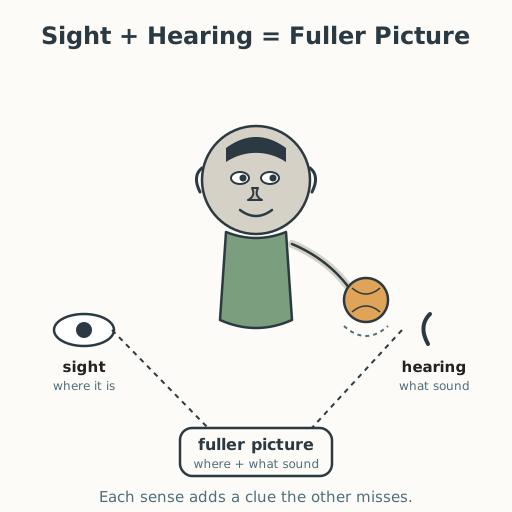
Lesson 2 — Eyes and Ears Together
Summary
Learners meet a second sense team: sight and hearing. They listen to a sound with eyes closed, then watch it with ears covered, then use both — and discover that each sense adds a clue the other misses. When eyes and ears team up, the picture is fuller.
Objectives
- Describe how two senses can work together, such as taste and smell, to give a fuller picture of something. (D03.S1.03.01)
Connection
Have you ever heard a clap from across the room, or watched a bird land without hearing it over the wind? Your eyes tell you where something is; your ears tell you what sound it makes. Alone, each sense only gets half the story. Together, they fill in the whole picture — that is how you catch a tossed ball, or know a drum is being hit even while you watch it.
Materials
- A small sound-making object (shaker, hand clap, or drum)
- A soft ball or beanbag to drop or bounce
- Paper and crayons
Preparation
- Choose a few clear sounds to use — a clap, a shaker, a dropped ball.
- Clear a small space where learners can sit and cover or close their eyes safely.
- Prepare paper and crayons for the closing drawing.
Facilitator note
This lesson is written to the learner (“you”) so it works in a classroom and for a self-directed learner. Prepare the sound sources and space, then guide the three-step listen/watch/both activity. This spirals from Lesson 1’s taste-and-smell team to a second pair of senses. Honor every body and every ability: a learner who is deaf or hard of hearing gets far more from eyes (and may read lips or use sign — that is sight doing extra work), and a learner with low vision gets far more from ears — and can gather the “sight” clue through touch instead, feeling the ball’s bounce through the floor with a hand or foot, or having a friend guide their hand toward the sound. Frame this as a strength of teamwork, never as a lack: when one sense has less to work with, the others carry more. Let learners choose how to “cover” a sense — closing eyes or covering ears — in the way that is comfortable for them (never cover a hearing aid or cochlear implant; a learner who uses one may prefer to simply not listen for a moment, or watch a friend’s silent motion instead).
Where a tablet or camera records the sound, notice what the tool can do — save and replay a sound — and what it cannot: it does not feel the clap through the floor, and it is made somewhere and needs power, while your own ears and hands sense with nothing but themselves. A tool is a helper, never a replacement for the senses.
Procedure
- Gather (5 min). Last time you found that taste and smell team up. Today you will meet another team: your eyes and your ears.
- Hear only (10 min). Close your eyes (or cover them gently). Listen as a friend shakes a shaker, claps, or drops a soft ball. What can your ears tell you? Maybe the sound is loud or soft, near or far. What can your ears NOT tell you? They cannot show you exactly where the ball is or what it looks like.
- See only (10 min). Now cover your ears (or have your friend make a silent motion). Watch the shaker move or the ball drop. What can your eyes tell you? Maybe where it is and how it moves. What can your eyes NOT tell you? They cannot hear the clap or the thud.
- Both together (10 min). Now use both — watch AND listen. Notice how the two clues join. You know where it is, how it moves, AND what sound it makes. That is a fuller picture.
- Draw the team (10 min). Draw an eye and an ear with an arrow meeting in the middle, and label them “sight” and “hearing.” Write one sentence about a clue each one gives you.
- Close (5 min). Say it together: “eyes and ears team up.” Two senses together fill in the whole picture.
Differentiation
- Support: Use one clear sound at a time and guide each step aloud; accept spoken or drawn answers.
- Extension: Ask learners to name a third sense that could add a clue to the same sound (for example, feeling the ball’s bounce through the floor with their feet).
Assessment
- Formative (observation/peer): Can the learner say, in their own words, one clue the eyes give and one clue the ears give, and that together they make a fuller picture?
Resources
- World Health Organization — global health and wellbeing reference: https://www.who.int/
Home connection
Tonight, close your eyes and listen for one sound at home, then open your eyes and find it. Tell someone what your ears told you first and what your eyes added.