Lesson 02 — Food — Energy to Grow, Play, and Learn
Learners recall the food groups from Grade 2 and learn why food matters: it is the body's fuel, giving energy to grow, play, and learn. Every family's way of eating is honored, and no food, meal, or body is ranked — the point is noticing that food powers the whole body's work.
Objectives
Objectives
- D03.S3.03.01 Describe what a body needs to stay healthy, such as food, water, sleep, and movement, and why each matters.
Essential question
Why does food matter for my body, and how does it give me energy to grow, play, and learn?
Key vocabulary
Materials
Standard materials
- Food group reminder cards · 1 set Fruits, vegetables, grains, and proteins from many places — rice, maize, flatbread, beans, lentils, greens, mango, fish, eggs, roots
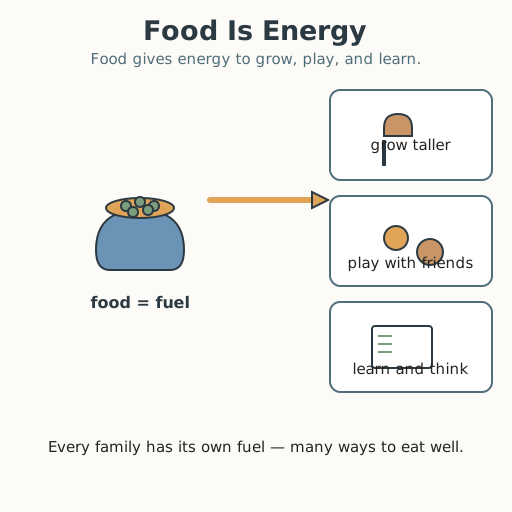
- A "food is fuel" picture · 1 A simple picture comparing food to fuel — a meal and a body full of energy to grow, play, and learn
- Paper and crayons · per learner To draw a meal that gives energy for one of the three — grow, play, or learn
Low-tech / no-cost
- Voice and body Name foods from home and act out the energy they give — running, growing tall, thinking hard
- Remembered foods Recall and name a food from each group with no cards or paper needed
Enriched / lab & device
- Real whole foods to touch and smell · a few Safe whole foods — rice, a mango, a root, a handful of beans — to hold and connect to energy
- A "food is fuel" picture book · 1 A book showing how food becomes energy in bodies of many kinds
Works in different contexts
- large-group Discuss food-as-fuel together, then send pairs to match each food card to what it helps the body do — grow, play, or learn
- self-directed A learner sorts food cards into groups, says what food gives the body, and draws one meal that fuels them
- outdoor-only Eat or talk about a shared food outdoors and name the energy it gives; act out growing, playing, and learning
- multi-age Older learners read the food cards and explain food groups while younger learners act out the energy each food gives
- level-grouped Learners who can explain why food matters teach it back; others match foods to "grow, play, or learn" with a reminder card
Lesson 2 — Food — Energy to Grow, Play, and Learn
Summary
Learners recall the food groups from Grade 2 and learn why food matters: it is the body’s fuel, giving energy to grow, play, and learn. Every family’s way of eating is honored, and no food, meal, or body is ranked — the point is noticing that food powers the whole body’s work, whatever a family eats.
Objectives
- Describe what a body needs to stay healthy, such as food, water, sleep, and movement, and why each matters. (D03.S3.03.01)
Connection
Have you ever felt tired and slow, then eaten something and felt ready to go again? That is food doing its job. Food is your body’s fuel — like wood for a fire or petrol for a car, food is what your body burns for energy to grow, play, and learn. Today you will see how food powers every part of your day.
Materials
- Food group reminder cards (fruits, vegetables, grains, proteins from many places)
- A “food is fuel” picture
- Paper and crayons
Preparation
- Prepare the food group reminder cards and the “food is fuel” picture.
- Hold the line on no food shaming: food is fuel, and every family’s fuel is welcome and worthy — there is no “good” or “bad” food here, only food that powers a body.
Facilitator note
This lesson is written to the learner (“you”). No food moralizing, no “good” or “bad” foods, and no talk of body size or weight. Food’s job is to give energy, and different families get that energy from different foods — rice, maize, wheat, millet, beans, roots, fish, eggs, fruits, and greens all fuel bodies well. A food that is everyday for one family may be rare for another, and neither is wrong. This lesson retrieves Grade 2’s food groups (U.02.008) and deepens it with the why: energy for growth, play, and learning. A learner who does not use a speaking voice points, signs, or acts out the energy a food gives; a learner who is blind or has low vision feels real or textured foods and names the energy each gives; a learner who is deaf or hard of hearing follows the cards and demonstrations from the front, since every idea is shown, not only told. Some learners may not have enough food at home — frame food as energy every body deserves, and respond with care if a learner shares something hard. The health facts are from the World Health Organization: food provides the energy and nutrients the body needs to grow and stay healthy.
Procedure
- Gather (5 min). Remember last year: you sorted foods into fruits, vegetables, grains, and proteins. This year we learn what all food is for.
- Food is fuel (10 min). Look at the “food is fuel” picture. Just as a fire needs wood and a car needs fuel, your body needs food. Food gives your body energy — the power to move, think, and grow. Without food, a body quickly runs low and feels weak.
- What does energy do? (10 min). Your body uses food energy to grow (taller, stronger bones and muscles), to play (run, jump, laugh), and to learn (your brain burns energy when you think and read). Point to each one on the picture.
- Many fuels, one job (10 min). Sort the food cards back into the four groups. A rice-and-beans meal, a flatbread-and-lentils meal, a fish-and-roots meal — different fuels, same job: energy for your body. No meal is better than another; there are many ways to fuel a body well.
- Draw your fuel (5 min). Draw one meal your family eats, and under it draw what the energy helps you do — grow, play, or learn.
- Close (5 min). Say it together: “Food is my fuel. It gives me energy to grow, play, and learn.”
Differentiation
- Support: Match just a few foods to “grow, play, or learn” with a reminder card; accept spoken, drawn, or gestured answers.
- Support (non-speaking): Point to foods and act out the energy each one gives.
- Support (blind/low-vision): Feel real foods and name the energy each gives; describe the “fuel” idea aloud as a story.
- Extension: Name one food from each of the four groups your family eats, and explain what kind of energy (grow, play, or learn) it most helps you with.
Assessment
- Formative (observation): Can the learner say, in their own way, that food gives the body energy to grow, play, and learn — without any ranking of foods or bodies?
- Self: The learner names one food they ate and what it helped their body do.
Home connection
At your next meal, point to the food on your plate and tell a grown-up how it fuels you — to grow, to play, or to learn.
Resources
- World Health Organization, “Healthy diet” (food and energy for a growing body): https://www.who.int/news-room/fact-sheets/detail/healthy-diet