Lesson 04 — Sleep and Movement — Rest and Motion
Learners complete the four body needs by learning why sleep and movement matter: sleep restores and mends the body, and movement strengthens the heart, muscles, and bones and lifts the mood. They feel both in their own bodies — moving, then resting — and no body or pace is judged, because every body moves and rests in its own way.
Objectives
Objectives
- D03.S3.03.01 Describe what a body needs to stay healthy, such as food, water, sleep, and movement, and why each matters.
Essential question
Why do sleep and movement matter for my body, and how do they work together to keep me strong?
Key vocabulary
Materials
Standard materials
- Rest and motion picture cards · 1 set Cards of sleep and movement times — bedtime, a nap, running, dancing, walking, jumping, stretching
- A "rest and motion" chart · 1 Two columns — sleep restores, movement strengthens — to sort the cards into
- Paper and crayons · per learner To draw one way to rest and one way to move
Low-tech / no-cost
- Voice and body Act out sleeping and moving, and feel your heartbeat after moving; no cards needed
- A place to move and rest Use the room or outdoors to move, then sit still and feel the body slow down
Enriched / lab & device
- A "my body rests and moves" picture book · 1 A book showing many bodies resting and moving in many ways
- A simple movement game · 1 A short game of run, jump, and stretch, adapted to every body, to feel movement's effect
Works in different contexts
- large-group Move as a whole group, then rest together and notice heartbeats slowing; sort the rest-and-motion cards as a class
- self-directed A learner moves, feels their own heartbeat, rests, and sorts the cards into rest and motion, then draws one of each
- outdoor-only Move outdoors — run, jump, stretch — then sit and rest, noticing how the body feels in each state
- multi-age Older learners lead a short movement game and explain why sleep restores; younger learners act out rest and motion
- level-grouped Learners who can explain why sleep and movement matter teach it back; others sort the cards and join the movement
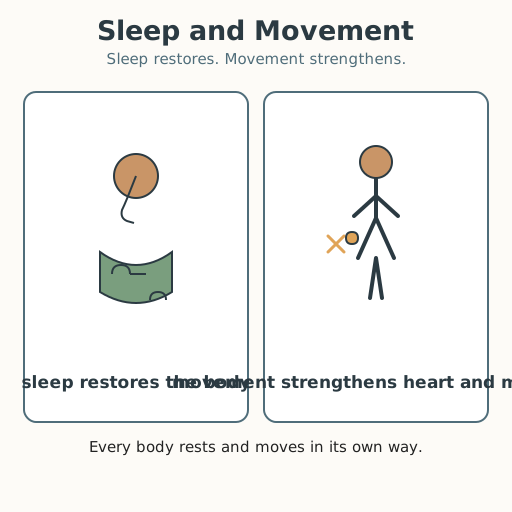
Lesson 4 — Sleep and Movement — Rest and Motion
Summary
Learners complete the four body needs by learning why sleep and movement matter: sleep restores and mends the body, and movement strengthens the heart, muscles, and bones and lifts the mood. They feel both in their own bodies — moving, then resting. No body or pace is judged, because every body moves and rests in its own way.
Objectives
- Describe what a body needs to stay healthy, such as food, water, sleep, and movement, and why each matters. (D03.S3.03.01)
Connection
Think of the last time you were very tired and then slept deeply — you woke up ready again. And think of running or dancing until your heart beat fast and your skin felt warm, then how good it felt afterward. Sleep and movement are two more needs your body has, and they work like a team: sleep restores you, and movement makes you strong. Today you will feel both in your own body.
Materials
- “Rest and motion” picture cards (bedtime, a nap, running, dancing, walking, stretching)
- A “rest and motion” chart with two columns
- Paper and crayons
Preparation
- Prepare the picture cards and the two-column chart (“sleep restores,” “movement strengthens”).
- Clear a safe space for a short movement moment, adapted to every body.
Facilitator note
This lesson is written to the learner (“you”). No body or pace is judged. Every body moves and rests in its own way, and some bodies move with wheels, aids, or help — all movement counts. Do not turn movement into a contest or tie it to body size; the goal is the felt sense of moving and resting. Sleep needs vary, too — most children aged 6–12 need about 9–12 hours a night (American Academy of Sleep Medicine), but families and bodies differ, and rest is never a rule to be shamed over. A learner who uses a wheelchair or has motor differences moves in their own way — celebrate it; a learner who does not use a speaking voice points or acts out rest and motion; a learner who is blind or has low vision feels the heartbeat after moving and the body slowing at rest; a learner who is deaf or hard of hearing follows the cards and the demonstration, and can feel the fast-then-slow heartbeat by touching their chest. This lesson finishes the four needs and sets up the unit’s later food-origins and safety lessons. Health facts: the World Health Organization recommends regular physical activity for children’s health, and the American Academy of Sleep Medicine recommends about 9–12 hours of sleep for children aged 6–12.
Procedure
- Gather (5 min). You have learned two needs — food and water. Today you meet the last two: sleep and movement.
- Why sleep matters (10 min). When you sleep, your body restores itself — it mends, grows, and stores what you learned that day. A body that does not sleep enough feels tired, cross, and fuzzy. Point to the sleep cards: bedtime, a nap, a quiet rest.
- Why movement matters (10 min). When you move, you make your heart, muscles, and bones strong, and you lift your mood. Moving is not a contest and not about how a body looks — it is about feeling good and staying strong. Point to the movement cards: running, dancing, walking, jumping, stretching.
- Feel it in your own body (10 min). Move for a short time — run in place, jump, stretch, or move in your own way. Stop and put a hand on your chest: your heart is beating fast and you feel warm. Now sit or lie still and rest. Feel your heart slow and your breath soften. That is the team of motion and rest.
- Sort rest and motion (5 min). Sort the cards into the two columns: sleep restores, movement strengthens.
- Close (5 min). Say it together: “Sleep restores me, and movement makes me strong. I rest and I move, and I care for my body.”
Differentiation
- Support: Do one movement and one rest, then feel the heartbeat together; accept spoken, drawn, or gestured answers.
- Support (motor-difference): Movement is any movement — rolling, reaching, swaying, or moving with a peer; celebrate it and feel the heartbeat at rest.
- Support (non-speaking): Point to the cards and act out rest and motion with the body.
- Extension: Name one more way movement helps your body or mood, and one thing you do to get a good sleep.
Assessment
- Formative (observation): Can the learner say, in their own way, that sleep restores the body and movement strengthens it — without any judgment of bodies or pace?
- Self: The learner notices their own heartbeat fast after moving and slow after rest, and names which they need more of today.
Home connection
With a grown-up, notice together how your body feels after moving and after resting today. Name one way you rest well and one way you like to move.
Resources
- World Health Organization, “Physical activity” (why movement matters): https://www.who.int/news-room/fact-sheets/detail/physical-activity
- American Academy of Sleep Medicine, “Recommended amount of sleep for pediatric populations” (9–12 hours for ages 6–12): https://aasm.org/resources/pdf/pediatricsleepdurationconsensus.pdf