Lesson 05 — Where My Food Comes From
Learners trace common foods to their origins: plants, animals, farms, and gardens. They sort foods such as rice, mango, eggs, milk, beans, fish, and honey by where they come from, and they learn that every food has an origin in the living world — a first step toward understanding how food reaches a table.
Objectives
Objectives
- D03.S3.03.02 Identify where common foods come from, such as plants, animals, farms, and gardens, and how they reach a table.
Essential question
Where does my food come from — which plants, animals, farms, and gardens grow it?
Key vocabulary
Materials
Standard materials
- Food origin cards · 1 set Common foods with their origins — rice (plant), mango (plant), egg (animal), milk (animal), beans (plant), fish (animal), honey (bees)
- Four origin mats · 4 Labeled "from plants," "from animals," "from a farm," and "from a garden"
- Paper and crayons · per learner To draw one food and where it comes from
Low-tech / no-cost
- Remembered foods Name foods from home and tell where each one comes from; no cards needed
- Voice and body Act out growing from a seed, being a hen laying an egg, or a bee making honey
Enriched / lab & device
- Real whole foods to examine · a few Safe whole foods — rice, a mango, an egg, a carrot, a handful of beans — to hold and trace to their origin
- A "where food comes from" picture book · 1 A book showing plants, animals, farms, and gardens around the world
Works in different contexts
- large-group Sort the origin cards together at the front, then send pairs to re-sort a small set and explain one food each
- self-directed A learner sorts the cards onto the four mats, checks by naming why each food went where, then draws one food and its origin
- outdoor-only Find real plants, gardens, or animals nearby and name which food each could give; sort foods by standing in the matching circle
- multi-age Older learners read the cards and explain origins while younger learners match foods to their plants or animals
- level-grouped Learners who remember origins sort on their own; others re-match foods to origins with a reminder picture
Lesson 5 — Where My Food Comes From
Summary
Learners trace common foods to their origins: plants, animals, farms, and gardens. They sort foods such as rice, mango, eggs, milk, beans, fish, and honey by where they come from, and they learn that every food has an origin in the living world — a first step toward understanding how food reaches a table.
Objectives
- Identify where common foods come from, such as plants, animals, farms, and gardens, and how they reach a table. (D03.S3.03.02)
Connection
The rice in your bowl, the mango in your hand, the egg on your plate — none of them appeared from nowhere. Every food begins somewhere in the living world: on a plant, from an animal, in a farm, or in a garden. Knowing where food comes from connects you to the Earth and to the people who grow your food. Today you will trace your foods to their origins.
Materials
- Food origin cards (rice, mango, egg, milk, beans, fish, honey, and more)
- Four origin mats labeled “from plants,” “from animals,” “from a farm,” and “from a garden”
- Paper and crayons
Preparation
- Prepare the food origin cards and the four origin mats.
- Note that many foods fit more than one origin (a mango comes from a plant and can be grown in a garden or on a farm); sorting is for noticing, not for being right.
Facilitator note
This lesson is written to the learner (“you”). Every food has an origin in the living world, and no origin is better than another. The four mats are one way to sort, not the only right one — a mango comes from a plant and can be grown in a garden or on a farm, and a hen’s egg comes from an animal and can be raised on a farm or in a yard. Celebrate the wide, global range of foods: rice, maize, millet, wheat, beans, lentils, roots, fruits, fish, eggs, milk, and honey all feed the world. Honor that food reaches families in more ways than planted farms and gardens — many people gather wild fruits, greens, and honey, fish rivers, lakes, and seas, or herd animals that move with the seasons, and these ways of living are as real and worthy as farming. Avoid ranking any food as more or less important. A learner who is blind or has low vision sorts real or textured foods by touch; a learner who does not use a speaking voice points or signs; a learner who is deaf or hard of hearing follows the mats and demonstration from the front, since every idea is shown, not only told. This lesson opens the unit’s D03.S3.03.02 “where food comes from” path and leads into the farm-to-table journey. The framing that foods originate from plants, animals, farms, and gardens reflects the FAO’s account of food coming from plants and animals raised by people.
Procedure
- Gather (5 min). Think of one food you ate today. Where did it begin? Today you will find out.
- Meet the four origins (10 min). Some food comes from plants — fruits, vegetables, grains, seeds, and roots. Some comes from animals — eggs, milk, fish, and meat. A farm is a place where people grow plants and raise animals to feed people, and a garden is a smaller place, sometimes at home, where food is grown. And not every family’s food begins in a planted field — some food is gathered from wild places (wild fruits, greens, and honey), some is fished from rivers and seas, and some comes from herded animals. These are all real ways food comes to a table. Point to each mat as we name it.
- Sort foods to their origins (15 min). Take a card. Which mat does it go on? Say why: “Rice comes from a plant — it is a grain.” “An egg comes from an animal — a hen.” “Honey comes from bees.” If a food fits more than one mat, put it where it makes sense and say why — sorting is for noticing, not for being right.
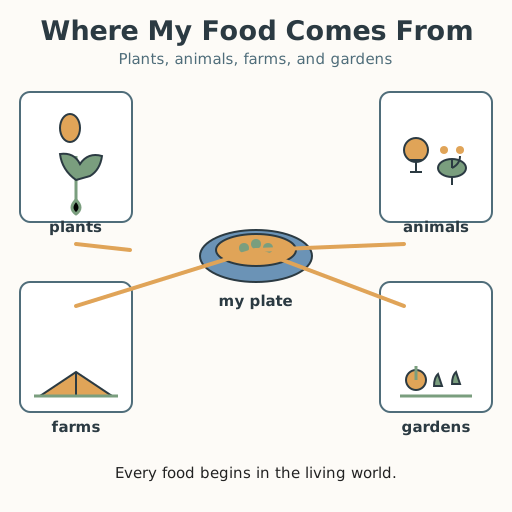
- Every food has a living origin (10 min). Look at the picture: a plant, an animal, a farm, and a garden all point to a plate. Every single food began in the living world. There is no food that appeared from nothing.
- Draw one origin (5 min). Draw one food and where it comes from — a plant, an animal, a farm, or a garden.
- Close (5 min). Say it together: “Every food comes from the living world — plants, animals, farms, and gardens. I am connected to the Earth through the food I eat.”
Differentiation
- Support: Sort just four familiar foods first; use real foods from the learner’s own kitchen. Learners may point, sign, or gesture instead of speaking.
- Support (blind/low-vision): Use real or textured foods and sort by touch, naming each food and its origin as it is felt.
- Extension: Name one food from each origin (plant, animal, farm, garden) that their family eats, and draw a “food origins” map of their own meals.
Assessment
- Formative (observation): Can the learner place a food into one of the four origins and, in their own way, show that every food begins in the living world?
- Self: The learner names one food they already knew and one new origin they learned.
Home connection
At your next meal, point to one food and name where it comes from — a plant, an animal, a farm, or a garden. Tell a grown-up which origin your food began in.
Resources
- Food and Agriculture Organization of the United Nations, “The State of Food and Agriculture” (food comes from plants and animals raised by people): https://www.fao.org/publications/home/fao-flagship-publications/the-state-of-food-and-agriculture/en