Lesson 01 — Simple Machines — Lever, Wheel, and Ramp
Learners meet three simple machines — the lever, the wheel, and the ramp — and tell how each makes a job easier: a lever lifts, a wheel rolls, and a ramp lets a load move up a slope instead of being lifted straight up. They learn that a simple machine is not magic and not scary — it is a small thing, made by people, that changes how force is used so a job feels easier.
Objectives
Objectives
- D10.S1.03.01 Name a simple machine, such as a lever, wheel, or ramp, and tell how it makes a job easier.
Essential question
What is a simple machine, and how does a lever, wheel, or ramp make a job easier?
Key vocabulary
Materials
Standard materials
- Simple-machine picture cards · 1 set A lever (a pry bar lifting a rock, a seesaw), a wheel (a cart wheel, a wheelbarrow), and a ramp (a loading ramp, a wheelchair ramp), each with a job it makes easier
- A real lever, wheel, and ramp to try (a ruler on a pencil, a toy cart, a book propped as a ramp) · 1 set per group Safe, hands-on models for feeling how each makes a job easier
- Paper and crayons · per learner For drawing one simple machine and the job it makes easier
Low-tech / no-cost
- Found objects as a lever, wheel, and ramp A stick over a stone is a lever; a round fruit or stone rolled is a wheel; a flat board propped on a rock is a ramp — no printed cards needed
- Voice and body Act out lifting a heavy thing, rolling a load, and pushing up a slope, and name which simple machine helps each time
Enriched / lab & device
- Real simple machines to see (a wheelbarrow, a ramp, a pry bar, a doorstop) · 1 per group Handled safely with help, to feel that a lever, wheel, and ramp all make work easier
- A photo set of simple machines used around the world · 1 set A hand cart, a water-lifting lever (shadoof), a loading ramp, a bicycle wheel — one job each makes easier
Works in different contexts
- large-group Show each machine big; the whole group names the job, then acts it out (lift, roll, slide) before a few learners point to lever, wheel, or ramp
- self-directed A learner matches each simple machine to the job it makes easier, then draws one and writes or says how it helps
- outdoor-only Find or make a lever (a stick on a stone), a wheel (a rolling log or round stone), and a ramp (a board on a rock) outside, and name the job each makes easier
- multi-age Older learners read the machine labels and coach younger ones in naming the job each machine makes easier and acting it out
- level-grouped Learners who finish early name a second job the same simple machine helps; others match one machine to one job
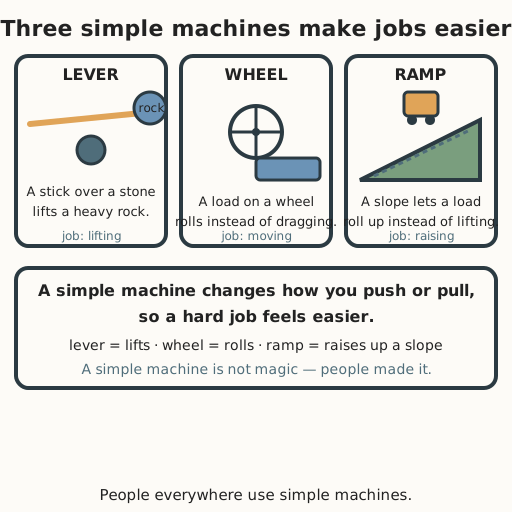
Lesson 1 — Simple Machines: Lever, Wheel, and Ramp
Summary
Learners meet three simple machines — the lever, the wheel, and the ramp — and tell how each makes a job easier. A lever (a stick over a stone, a seesaw) lifts a heavy thing with less effort; a wheel lets a load roll instead of slide; a ramp lets a load move up a slope instead of being lifted straight up. They learn that a simple machine is not magic and not scary: it is a small thing, made by people, that changes how force is used so a job feels easier.
Objectives
- Name a simple machine, such as a lever, wheel, or ramp, and tell how it makes a job easier. (D10.S1.03.01)
Connection
Think of a time something felt too heavy or too hard: a rock too heavy to lift, a box too heavy to drag across the ground, a load too heavy to carry up steps. People long ago found three small helpers. A lever — a stick over a stone — lifts the rock. A wheel lets the box roll. A ramp lets the load roll up a slope. You have seen all three: a seesaw in a park, a cart in a market, a slope up to a door. Each one turns a hard job into an easier one.
Materials
- Simple-machine picture cards (a lever, a wheel, a ramp — each with a job it makes easier)
- A real lever, wheel, and ramp to try (a ruler on a pencil, a toy cart, a book propped as a ramp)
- Paper and crayons
Preparation
- Prepare or draw the three simple-machine cards: a lever lifting a rock (and a seesaw), a wheel on a cart or wheelbarrow, and a ramp up to a step or a lorry.
- Set out one real model of each: a ruler balanced on a pencil (lever), a small cart or a rolling cylinder (wheel), a book propped on a block (ramp).
- Clear space to act out lifting, rolling, and sliding.
Facilitator note
This lesson is written to the learner (“you”). Keep the message gentle and true: a simple machine is a wonderful thing people make, but it is neither magic nor anything to fear. It does not create strength out of nothing — it changes how force is used so a job feels easier (a lever changes where you push; a wheel changes sliding into rolling; a ramp spreads the lift over a longer, gentler path). This is a foundational idea, so model each machine, then guide practice before learners work independently (Kirschner, Sweller & Clark, 2006). Honor every tool and every people equally: a lever, a wheel, and a ramp are used by people everywhere, and none is “more modern” or “better” than another — a hand cart in one market and a lorry ramp in another solve the same kind of problem. Honor every body: a learner who is blind or has low vision can feel each machine (the ruler tipping on a pencil, the wheel rolling, the book’s slope) and name the job it makes easier by feel; a non-speaking learner points to the machine and to the job; acting out lifting, rolling, and sliding works for learners who learn best by moving. Supervise all handling. Note for later: we are not ranking machines — the wheel is not “better” than the lever; each is the right tool for its own job.
Procedure
- Gather (5 min). Think of something that felt too heavy or too hard to move. Today you meet three small helpers people invented to make such jobs easier.
- Meet the lever (8 min). A lever is a stiff bar that tips on a point. Watch or try one: a stick over a stone, or a ruler on a pencil. Push down on the long end and the short end lifts the heavy thing. Say it: “A lever lifts a heavy thing more easily.”
- Meet the wheel (8 min). A wheel is a circle that rolls on an axle. Watch or try a cart. A load on wheels rolls instead of dragging. Say it: “A wheel lets a heavy load roll, so it is easier to move.”
- Meet the ramp (8 min). A ramp is a slope. Watch or try a book propped as a ramp. Instead of lifting a load straight up, you roll or slide it up the slope. Say it: “A ramp lets a load move up a slope instead of being lifted straight up.”
- Match machine to job (8 min). With the cards, match each simple machine to the job it makes easier. Say it in a full sentence: “The lever makes lifting the rock easier.”
- Draw one machine (6 min). Draw one simple machine — lever, wheel, or ramp — and the job it makes easier. Write or say one sentence: “The ___ makes ___ easier.”
- Close (2 min). A lever, a wheel, and a ramp are simple machines. They are not magic and not scary — they change how you push or pull so a hard job feels easier. People everywhere use them.
Differentiation
- Support: Name one machine and its job together aloud, using the frame “The ___ makes ___ easier,” while holding the real model.
- Blind/low vision: Feel each machine (the tipping lever, the rolling wheel, the slope of the ramp) and name the job it makes easier by shape, motion, and weight.
- Deaf/hard of hearing: Share each machine with sign, pictures, and acting; the learner signs or points to the machine and to the job it makes easier.
- Non-speaking: Point to the machine and to the job it makes easier, while a partner says the full sentence aloud.
- Motor differences: Choose the machine and direct a partner’s hands to move it and draw it, while the learner says or points to the job; use big, light models placed within reach.
- Extension: Name a second job the same simple machine helps, or find a lever, a wheel, and a ramp working together in one real tool (a wheelbarrow is a wheel plus a lever).
Assessment
- Formative (observation): Can the learner name a simple machine (lever, wheel, or ramp) and tell how it makes a job easier?
- Artifact (portfolio): The “simple machine and its job” drawing with a sentence.
Home connection
At home, find one simple machine — a lever, a wheel, or a ramp — in a room or outside, and tell a grown-up the job it makes easier. Ask the grown-up which simple machine they use the most and why.
Resources
- Britannica Kids, “Tool” — a tool is anything people use to help do a job, supporting the lesson’s core idea that simple machines are things people made to make work easier. https://kids.britannica.com/kids/article/tool/400194