Lesson 03 — A Day Long Ago, A Day Today
Learners compare a child's daily life in the Indus Valley city of Mohenjo-Daro (about 2500 BCE) with daily life today, identifying at least one thing that changed and one thing that stayed the same. They see that change and continuity always sit side by side, and that children long ago were real people with homes, play, and learning of their own.
Objectives
Objectives
- D08.S1.04.02 Compare daily life in an earlier society with life today and identify one thing that changed and one thing that stayed the same.
Essential question
What was daily life like in an earlier society, and what changed and what stayed the same compared with today?
Key vocabulary
Materials
Standard materials
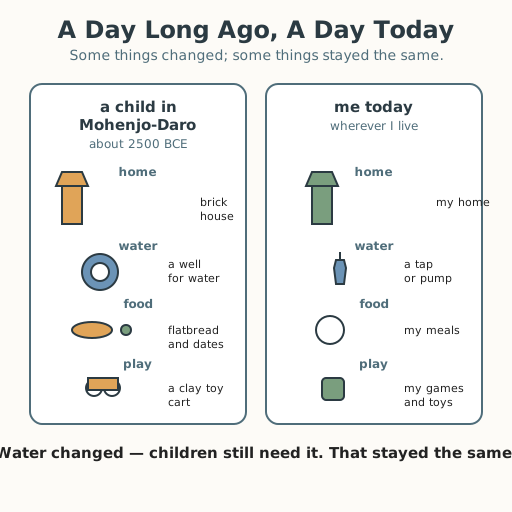
- A "then and now" comparison chart · 1 per learner or pair Two columns — "a child in Mohenjo-Daro (about 2500 BCE)" and "me today" — with rows for home, water, food, play, and learning
- Picture cards of daily life · 1 set Brick house, well, baked flatbread and dates, clay toy cart, learning from elders — for the long-ago side
- Pencils and crayons · per learner For completing the chart
Low-tech / no-cost
- Found objects A clay pot or cup (well), a flat stone (flatbread), a small toy (play) — match each to a part of daily life then and now
- Body and voice Act out a morning in Mohenjo-Daro — drawing water, baking, playing, learning — then act the same morning today
Enriched / lab & device
- A picture book or photo set of the Indus Valley · 1 Optional — to see Mohenjo-Daro's brick houses, drains, and toys
- A tablet or camera · 1 per group Optional — photograph the completed chart as a portfolio record
Works in different contexts
- large-group Build the comparison chart together on a big sheet, the whole group calling out "changed!" or "the same!" for each row
- self-directed The learner completes the chart alone, then tells a grown-up or peer one thing that changed and one that stayed the same
- outdoor-only Feel the real weather outside and act drawing water and baking bread as a child long ago might, then as you do today
- multi-age Older learners read the labels and scribe the sentences, while younger learners place the cards and act each row
- level-grouped Learners who finish early coach peers by asking "is this part the same as your day, or different?" rather than telling
Lesson 3 — A Day Long Ago, A Day Today
Summary
Learners step into the daily life of a child in Mohenjo-Daro, a planned city of the Indus Valley (about 2500 BCE, in what is now Pakistan), and compare it with their own day. They find one thing that changed — how people get water, from wells to taps — and one thing that stayed the same — children still play and learn. The lesson teaches that change and sameness always sit side by side, and that children long ago were real people, not curiosities.
Objectives
- Compare daily life in an earlier society with life today and identify one thing that changed and one thing that stayed the same. (D08.S1.04.02)
Connection
Every day you do ordinary things — wake, wash, eat, play, learn, rest. Children have done these same ordinary things for thousands of years, but how they did them changed with place and time. A child in Mohenjo-Daro drew water from a brick well and played with a small clay cart; you may turn a tap and play a different game. The need to wash, eat, play, and learn is the same; the way changes. Both parts of the story matter.
Materials
- A “then and now” comparison chart (one per learner or pair)
- Picture cards of daily life in Mohenjo-Daro
- Pencils and crayons
Preparation
- Prepare the chart with two columns and five rows: home (brick house with flat roof and courtyard / your home); water (a brick well / a tap or pump); food (flatbread, dates, vegetables / your meals); play (clay toy carts and dice / your games); learning (from elders and family / your school or learning place).
- Prepare simple picture cards for the long-ago side.
Facilitator note
This lesson is written to the learner (“you”). Comparing is a foundational skill, so model one full row first (Kirschner, Sweller & Clark, 2006): “Water — long ago, a child drew water from a brick well; today, many people turn a tap. That changed. But children still need water every day — that stayed the same.” Then guide the other rows. Hold the earlier society with respect: Mohenjo-Daro was a real, clever city — brick houses, covered drains, wells, and a grid of streets — not “primitive.” Do not rank “today” as better in every way; some things today are more convenient, and some things long ago were also wise and beautiful. Honor every body: describe the cards in words for a learner who cannot see them; a learner who does not use a speaking voice points or acts. Use the present for the learner’s life and the past for the long-ago city.
Procedure
- Gather (5 min). Think of your own morning: what do you do, from waking to breakfast? Name three things.
- Meet a child in Mohenjo-Daro (10 min). About 4,500 years ago, a city of brick houses, wells, and straight streets stood by the Indus River. A child there lived in a brick home, drew water from a well, ate flatbread and dates, played with clay toy carts, and learned from elders.
- Compare then and now (15 min). Fill each row of the chart:
- Home: brick house with a courtyard / your home.
- Water: a brick well / a tap or pump.
- Food: flatbread and dates / your meals.
- Play: clay carts and dice / your games.
- Learning: from elders / your learning place. For each row, say what changed and what stayed the same.
- Name one change and one same (10 min). Choose one thing that changed and one thing that stayed the same. Say or write each in a sentence: “People once drew water from wells; today many turn a tap. But children still need water every day.”
- Close (5 min). Daily life changes across time — and much stays the same. A child long ago and you are both part of the same long human story.
Differentiation
- Support: Compare only water and play, with heavy picture support and one shared sentence said together.
- Support (blind/low-vision): Feel a clay cup (well) and a small toy, and describe how each part of the day changed or stayed the same aloud.
- Support (non-speaking): Sort the picture cards into “long ago” and “today” and point to changed/same instead of speaking.
- Support (Deaf/HH): The cards are visual — sort them and sign “long ago,” “today,” “changed,” and “the same” as you go.
- Support (motor-difference): Use a large, stable chart and bigger cards; point or eye-gaze while a partner moves each card.
- Extension: Choose a different earlier society you have heard about and name one way its daily life changed and one way it stayed the same.
Assessment
- Formative (observation): Can the learner match daily-life items to “long ago” and “today”?
- Formative (oral/performance): Does the learner name one thing that changed and one thing that stayed the same — by speaking, signing, writing, or acting?
Resources
- Encyclopaedia Britannica, “Mohenjo-daro” — a planned Indus Valley city with brick houses, wells, covered drains, and a grid of streets, flourishing about 2500 BCE. https://www.britannica.com/place/Mohenjo-daro
- Encyclopaedia Britannica, “Indus civilization” — the Indus (Harappan) civilization, including its cities, crafts, and daily life. https://www.britannica.com/topic/Indus-civilization
Home connection
Ask someone at home: “What was daily life like when you were my age, and what is one thing that changed and one thing that stayed the same?” Tell each other one of each.