Lesson 05 — Eating Patterns: How We Eat Shapes How We Feel
Learners explain how **eating patterns** — when and how regularly we eat, whether we listen to hunger and fullness, whether we eat with others or while distracted — affect **health, digestion, and wellbeing**, not only *what* we eat. They build a picture of their own day of eating and honor the many patterns of the world.
Objectives
Objectives
- D03.S3.08.02 Explain how eating patterns, not only what one eats, affect health, digestion, and wellbeing.
Essential question
How do eating patterns — not only what I eat — affect my health, digestion, and wellbeing?
Key vocabulary
Materials
Standard materials
- A-day-of-eating sheet · 1 per learner A timeline of a day with space to mark when meals and snacks happen and how the body felt around them
- Pattern cards · 1 set per group Cards describing patterns — regular meals, skipping meals, eating with others, distracted eating, late-night eating, mindful eating — to sort and discuss
Low-tech / no-cost
- A shared board or large paper Draw the day's timeline together and mark meal times and body feelings as a group
- Voice and body Act out and describe hunger and fullness signals; no cards needed
Enriched / lab & device
- A food-and-mood log · 1 per learner A simple one-week page to note meal timing and how the body and mood felt, to reflect on over the week
- Photos of communal meals across cultures · 1 set Images of shared family meals, school lunches, and communal eating from several regions to discuss connection
Works in different contexts
- large-group Build one class timeline of a typical day, marking meal times, then small groups sort the pattern cards and report
- multi-age Younger learners point to when they feel hungry and full; older learners explain how a pattern (like skipping or eating together) affects the body and mood
- self-directed A learner fills their own day-of-eating sheet and writes one pattern they would keep and one they might adjust
- level-grouped Learners ready to extend distinguish a healthy eating pattern from a restrictive or dieting pattern, explaining the difference
- outdoor-only Discuss how a picnic or a shared outdoor meal changes the *pattern* of eating — slower, together, unhurried
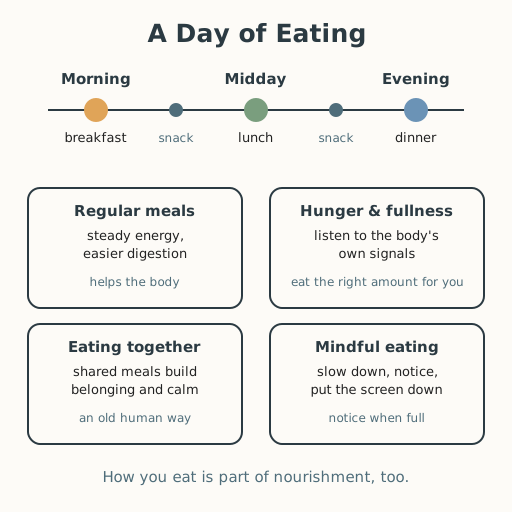
Lesson 5 — Eating Patterns: How We Eat Shapes How We Feel
Summary
Learners explain how eating patterns — when and how regularly we eat, whether we listen to hunger and fullness, whether we eat with others or while distracted — affect health, digestion, and wellbeing, not only what we eat. They build a picture of their own day of eating and honor the many patterns of the world.
Objectives
- Explain how eating patterns, not only what one eats, affect health, digestion, and wellbeing. (D03.S3.08.02)
- Describe one pattern in their own day and how it might help or hinder wellbeing. (D03.S3.08.02)
Connection
Two people can eat the very same meal and feel completely different — one calm and satisfied, the other rushed and uneasy. The difference is not the food; it is how it was eaten: regularly or after skipping all day, slowly or while scrolling, alone or with people they care about. How you eat is part of nourishment too. Today you learn to notice the pattern behind the plate.
Materials
- A-day-of-eating sheet
- Pattern cards
Preparation
- Copy the day-of-eating sheet and pattern cards.
- Retrieval: from Grade 7, recall noticing body signals of hunger, fullness, and energy needs; from earlier grades, recall that food gives the body energy.
Facilitator note
This lesson is written to the learner (“you”). The idea to land: eating patterns matter as much as food choice. Regular meals steady energy and support digestion; listening to hunger and fullness helps us eat the right amount for our own body; eating with others supports connection and wellbeing; eating while very distracted can lead us to miss fullness signals. These are gentle, evidence-aligned, wellbeing claims (S-038, S-261), not weight claims — and the lesson must never drift into dieting, restriction, or judgment of any body. Grade 7 already established that restricting food harms a growing body and that energy needs differ between bodies; build on that. The global/anthropological lens is central: eating patterns differ wonderfully across cultures — communal shared meals, several small meals, two larger meals, family meals at a set hour, seasonal and religious fasting (such as Ramadan), and grazing — and each is honored as a way of living, never ranked (S-118). Hold fasting traditions respectfully: they are meaningful practices, not “skipping meals.” The egalitarian lens: regular, varied meals are a matter of access, not virtue — a learner who is hungry because food is scarce is never to be shamed; hunger is a justice issue (S-120). The social-emotional lens: eating with others is one of the oldest human ways of belonging. The ethics lens: how we eat affects our own body and can be an act of care for ourselves. The technology & environment lens: how we eat is shaped by tools and places too — a phone in hand while eating can blunt fullness signals, and where food comes from and what is wasted touches the Earth — so the pattern is never only personal. Keep it concrete and warm; the connection is the meal, the concept is the pattern.
Procedure
- Recall (5 min). From Grade 7: what does it feel like to be hungry? To be full? Name the body signals.
- Meet eating patterns (10 min). A pattern is not what you eat but how and when. Look at the pattern cards: regular meals, skipping meals, eating with others, eating while distracted, eating slowly and noticing, late-night eating.
- Sort and discuss (12 min). In your group, sort the patterns into “helps my body and mood” and “might make it harder,” and say why for each. (There are no “bad people” here — only patterns that help or hinder.)
- Map your own day (13 min). On your day-of-eating sheet, mark when you usually eat and how your body feels around each time. Circle one pattern that helps and one you might gently adjust.
- Honor the world’s patterns (5 min). Note: people everywhere eat differently — shared meals, small meals, two big meals, fasting traditions — and each is a real way of living, not a mistake.
- Close (5 min). You are not just what you eat; you are how you eat. Next: we meet substances — tobacco, alcohol, and drugs.
Differentiation
- Support: Match each pattern card to a simple drawing (a clock, a family at a table, a phone) and name one that helps.
- Extension: Explain the difference between a healthy eating pattern and a restrictive or dieting pattern, and why restriction harms a growing body.
Assessment
- Formative (observation): Can the learner explain how at least two patterns affect health, digestion, or wellbeing?
- Portfolio artifact: The completed day-of-eating sheet, kept in the portfolio.
Home connection
At your next meal at home, notice the pattern: is it regular? Shared? Slow? Ask how it feels to eat that way — and thank whoever made the meal.
Resources
- On healthy eating patterns (regular meals, variety, mindful eating): World Health Organization, “Healthy diet,” https://www.who.int/news-room/fact-sheets/detail/healthy-diet (S-038).
- On adolescence as a time of forming lifelong habits: World Health Organization, “Adolescent health,” https://www.who.int/health-topics/adolescent-health (S-261).
- On how dietary guidance and food patterns differ by culture: Food and Agriculture Organization, “Food-based dietary guidelines,” https://www.fao.org/nutrition/education/food-dietary-guidelines/en/ (S-118).