Lesson 09 — My Class, My Community
Learners name the groups beyond family that they belong to — their class, friends, neighbors, and community — and see how many people hold them.
Objectives
Objectives
- D01.S2.K.02 Name the groups to which they belong (family, class, community).
Essential question
What groups do I belong to besides my family?
Key vocabulary
Materials
Standard materials
- Paper and crayons · per learner
- A large shared paper for a class "we belong" picture · 1 One big sheet or joined papers for a group drawing
Low-tech / no-cost
- Voice and body Name groups aloud and act out belonging to them; no paper needed
- A shared ground drawing Draw a big map of your community in the soil and mark where you belong
Enriched / lab & device
- A walk around the neighborhood or school (with an adult) · 1 Point to the places and helpers that make up the community
- A tablet with a map app · 1 per group Find the school or meeting place on a map and talk about who is nearby
Works in different contexts
- large-group Build a group list of "groups we belong to" and have learners raise a hand for each one they share
- self-directed A learner draws themselves in the middle and draws circles for each group they belong to — class, neighbors, friends, a place of gathering
- outdoor-only Walk the edges of a shared space and name the people and helpers who make it a community — a shop, a well, a meeting tree
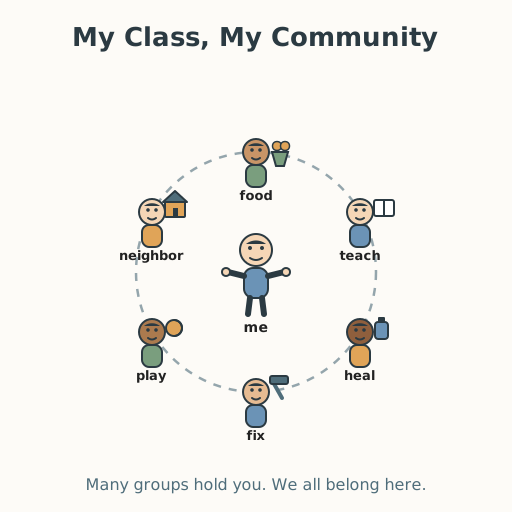
Lesson 9 — My Class, My Community
Summary
Learners widen the circle from family to the other groups they belong to: their class, their friends, their neighbors, and their community. They draw the groups and the people who help hold them together.
Objectives
- Name the groups to which they belong (family, class, community). (D01.S2.K.02)
Connection
You belong to more than your family. You belong to your class, to your friends, and to your community — the people who live and work near you. The people who sell food at the market, who teach at your school, who help when someone is sick — these people are part of your community too.
Materials
- Paper and crayons
- One large shared paper for a class “we belong” picture
Preparation
- Clear space for a group drawing.
- Prepare a list of possible groups: class, friends, neighbors, community, a place of gathering.
Facilitator note
This lesson is written to the learner (“you”) so it works in a classroom and for a self-directed learner. As facilitator, keep “community” concrete — the people and places a learner actually sees, not an abstraction. Where learners come from different neighborhoods or places of worship or gathering, honor each equally and avoid naming one as the norm.
Procedure
- Gather (5 min). Think: besides your family, what group are you part of? Your class? Your friends? Your neighbors?
- Many groups (10 min). Name groups one by one and raise a hand for each you belong to: class, friends, neighbors, community. Notice how many hands go up.
- Who holds us (10 min). In your community, who helps? (Someone who sells food, teaches, heals, fixes, or keeps us safe.) Name one helper and what they do.
- We belong (15 min). On the big shared paper, each learner draws one place or person from the community. Add your mark. Look — many hands made one big picture.
- Close (5 min). Remember: many groups hold you. You belong in each one.
Differentiation
- Support: Offer pictures or gestures for each group so learners can point rather than name.
- Extension: Invite learners to name one way they help their community, even in a small way, and tell a partner.
Assessment
- Formative (observation): Can the learner name at least one group they belong to besides family?
- Artifact (portfolio): The shared “we belong” picture (or a photo of it).
Resources
- CASEL SEL Framework (foundational competencies): https://casel.org/fundamentals-of-sel/
Home connection
On your way home, notice three people who help your community. Tell a grown-up who they are and what they do.