Lesson 05 — Everyday Foods and Sometimes Foods
Learners sort common foods into "everyday" and "sometimes" groups with guidance, and talk about how everyday foods help a body stay strong — without judging any food or any family.
Objectives
Objectives
- D03.S3.K.01 Sort common foods into "everyday" and "sometimes" groups with guidance.
Essential question
Which foods keep my body strong every day?
Key vocabulary
Materials
Standard materials
- Food picture cards · 1 set Pictures of common foods from many places — rice, beans, fruit, vegetables, fish, bread, sweets, fried snacks
- Two sorting baskets or mats · 2 Labeled "everyday" and "sometimes"
Low-tech / no-cost
- Real or drawn foods Sort real foods from the kitchen, or draw simple food pictures on scrap paper or in the dirt
- Two drawn circles Draw two circles on the ground and sort into them; no baskets needed
Enriched / lab & device
- Food models or empty packages · 1 set Clean, empty food packages or play foods for hands-on sorting
- Picture book about foods of the world · 1 A book showing many different ways people eat, to talk about afterward
Works in different contexts
- large-group Hold up each food card and have the whole group vote "everyday" or "sometimes" by pointing to the matching basket, then sort together
- self-directed A learner sorts the picture cards alone into two piles, then checks their choices with a grown-up or older peer
- outdoor-only Draw two big circles in the dirt and place real or drawn foods into the everyday or sometimes circle
- multi-age Older learners can act as recorders, writing or tallying which foods went in each group while younger learners sort
Lesson 5 — Everyday Foods and Sometimes Foods
Summary
Learners sort common foods into “everyday” and “sometimes” groups with guidance, and discover that everyday foods — fruits, vegetables, grains, beans, fish, and more — help a body stay strong and full of energy. The lesson is taught with kindness: no food is “bad,” and every family’s way of eating is honored.
Objectives
- Sort common foods into “everyday” and “sometimes” groups with guidance. (D03.S3.K.01)
Connection
Everywhere in the world, people eat — but not the same things. In one home, the everyday food might be rice and beans; in another, flatbread and lentils; in another, fish and root vegetables. Some foods give our bodies steady strength every day, and some are special treats we enjoy only sometimes. Knowing the difference helps us care for our bodies.
Materials
- Food picture cards (fruits, vegetables, grains, beans, fish, bread, sweets, fried snacks, and more)
- Two sorting baskets or mats labeled “everyday” and “sometimes”
Preparation
- Gather or draw food picture cards that include everyday foods and treat foods from many places and cultures.
- Label two baskets or mats: “everyday” and “sometimes.”
Facilitator note
This lesson is written to the learner (“you”). Teach it without shame. The words are “everyday” and “sometimes” — never “good” and “bad.” No child should feel that their family’s food, culture, or budget is being judged. Some children may not have steady access to food; keep the tone warm and matter-of-fact, and never ask a child to report what they ate. Frame the sorting as a way to notice what helps a body feel strong, not a rule to obey or a test to pass.
Procedure
- Gather (5 min). Think of a food you love. Everyone loves different foods, and every family eats in its own way. Today we will sort foods into two groups.
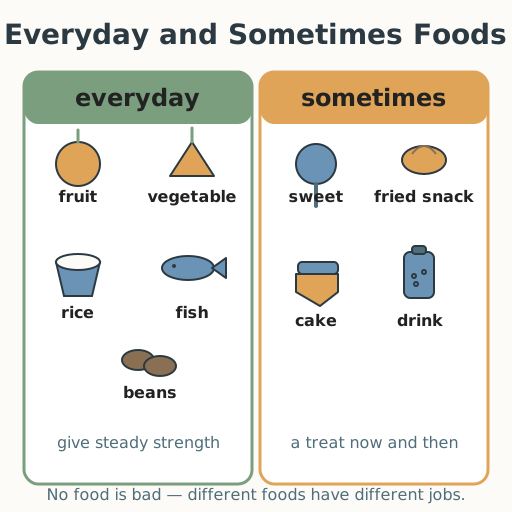
- Meet the two groups (10 min). Look at the two baskets. “Everyday” foods are the ones that give our bodies steady strength and energy, like fruits, vegetables, grains, beans, fish, and milk foods. “Sometimes” foods are treats we enjoy now and then, like sweets and fried snacks. Neither one is bad — they just have different jobs.
- Sort together (20 min). Pick up each food card. Which basket does it go in? Talk about why with a partner: “A banana is everyday because it gives me energy to play.” If you are not sure, ask — sorting is about learning, not being right.
- Talk about it (5 min). Look at the two full baskets. Which basket would help a body feel strong every day? Which basket would you choose for a special treat?
- Close (5 min). Remember: foods are friends, not rules. We care for our bodies by enjoying everyday foods most of the time and sometimes foods once in a while.
Differentiation
- Support: Sort just four familiar foods first; use real foods from the learner’s own kitchen.
- Extension: Invite learners to think of one food from their family’s table and decide which group it fits, then share why.
Assessment
- Formative (observation): Can the learner place a food into the everyday or sometimes group and give a simple reason, with guidance?
- Self: The learner names one everyday food they already enjoy.
Home connection
With a grown-up, look in the kitchen and name two everyday foods and one sometimes food you share as a family. No food is good or bad — just noticed with kindness.