Lesson 10 — My Body Is My Home
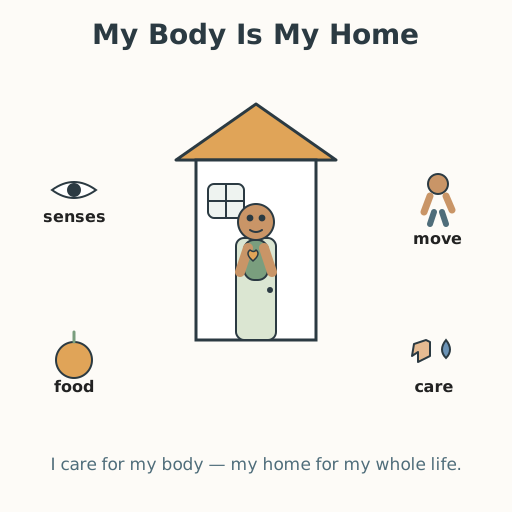
Learners bring the whole unit together — senses, movement, food, and self-care — by creating a "My Body Is My Home" picture that shows how they know and care for their own body.
Objectives
Objectives
- D03.S1.K.01 Name the five senses and identify a body part used for each.
- D03.S2.K.01 Demonstrate big movements (run, hop, balance) and small movements (draw, stack) with growing control.
- D03.S3.K.01 Sort common foods into "everyday" and "sometimes" groups with guidance.
- D03.S4.K.01 Show a self-care routine (washing hands, brushing teeth) and tell when to ask a grown-up for help.
Essential question
How do I care for this body that is my home?
Key vocabulary
Materials
Standard materials
- Paper and crayons or paints · per learner For a "My Body Is My Home" drawing
- A large paper outline of a body · 1 To fill in together with the things the unit celebrated
Low-tech / no-cost
- Found natural materials Leaves, stones, seeds, or shells to arrange a body shape on the ground
- Voice and body Act out and name each thing from the unit with your voice and movements; no paper needed
Enriched / lab & device
- A class book or poster kit · 1 Materials to assemble a class "My Body Is My Home" book or poster to keep
- Music for movement · 1 For a closing movement celebration
Works in different contexts
- large-group Build one big body outline together — every learner adds a drawing or word for a sense, a movement, a food, or a self-care habit
- self-directed A learner makes their own "My Body Is My Home" drawing or booklet, adding one thing for each strand, and shares it with a grown-up
- outdoor-only Arrange a big body shape on the ground with leaves, stones, and sticks, and place a found object at each sense and each body part you care for
- multi-age Older learners help younger ones label their drawings and run the closing movement celebration
Lesson 10 — My Body Is My Home
Summary
Learners celebrate everything they learned in the unit — the five senses, big and small movement, everyday foods, and self-care — by creating a “My Body Is My Home” picture or book. It is a joyful capstone that honors every body.
Objectives
- Name the five senses and identify a body part used for each. (D03.S1.K.01)
- Demonstrate big and small movements with growing control. (D03.S2.K.01)
- Sort common foods into “everyday” and “sometimes” groups. (D03.S3.K.01)
- Show a self-care routine and tell when to ask for help. (D03.S4.K.01)
Connection
You have spent this whole unit getting to know your body — the home you will live in your whole life. You learned what it senses, how it moves, what feeds it, and how to wash and care for it. A home is a place you keep safe and take care of, and your body is the closest home you have.
Materials
- Paper and crayons or paints
- A large paper outline of a body (to fill in together)
Preparation
- Draw or tape out a large body outline, or give each learner a blank page.
- Gather crayons or paints and any found natural materials.
Facilitator note
This lesson is written to the learner (“you”). As facilitator, this is a celebration, not a test. Help each learner recall one thing from each part of the unit and add it to their picture or the class body outline. Keep the tone joyful and inclusive — every body, every ability, and every way of living is welcome here.
Procedure
- Gather (5 min). Look down at your hands and wiggle your fingers. This is your body — your home. Today we remember everything we learned about caring for it.
- Remember the senses (10 min). Name the five senses and touch the body part for each: eyes, ears, nose, tongue, and hands. Draw or place a mark for each one on your body picture.
- Remember movement (10 min). Move your body your way! Run, roll, glide, or stretch; hop or step high; balance seated or standing. Then draw a small shape or stack something small. Add a drawing of your favorite movement to your picture.
- Remember food and care (10 min). Name one everyday food that helps you grow, and one way you care for your body — washing hands, brushing teeth, or asking for help when you need it. Add those to your picture too.
- Share and celebrate (5 min). Show your “My Body Is My Home” picture to a partner and tell them one thing you love about the home that is your body.
- Close (5 min). Put your hand over your heart. Thank your body for carrying you, and promise to care for it — with food, movement, washing, and asking for help when you need it.
Differentiation
- Support: Work with one strand at a time, or let the learner choose just one thing to add to a shared class picture.
- Extension: Invite learners to make a small “My Body Is My Home” book with one page for each strand, and to add a page about a new thing they want to learn.
Assessment
- Portfolio: The “My Body Is My Home” drawing or book becomes a portfolio artifact capturing the whole unit.
- Observation (formative): Can the learner recall one thing from each of the four strands — a sense, a movement, a food, and a self-care habit?
Home connection
Show your “My Body Is My Home” picture to a grown-up and tell them the four ways you care for your body: sensing, moving, eating everyday foods, and washing. Ask them what they love about their own body.