Lesson 09 — Asking for Help
Learners practice telling the difference between things they can try themselves and times to ask a trusted grown-up, then rehearse asking clearly for help.
Objectives
Objectives
- D03.S4.K.01 Show a self-care routine (washing hands, brushing teeth) and tell when to ask a grown-up for help.
Essential question
When do I ask a grown-up for help?
Key vocabulary
Materials
Standard materials
- Scenario cards · 1 set Simple picture cards of times to ask for help — a cut, feeling sick, a broken toy, feeling scared or unsafe, a fire
- A "help" sign or bell · 1 A prop for practicing how to ask clearly
Low-tech / no-cost
- Voice and body Act out each scenario and practice the words aloud; no cards needed
- Found objects Use a doll, a leaf bandage, or a friend to act out asking for help
Enriched / lab & device
- Role-play puppets · 1 set Puppets or dolls to act out asking a grown-up for help
- A "who can help" picture chart · 1 A chart with trusted adults — caregiver, teacher, nurse, neighbor — to name who to ask
Works in different contexts
- large-group Show each scenario card and have the whole group practice saying the help words together before a few learners act it out
- self-directed A learner sorts the scenario cards into "I can try myself" and "ask a grown-up," then practices the words with an older peer or caregiver
- outdoor-only Act out asking for help on a walk — a scrape, feeling lost, a wasp nest — and practice finding the nearest safe grown-up
- multi-age Older learners play the "grown-up" in role-plays so younger learners can practice asking a real person
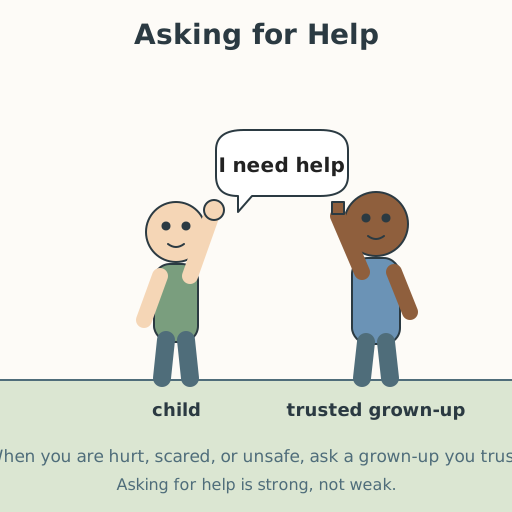
Lesson 9 — Asking for Help
Summary
Learners learn to tell the difference between little things they can try themselves and times to ask a trusted grown-up for help, and they rehearse asking clearly and confidently. Asking for help is a strength, not a weakness.
Objectives
- Tell when to ask a grown-up for help. (D03.S4.K.01)
Connection
Everyone needs help sometimes — even grown-ups. You need help when you are hurt, when you feel sick, when you are scared or unsafe, when something is too heavy or too high, or when you feel lost. Knowing when to ask, and who to ask, keeps your body — your home — safe.
Materials
- Scenario cards (a cut, feeling sick, a broken toy, feeling scared or unsafe, a fire, a too-high shelf)
- A “help” sign or bell for practicing
Preparation
- Prepare or draw simple scenario cards.
- Set a warm, safe tone — asking for help is brave, never silly.
Facilitator note
This lesson is written to the learner (“you”). As facilitator, keep the tone warm and reassuring. Introduce “trusted grown-ups” — the adults a child can safely turn to, such as a caregiver, teacher, nurse, or neighbor. Keep safety talk age-appropriate: if a child is hurt, scared, or made to feel unsafe, they should tell a trusted grown-up — no details beyond that are needed at this age. Be ready for a child to share something heavy, and respond with calm and follow your local safeguarding steps.
Procedure
- Gather (5 min). Think of a time you asked for help. How did it feel? Asking for help is something strong people do.
- Myself or a grown-up? (15 min). Look at each scenario card. Sort them: is this a little thing you can try yourself, or a time to ask a grown-up? Talk it through with a partner. A cut, feeling sick, feeling scared or unsafe, or a fire are all times to get a grown-up right away. A broken toy you might fix or leave.
- Who can help? (10 min). Name the trusted grown-ups in your life — at home, at school, in your neighborhood. Point to a partner and say one grown-up you would ask.
- Practice asking (10 min). Take turns: one person is the grown-up, one person asks clearly. “I need help — I hurt my knee,” or “I feel scared.” Speak in a calm, clear voice — or sign, point, tap a shoulder, or show a picture. Asking looks different for everyone, and every way of asking works.
- Close (5 min). Remember: asking for help keeps your body safe. It is always okay to ask.
Differentiation
- Support: Use two or three scenarios and practice one help phrase many times; model the words and tone.
- Extension: Invite learners to add their own scenario to the sort and to role-play asking a specific trusted grown-up by name.
Assessment
- Formative (observation): Can the learner sort a scenario and say one trusted grown-up to ask, with guidance?
- Self: The learner names one situation where they would ask for help this week.
Home connection
With a grown-up, name the trusted adults you could ask for help at home, at school, and in your neighborhood. Practice saying “I need help” in a clear, calm voice.