Lesson 04 — Waiting and Passing
Learners practice the hardest part of sharing — waiting — by passing one object around a group and keeping the game going for everyone.
Objectives
Objectives
- D02.S1.K.01 Take turns and share materials during play with a gentle reminder.
Essential question
How do we wait our turn and pass a shared thing along?
Key vocabulary
Materials
Standard materials
- A ball or beanbag to pass · 1
- A simple rhythm instrument or clapping pattern · 1 To mark the beat while waiting
Low-tech / no-cost
- Voice and body A passing game with a clap or a spoken word instead of an object
- A single found object A stone or leaf passed around a circle in time with a song
Enriched / lab & device
- A timer or sand timer · 1 Makes waiting visible — watch the sand fall until it is your turn
- A soft ball · 1 Large and bright so the passing line is easy to follow
Works in different contexts
- large-group Pass in one big circle so the wait is shared by everyone; keep the chant going the whole time
- self-directed A learner practices waiting with a sand timer, noticing what their body does while they wait
- outdoor-only Pass a stone or stick around a sitting circle outdoors, keeping a slow beat together
- multi-age Younger learners wait beside an older buddy who helps them remember when it is their turn
- level-grouped Learners who find waiting easy pass more slowly and deliberately; others use a fast pass first
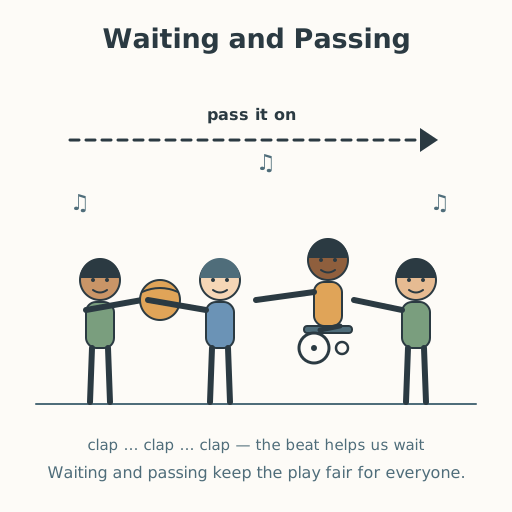
Lesson 4 — Waiting and Passing
Summary
Learners practice waiting and passing — the engine that keeps turn-taking and sharing going. By passing one object around a group in rhythm, they learn that waiting is not doing nothing; it is how we hold the game open for everyone.
Objectives
- Take turns during play with a gentle reminder, waiting and passing without grabbing. (D02.S1.K.01)
Connection
Waiting is the quiet part of every game — the moment before your turn, the pause while someone else goes. It is not nothing; it is the part that keeps the game fair for everyone. When you wait and then pass the thing along, you keep the play going for the whole circle.
Materials
- A ball or beanbag to pass
- A simple rhythm instrument or clapping pattern
Preparation
- Arrange a circle.
- Choose a slow, steady chant or clapping pattern to mark the beat while waiting.
- Have the passing object ready.
Facilitator note
This lesson is written to the learner (“you”) so it works in a classroom and for a self-directed learner. As facilitator, keep the beat slow and steady — a calm rhythm helps young bodies wait. If a learner grabs, stay warm: a gentle reminder and a smile return the game to its rhythm. This lesson closes Strand S1; celebrate how far the learners have come in taking turns and sharing.
Procedure
- Gather (5 min). Sit in a circle. We will pass one thing all the way around. To do it, everyone must wait and everyone must pass.
- Find the beat (5 min). Clap a slow beat together: clap … clap … clap. This beat will help us wait.
- Pass it around (15 min). Pass the ball to the beat. When it reaches you, hold it for one beat, then pass it on. Your hands are patient; the ball keeps moving.
- Slow it down (10 min). Try passing even more slowly. How does it feel to wait longer? What does your body do while you wait? Breathe, watch, and stay ready.
- Close (10 min). Talk: was waiting hard or easy? What helped you wait? Remember — waiting and passing keep the play fair for everyone.
Differentiation
- Support: Pass quickly at first, then gradually slow the beat as learners grow comfortable.
- Extension: Pass two objects at once in opposite directions and see if the group can keep both moving.
Assessment
- Formative (observation): Can the learner wait for the object and pass it along without grabbing, with only a gentle reminder?
- Artifact (portfolio): A note or drawing about what waiting feels like.
Resources
- CASEL SEL Framework (foundational competencies): https://casel.org/fundamentals-of-sel/
Home connection
Play a passing game at home — a ball, a cup, or a song where each person adds a word. Feel how waiting keeps the game alive for everyone.