Lesson 07 — What Makes a Friend Glad or Sad
Learners sort small situations into what makes a friend glad and what makes a friend sad, and discover that their own choices can change how a friend feels.
Objectives
Objectives
- D02.S2.K.01 Describe how a friend or story character might feel in a simple situation.
Essential question
What kinds of things make a friend glad or sad?
Key vocabulary
Materials
Standard materials
- Two small baskets or boxes · 2 One labeled "glad," one labeled "sad"
- Picture cards of small situations · 1 set Sharing a snack, a fallen tower, a hug, a pushed friend
Low-tech / no-cost
- Voice and body Name situations aloud and have learners show a glad face or a sad face
- Draw two circles in the soil One for glad, one for sad; step into the circle that matches each situation
Enriched / lab & device
- Photographs of kind and hurtful moments · 1 set Real images for sorting into glad and sad
- A tablet with a sorting app · 1 per group Drag each situation picture into "glad" or "sad"
Works in different contexts
- large-group Hold up each situation card and have the whole group step or point toward glad or sad
- self-directed A learner sorts situation cards into two piles and says aloud what each one would make a friend feel
- outdoor-only Act out a kind action and a hurtful action, and ask the group which one makes a friend glad
- multi-age Older learners add *why* each situation makes a friend glad or sad; younger ones sort and point
- level-grouped Learners who are ready think of their own glad/sad situations; others sort given cards
Lesson 7 — What Makes a Friend Glad or Sad
Summary
Learners connect actions to feelings: kind actions make friends glad, hurtful ones make them sad. By sorting small situations, they discover that what they do has real power over how another person feels.
Objectives
- Describe how a friend might feel in a simple situation. (D02.S2.K.01)
Connection
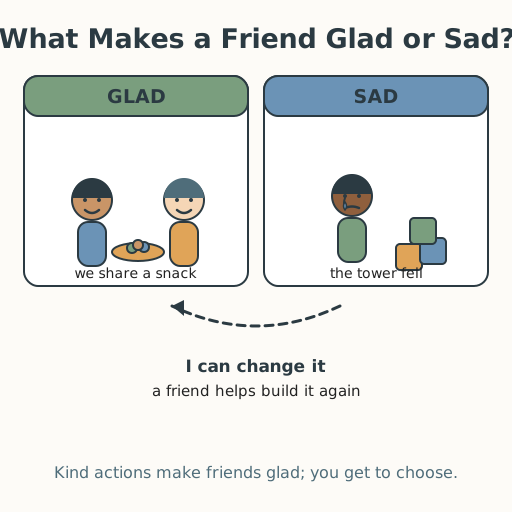
Every day, small things change how your friends feel. A shared snack makes someone glad; a knocked-over tower makes someone sad; a pushed friend feels hurt. When you notice which is which, you begin to choose the kind thing — and that choice is yours to make.
Materials
- Two small baskets or boxes (glad, sad)
- Picture cards of small situations
Preparation
- Label the two baskets “glad” and “sad.”
- Prepare situation cards: sharing, hugging, helping, a fallen tower, a pushed friend, a kind word.
Facilitator note
This lesson is written to the learner (“you”) so it works in a classroom and for a self-directed learner. As facilitator, keep the situations simple and free of blame — the aim is noticing, not shaming. Affirm that all people sometimes make friends sad by accident, and the caring thing is to notice and try again.
Procedure
- Gather (5 min). Think: what is one thing that made you glad today? One thing that made you sad? Our actions do this to others too.
- Meet glad and sad (5 min). Here are two baskets: glad and sad. We will sort small happenings into them.
- Sort the situations (15 min). For each card, ask: would this make a friend glad or sad? Put it in the right basket. A shared snack — glad. A pushed friend — sad. Talk about why.
- I can change it (10 min). Choose one “sad” card. What could change it to “glad”? (A fallen tower — a friend helps build it again.) Move it to glad.
- Close (10 min). Remember: your choices reach other people’s hearts. Kind actions make friends glad; hurtful ones make them sad. You get to choose.
Differentiation
- Support: Use only two contrasting cards at first (a hug, a push) and sort together.
- Extension: Invite learners to invent a new situation and decide which basket it belongs in, then explain.
Assessment
- Formative (observation): Can the learner say whether a simple situation would make a friend glad or sad?
- Artifact (portfolio): The sorted cards, or a drawing of “one thing that makes a friend glad.”
Resources
- CASEL SEL Framework (foundational competencies): https://casel.org/fundamentals-of-sel/
Home connection
At home, notice one thing you do today that makes someone glad. Tell a grown-up what it was and how you could tell.