Lesson 10 — My Class Community
Learners name their class as a community they belong to and share one thing the class does together, seeing that the class becomes a caring place through everyone's small part.
Objectives
Objectives
- D02.S3.K.01 Name a community they belong to and one thing people do together in it.
Essential question
What do we do together in our class?
Key vocabulary
Materials
Standard materials
- Paper and crayons · per learner
- A large shared paper · 1 For a class "what we do together" picture
Low-tech / no-cost
- Voice and body Act out one thing the class does together; others guess it
- A shared ground drawing Draw one big circle in the soil and mark the things the class does together
Enriched / lab & device
- Photos of the class at work and play · 1 set Real images of the class doing things together
- A tablet with a drawing app · 1 per group Learners add to a shared digital picture of "our class together"
Works in different contexts
- large-group Build a group list of class routines and have learners mime each one for the group to name
- self-directed A learner lists (in words or pictures) three things their class or learning group does together
- outdoor-only Name the things your group does together outdoors — circle time, games, tending a garden plot
- multi-age Older learners explain how the class helps each other; younger ones name what they like doing together
- level-grouped Learners who are ready name one way they help the class; others name one thing they do together
Lesson 10 — My Class Community
Summary
Learners widen the circle from family to their class. They name their class as a community they belong to and share one thing the class does together — and see that every small part they play helps make the class a caring place.
Objectives
- Name their class as a community they belong to and one thing people do together in it. (D02.S3.K.01)
Connection
Your class is a community — a group of people who learn, play, and help each other together, day after day. Everyone in it belongs, and everyone has a part. When each person adds their small part, the whole class becomes a place that cares for everyone in it.
Materials
- Paper and crayons
- One large shared paper for a class “what we do together” picture
Preparation
- Prepare the shared paper for a group drawing.
- Think through the class’s daily routines to prompt memory.
Facilitator note
This lesson is written to the learner (“you”) so it works in a classroom and for a self-directed learner. As facilitator, keep the focus on togetherness — not rules. The class community is built by shared activities, not by obedience. Name every learner as a member with something to contribute, so no one feels like a visitor.
Procedure
- Gather (5 min). Think: who is in our class? All of us. Together, we are a community.
- What we do together (10 min). Name things the class does together: circle time, songs, games, cleaning up, sharing snacks, helping each other. Mime one and let others guess.
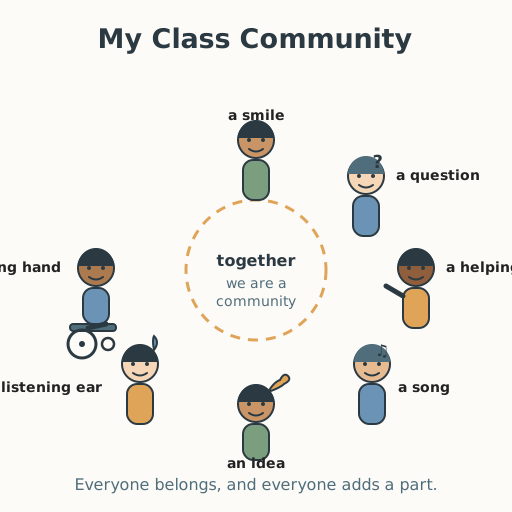
- Everyone has a part (15 min). Each of us brings something to the class — a smile, a helping hand, a question, a song. Tell a partner one thing you add.
- Draw it (10 min). On the shared paper, draw one thing our class does together. Add your mark. Look — many hands made one big picture, just like our class.
- Close (5 min). Remember: your class is your community. You belong here, and the class is better because you are in it.
Differentiation
- Support: Offer a sentence starter: “In our class we ___ together.”
- Extension: Invite learners to name one way the class could care for each other even better, and share it.
Assessment
- Formative (observation): Can the learner name the class as a community and one thing the class does together?
- Artifact (portfolio): The shared “our class together” picture (or a photo of it).
Resources
- CASEL SEL Framework (foundational competencies): https://casel.org/fundamentals-of-sel/
Home connection
Tell a grown-up one thing your class does together and one thing you add to the class.