Lesson 04 — Listening to a Speaker
Learners practice listening to a real person, not just a story — holding their attention, remembering one important thing, and asking a wondering question.
Objectives
Objectives
- D04.S1.K.01 Listen to a story or speaker and retell one important part in their own words.
Essential question
How do I listen to a person and remember what matters?
Key vocabulary
Materials
Standard materials
- A guest speaker or a short spoken message · 1 A person sharing one short, simple thing (how to plant a seed, how they made something, a favorite place)
- A "talking stick" or passing object · 1 Whoever holds it is the speaker; everyone else listens
Low-tech / no-cost
- A classmate or grown-up as speaker No visitor needed; any person telling one short thing works
- A rolled paper or stick as a talking stick Any object can mark whose turn it is to speak
Enriched / lab & device
- A short recorded message or video call · 1 Learners listen to a recorded speaker, then retell one thing they heard
Works in different contexts
- large-group Seat the speaker where all can see; pause the speaker after one idea and let the group whisper to a partner what they heard before continuing
- self-directed A learner listens to a grown-up or a recording, then tells back one thing and asks one wondering question
- outdoor-only Invite a community member — a gardener, a fisher, a grandparent — to speak outdoors about one thing they know; learners listen and retell
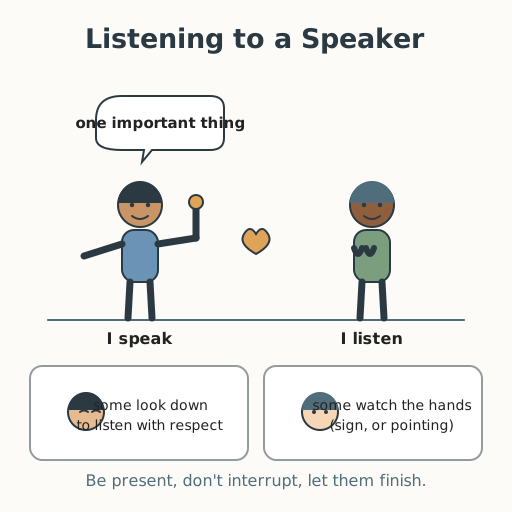
Lesson 4 — Listening to a Speaker
Summary
Learners practice listening to a live speaker — a person sharing one short thing — and retell one important part they heard, then ask a wondering question. Listening to a person is treated as a way of caring.
Objectives
- Listen to a story or speaker and retell one important part in their own words. (D04.S1.K.01)
Connection
Every day people talk to you — a grown-up giving directions, a friend telling a joke, a neighbor describing how to fix something. Listening to a person is how you understand what they know, what they need, and how they feel. Listening well is a way of showing someone that they matter.
Materials
- A guest speaker or a short spoken message
- A “talking stick” or passing object (optional)
Preparation
- Invite a speaker (a family member, a community worker, an older learner) to share one short, simple thing.
- Prepare the talking stick or a substitute.
Facilitator note
This lesson is written to the learner (“you”) so it works in a classroom and for a self-directed learner. If no visitor is available, you are the speaker, or use a recording. Keep the talk short — under three minutes — and about one concrete thing. Frame asking questions as “wondering together,” never as challenging the speaker. Honor the speaker’s language; if they speak a language some learners don’t know, invite translation with patience and curiosity. For a learner who is deaf or hard of hearing, arrange what they need to receive the message — a sign-language interpretation, lip-reading with the speaker facing them, a written or pictured key point, or captions on a recording — so “listening to a person” is open to every learner. Learners may tell back what they heard by speaking, signing, pointing, drawing, or acting; all are valid.
Procedure
- Gather (5 min). Think of a time someone really listened to you. How did it feel? How did you know they were listening?
- Meet the speaker (5 min). Learn who is speaking and what they will share. Get your ears, eyes, and body ready — the three listening jobs from Lesson 1.
- Listen (10 min). Listen to the whole message without interrupting. If a question pops into your head, hold it like a ball in your lap until the speaker is done.
- Tell back one thing (15 min). With a partner, say one important thing you heard, in your own words. Then, if you have one, ask a “wondering question” — something you are curious about.
- Close and thank (10 min). Thank the speaker. Say one thing you learned. Remember: when you listen to a person, you are giving them your full attention, and that is a gift.
Differentiation
- Support: Let a learner retell by pointing to a picture the speaker brought, or by echoing one phrase they remember.
- Extension: Invite learners to ask a follow-up question and connect the speaker’s idea to their own life.
Assessment
- Formative (observation): Does the learner hold attention during the speaker’s talk without interrupting?
- Formative (oral): Can the learner name one important thing the speaker said in their own words — spoken, signed, pointed, drawn, or acted out?
Resources
- CASEL SEL Framework (foundational competencies; social awareness and relationship skills): https://casel.org/fundamentals-of-sel/
Home connection
At home, practice listening to a grown-up’s short story without interrupting. Tell back one thing and ask one wondering question.