Lesson 12 — Greetings in My Language
Learners share a greeting from their home language with pride, teach it to others, and try a greeting from a different language, treating every greeting as a way of saying "I see you."
Objectives
Objectives
- D04.S4.K.01 Share a greeting or word from their home language and try one from another language.
Essential question
How do I greet someone in my home language?
Key vocabulary
Materials
Standard materials
- Greeting cards from the learners' home languages · 1 set A greeting word and a friendly picture for each learner's home language
- A welcome mat or circle marker · 1 A place to stand and greet, making the greeting a small ritual
Low-tech / no-cost
- Voice and a warm face A greeting needs only a word, a smile, and a warm face — no cards needed
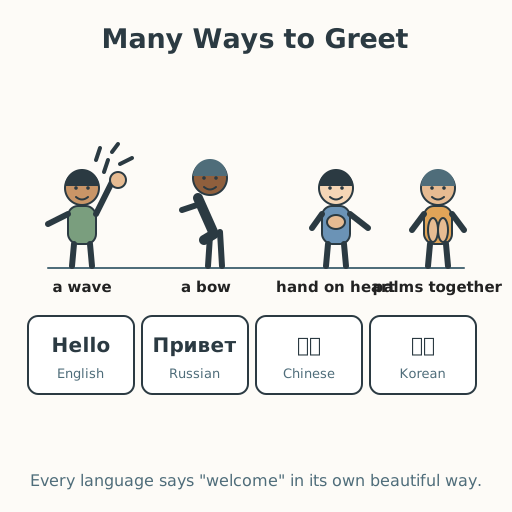
- A hand gesture or bow from home Greetings also live in the body — a wave, a bow, a hand on the heart
Enriched / lab & device
- Recordings of greetings in many languages · 1 set Learners listen to and echo greetings from around the world
Works in different contexts
- large-group Stand in a circle; each learner greets the group in their home language and the group echoes it back with the same warmth
- self-directed A learner practices their greeting, teaches it to a grown-up or into a recording, and tries one greeting from another language
- outdoor-only Greet the world outdoors — greet a tree, a bird, the sun — first in your home language, then in a new one
Lesson 12 — Greetings in My Language
Summary
Learners share a greeting from their home language, teach it to others, and try a greeting from a different language. Greetings are treated as acts of welcome — every language’s greeting is honored equally.
Objectives
- Share a greeting or word from their home language and try one from another language. (D04.S4.K.01)
Connection
A greeting is how you say “I see you.” Every language has its own way, and the one you learned first is yours to keep and share. Saying hello in your home language is a small act of pride — and learning someone else’s hello is a small act of friendship.
Materials
- Greeting cards from the learners’ home languages (optional)
- A welcome mat or circle marker (optional)
Preparation
- Learn each learner’s home-language greeting ahead of time (ask families if unsure).
- Prepare greeting cards or a simple welcome circle.
Facilitator note
This lesson is written to the learner (“you”) so it works in a classroom and for a self-directed learner. Home language is honored first — each child greets in their own language before any other is attempted. There is no “correct” accent; every pronunciation is welcomed with warmth. If a learner is shy or does not want to share, never force it — they may nod, smile, or gesture instead. A greeting also lives in the body (a bow, a wave, a hand on the heart), and those count fully.
Procedure
- Gather (5 min). How do you say hello to someone you love? Is it a word, a wave, a hug, a bow?
- Greet in your home language (10 min). One at a time, greet the group in your home language. Say it proudly — it is yours. The group greets you back the same way.
- Teach your greeting (10 min). Teach a partner your greeting. Say it slowly, and help them try it. Now learn theirs. Every greeting is a welcome.
- Try one from another language (15 min). Pick one greeting you just learned and practice it. Use your voice and a warm face. How does it feel to greet in a language that is not your own?
- Close (5 min). Remember: every language says “welcome” in its own beautiful way. Your greeting is a treasure, and so is everyone else’s.
Differentiation
- Support: Let a learner greet with a gesture or a smile only; offer one new greeting to echo rather than several.
- Extension: Invite learners to collect greetings from the whole group into a class “greeting book,” or to greet using a bow or gesture from their culture and explain it.
Assessment
- Formative (performance): Can the learner share a greeting from their home language and attempt one from another language?
- Formative (observation): Does the learner show respect for others’ greetings by listening and echoing?
Resources
- UNESCO, International Mother Language Day (languages, identity, and the value of every learner’s language): https://www.unesco.org/en/days/mother-language
Home connection
At home, teach your greeting to your family and ask them for a greeting they know in another language. Practice it together.